Welcome to the world of virtual reality! If you think you need to spend hundreds or even thousands of dollars on a high-end device to get a taste of VR, think again. The journey for many begins with a much simpler, yet surprisingly effective tool: the cardboard VR headset. This ingenious piece of tech, popularized by Google, turns the smartphone in your pocket into a portal to immersive new worlds. It’s affordable, accessible, and the perfect entry point into the exciting universe of virtual reality.
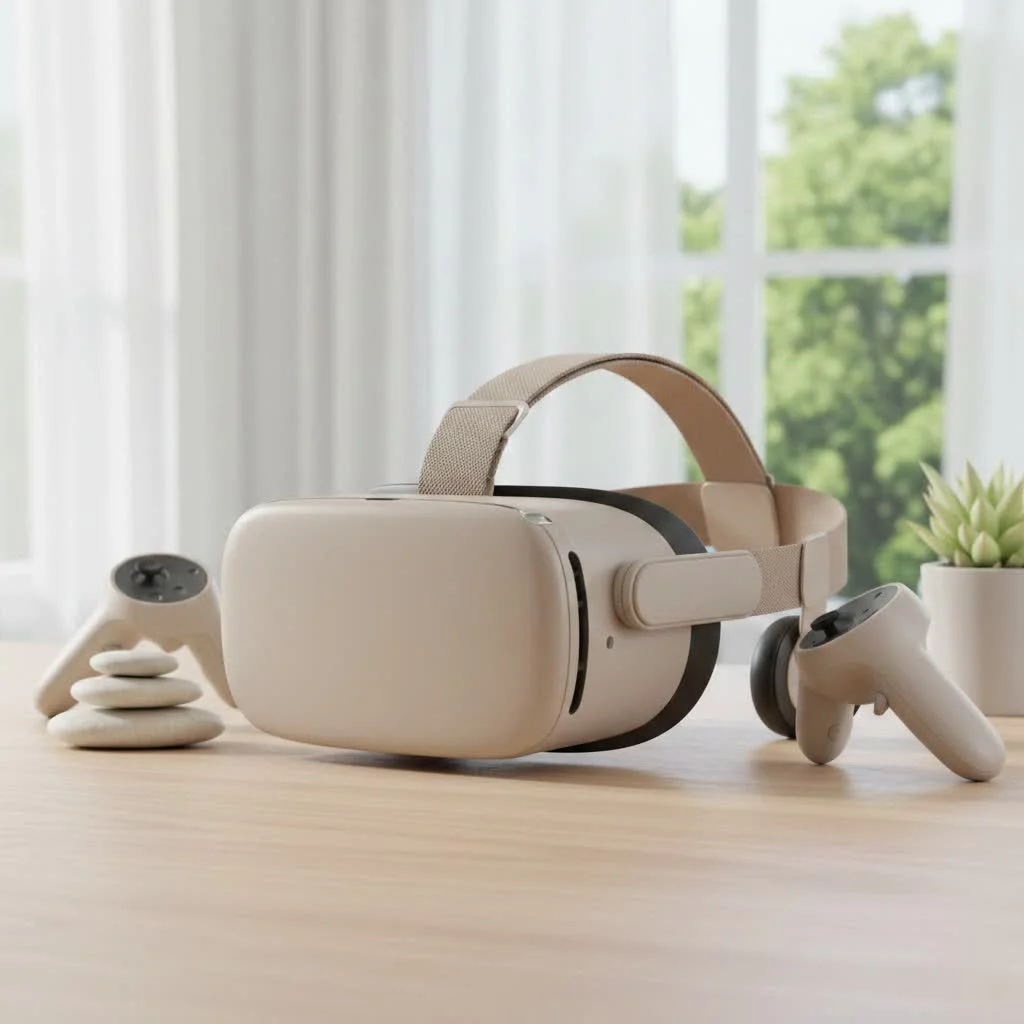
At MNWFC, we believe that technology should be for everyone. My decade of experience in the VR industry has shown me that the most powerful experiences aren’t always the most expensive. Let’s break down everything you need to know about this brilliant, low-cost gateway to VR.
What Exactly Is a Cardboard VR Headset?
A cardboard VR headset is a virtual reality viewer made from, you guessed it, folded cardboard. It works by holding your smartphone and using a pair of lenses to create a stereoscopic 3D image. By displaying a slightly different image to each eye, the headset tricks your brain into perceiving depth, creating an immersive virtual environment.
Think of it as a modern-day View-Master. Your smartphone provides the screen and the processing power, while the cardboard housing and lenses do the work of focusing the image and blocking out your peripheral vision. This simple combination is all it takes to transport you from your living room to the surface of Mars or the front row of a concert.
As my colleague, Dr. Alistair Finch, a pioneer in accessible technology, often says, “The genius of Cardboard VR isn’t in complex electronics, but in its elegant simplicity. It democratized virtual reality, proving that a powerful immersive experience is fundamentally about optics and perspective, not just processing power.”
How Does a Cardboard VR Headset Work?
The magic behind the cardboard VR headset lies in a few basic principles of human vision and simple physics. It’s a clever system that requires just three key components working together.
The Smartphone Screen
Your phone’s screen is split into two halves, one for each eye. The VR app you’re using renders two slightly offset perspectives of the same scene. This mimics how our eyes naturally see the world from slightly different angles.
The Biconvex Lenses
These are the most crucial parts of the headset. The lenses, typically around 45mm, are positioned between your eyes and the smartphone screen. They serve two primary functions:
- Magnification: They magnify the images on the screen, making them fill your field of view for a more immersive feel.
- Focus: They adjust the focal distance, allowing your eyes to comfortably focus on a screen that is only inches away, making it appear as if you’re looking at a distant scene.
The Cardboard Housing
|
Our Picks for the Best VR Headset in 2026
As an Amazon Associate I earn from qualifying purchases.
|
||
| Num | Product | Action |
|---|---|---|
| 1 | VR Headset for Nintendo Switch 2 (2025), Switch 2 Virtual Reality VR Glasses with Adjustable HD Lenses and Comfortable Head Strap, Labo VR Kit 3D Goggles for Switch 2 Accessories, White&Blue |

|
| 2 | PlayStation VR2 (PSVR2) |
|
| 3 | FEEBZ 3D VR Headset for Kids 2.0 + Android Remote - for iPhone & Android Phones - with 3D VR Videos & Apps Links - Virtual Reality Goggles Set for Beginners |
|
| 4 | VR Headset for Phone, Virtual Reality Glasses with Bluetooth Headphones for Adults and Kids Play 3D VR Games Movies (White VR Only) |
|
| 5 | DESTEK V5 VR Headset for Kids w/VR Gamepad, 128 Premium VR apps Included, Anti-Blue Eyes Protected HD Lenses, 110° FOV Virtual Reality Headsets for iPhone, Android Phone- Black |
|
| 6 | Meta Quest 2 — Advanced All-In-One Virtual Reality Headset — 256 GB (Renewed) |
|
| 7 | PlayStation VR2 Horizon Call of The Mountain™ Bundle (PSVR2) |
|
| 8 | Oculus Quest 2 Advanced All-in-One Virtual Reality Gmaing VR Headset 128GB Set, White |
|
| 9 | FEEBZ 3D VR Headset for Kids 2.0 + Android Remote - for iPhone & Android Phones - with 3D VR Videos & Apps Links - Virtual Reality Goggles Set for Beginners |
|
| 10 | Oculus Quest 2 VR Headset 128GB Holiday Set - Advanced All-in-One Virtual Reality Headset Cover Set, White |
|
The cardboard structure does more than just hold the pieces together. It precisely positions the lenses at the correct distance from both your eyes and the screen. More importantly, it acts as a light shield, blocking out your physical surroundings to fully immerse you in the virtual world.
When these elements combine, your brain fuses the two separate images into a single, cohesive 3D experience. Your phone’s built-in accelerometer and gyroscope track your head movements, allowing you to look around the virtual environment naturally.
Getting Started: Your First VR Experience in Minutes
Ready to dive in? Setting up your cardboard VR headset is incredibly easy. Whether you’ve purchased a pre-made kit or built one yourself, the process is largely the same.
- Assemble Your Viewer: If you have a kit, simply follow the folding instructions. They are usually numbered and take only a couple of minutes to put together.
- Download VR Apps: Head to the Google Play Store or Apple App Store and search for “VR” or “Cardboard” apps. Start with the official Google Cardboard app to calibrate your viewer. Other great starting points include YouTube VR, Within, and Google Arts & Culture VR.
- Launch the App: Open the VR app of your choice. Most apps will prompt you to place your phone inside the viewer.
- Insert Your Smartphone: Open the front flap of your cardboard VR headset, place your phone inside, and secure it. Make sure the line dividing the screen aligns with the center of the headset.
- Experience VR: Bring the viewer up to your eyes and adjust it until the image is clear and focused. Now, look around! You are officially in virtual reality.
What Can You Do With a Cardboard VR Headset?
You might be surprised by the vast amount of content available for this simple device. It’s not just for tech demos. You can explore a wide range of incredible experiences.
- Virtual Tours: Walk through the Louvre, explore the pyramids of Giza, or take a tour of the International Space Station without leaving your home.
- Immersive Games: Play simple, fun games where you control the action just by looking. From space shooters to puzzle games, there are hundreds to choose from.
- 360-Degree Videos: This is where Cardboard truly shines. Watch stunning 360-degree videos on platforms like YouTube VR. Swim with sharks, climb Mount Everest, or enjoy a front-row seat at a Paul McCartney concert.
- Educational Content: Learn in a whole new way. Dissect a virtual frog in a biology class, explore the human circulatory system, or walk among dinosaurs.
- Cinematic VR: Watch short films and narrative experiences designed specifically for virtual reality, placing you right in the middle of the story.
Frequently Asked Questions (FAQ)
What phones work with a cardboard VR headset?
Most modern Android phones and iPhones released in the last few years are compatible. The key requirements are a screen size typically between 4.7 and 6.5 inches and built-in gyroscope and accelerometer sensors for head tracking.
Is Google Cardboard still supported?
While Google is no longer actively developing the Google Cardboard platform, the technology is open source, and the official app still works perfectly. Furthermore, a massive library of third-party apps and 360-degree videos on platforms like YouTube continue to support the Cardboard format, ensuring it remains a viable and enjoyable platform.
Can you watch regular movies on it?
Yes, you can! Apps like YouTube VR or dedicated VR video players create a virtual cinema environment, allowing you to watch your own video files or stream services like Netflix on a massive virtual screen. It’s a private theater experience on a budget.
Is a cardboard VR headset bad for your eyes?
When used correctly and in moderation, there is no evidence to suggest cardboard VR headsets cause long-term damage to your eyes. However, some users may experience temporary eye strain or motion sickness. It’s important to take regular breaks (every 15-20 minutes) and stop if you feel any discomfort.
How much does a cardboard VR headset cost?
This is its best feature. You can find pre-made kits online for anywhere from $5 to $20. If you’re feeling crafty and have your own lenses, you can even download a template and make one yourself for next to nothing.
Your Adventure into VR Awaits
The cardboard VR headset represents the very best of accessible technology. It’s a testament to the idea that a powerful, mind-expanding experience doesn’t require a hefty price tag. It’s the perfect way for students, families, and anyone curious about virtual reality to take that first exciting step. Whether you want to explore the globe, play a fun game, or simply see what all the fuss is about, this humble device is your ticket in. So go ahead, fold your way into a new reality and start exploring.
Get our weekly buyer guide
Practical specs, not advice. Unsubscribe anytime.
I got a cardboard headset after reading about how accessible it is. It’s fun for a bit, but I found the comfort level wasn’t great for longer sessions. My phone also got pretty hot after about 20 minutes. It’s a good starting point, but I’m already looking at slightly more advanced options now.
This is exactly what I needed! I thought VR was only for serious gamers with huge budgets. The idea of using my smartphone as a portal to new worlds with just a piece of cardboard is genius. It’s super affordable and a fantastic way to dip your toes into VR without any commitment.
I was so skeptical about VR because of the price, but this guide really opened my eyes to the cardboard options. I picked one up for under $20 and it’s been a blast! It’s definitely the perfect entry point into virtual reality without breaking the bank. My kids love the simple games and 360 videos.
I’ve always wanted to try VR but the high-end devices were just too much. This post convinced me to try a Google Cardboard viewer. It’s surprisingly effective for what it is! The immersion is decent for a smartphone-powered device, and it’s a great way to see if VR is for you before investing in something more expensive.