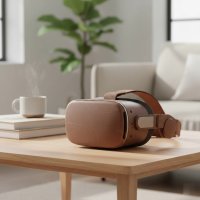
Welcome to the MNWFC official blog, your trusted source for all things virtual reality. With over a decade of hands-on experience, I’ve seen VR evolve from a niche hobby into a breathtaking digital frontier. If you’re looking to plug your gaming rig into the metaverse, you’ve come to the right place. Choosing the best VR headset for PC can feel overwhelming, but don’t worry. I’m here to break down the top contenders and help you find the perfect portal to new worlds.
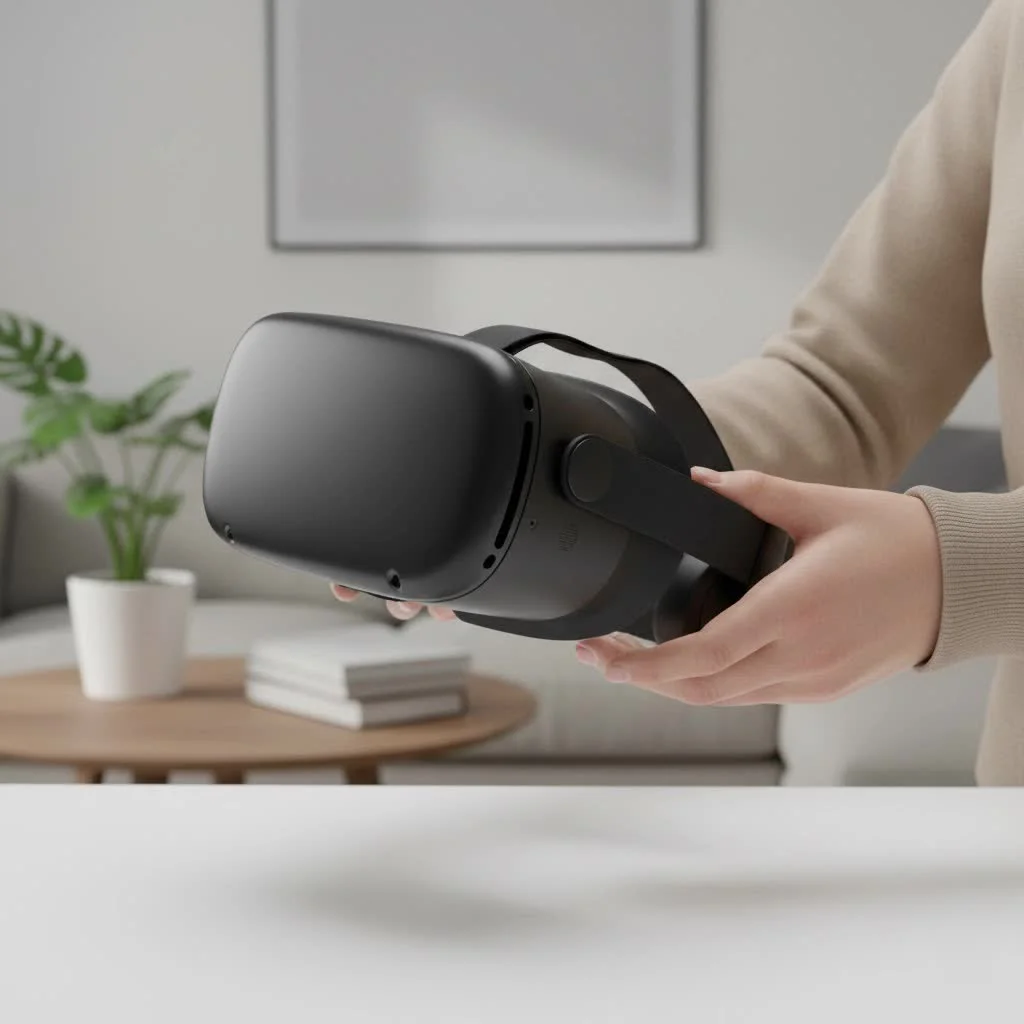
PC-powered VR offers the highest fidelity, most graphically intense experiences possible. By leveraging the raw power of your graphics card and processor, these headsets deliver visuals and performance that standalone devices simply can’t match. Whether you’re a hardcore simmer, a competitive FPS player, or a creative professional, the right PC VR headset will completely transform your digital life.
Top PC VR Headsets: The Best of the Best
When it comes to PC VR, you have several fantastic options, each with unique strengths. The choice often comes down to your budget, your technical comfort level, and what kind of experiences you prioritize. Let’s dive into the models that are currently leading the pack.
Valve Index: The Enthusiast’s Choice
Even a few years after its release, the Valve Index remains a gold standard for a dedicated PC VR experience. Its combination of high refresh rates (up to 144Hz), a wide 130-degree field of view, and the innovative “Knuckle” controllers make it a top pick for enthusiasts who demand precision and immersion above all else.
The Index controllers are a standout feature, tracking the movement of each individual finger. This allows for incredibly natural interactions in-game, from grabbing objects realistically to expressing yourself with detailed hand gestures. However, this premium experience comes at a cost and requires setting up external base stations for tracking, which can be a bit cumbersome.
Meta Quest 3: The Versatile All-Rounder
The Meta Quest 3 has quickly become a fan favorite, and for good reason. While it’s a brilliant standalone headset, its ability to connect to a PC—either via a USB-C cable (Link) or wirelessly (Air Link)—makes it an incredibly versatile and compelling option for PC VR. Its pancake lenses and high-resolution display (2064 x 2208 per eye) provide a sharp, clear image that rivals many dedicated PC headsets.
The true magic of the Quest 3 is its flexibility. You get the freedom of a wireless, standalone device for casual gaming and media consumption, plus the option to tap into the horsepower of your PC for demanding titles like Half-Life: Alyx or Microsoft Flight Simulator. The setup is simple, with no external sensors required, making it the most user-friendly entry into high-quality PC VR.
HP Reverb G2: The Budget Sim Specialist
|
Our Picks for the Best VR Headset in 2026
As an Amazon Associate I earn from qualifying purchases.
|
||
| Num | Product | Action |
|---|---|---|
| 1 | VR Headset for Nintendo Switch 2 (2025), Switch 2 Virtual Reality VR Glasses with Adjustable HD Lenses and Comfortable Head Strap, Labo VR Kit 3D Goggles for Switch 2 Accessories, White&Blue |

|
| 2 | Oculus Quest 2 VR Headset 128GB Holiday Set - Advanced All-in-One Virtual Reality Headset Cover Set, White |
|
| 3 | FEEBZ 3D VR Headset for Kids 2.0 + Android Remote - for iPhone & Android Phones - with 3D VR Videos & Apps Links - Virtual Reality Goggles Set for Beginners |
|
| 4 | PlayStation VR2 Horizon Call of The Mountain™ Bundle (PSVR2) |
|
| 5 | Meta Quest 2 — Advanced All-In-One Virtual Reality Headset — 256 GB (Renewed) |
|
| 6 | FEEBZ 3D VR Headset for Kids 2.0 + Android Remote - for iPhone & Android Phones - with 3D VR Videos & Apps Links - Virtual Reality Goggles Set for Beginners |
|
| 7 | PlayStation VR2 (PSVR2) |
|
| 8 | VR Headset for Phone, Virtual Reality Glasses with Bluetooth Headphones for Adults and Kids Play 3D VR Games Movies (White VR Only) |
|
| 9 | Oculus Quest 2 Advanced All-in-One Virtual Reality Gmaing VR Headset 128GB Set, White |
|
| 10 | DESTEK V5 VR Headset for Kids w/VR Gamepad, 128 Premium VR apps Included, Anti-Blue Eyes Protected HD Lenses, 110° FOV Virtual Reality Headsets for iPhone, Android Phone- Black |
|
If visual clarity is your absolute priority, especially for simulation games, the HP Reverb G2 is a fantastic and often overlooked option. It boasts an incredibly high resolution of 2160 x 2160 pixels per eye, which virtually eliminates the “screen door effect” and delivers a crystal-clear picture. This makes it a favorite among flight and racing simulator enthusiasts who need to read fine text on cockpit instruments.
Developed in collaboration with Valve, the Reverb G2 features excellent audio and comfortable ergonomics. While its controller tracking isn’t quite as robust as the Index or Quest 3, its visual fidelity at a more budget-friendly price point makes it a strong contender for those who spend most of their time in the pilot’s seat.
Key Features to Consider When Choosing a PC VR Headset
Navigating the technical specifications of a VR headset can be daunting. As your resident expert, let me distill it down to what truly matters for an incredible PC VR experience.
Resolution and Lens Type
This determines the sharpness and clarity of the image. Higher resolution, measured in pixels per eye, reduces the “screen door effect” where you can see the gaps between pixels. Modern headsets like the Quest 3 and Reverb G2 are pushing the boundaries of visual fidelity. Lens type is also crucial; newer pancake lenses, found in the Quest 3, allow for a slimmer headset profile and a wider sweet spot for clarity.
Refresh Rate
Measured in Hertz (Hz), the refresh rate is how many times the screen updates per second. A higher refresh rate (90Hz or above) results in smoother motion and a more comfortable experience, significantly reducing the risk of motion sickness. The Valve Index leads here with its 120Hz and experimental 144Hz modes.
Field of View (FoV)
FoV refers to the extent of the game world you can see at any given moment. A wider FoV increases your peripheral vision, making the experience feel more immersive and natural. The Valve Index excels with its 130-degree FoV, while most other headsets hover around the 110-degree mark.
Tracking: Inside-Out vs. Outside-In
This is how the system tracks the position of your head and hands.
- Outside-In Tracking: Requires external sensors (base stations) placed around your room, like the Valve Index. This method provides the most accurate, robust tracking but is more complex to set up.
- Inside-Out Tracking: Uses cameras on the headset itself to track its position and the controllers, like the Meta Quest 3 and HP Reverb G2. This is far easier to set up and more portable, and modern implementations are incredibly accurate for most use cases.
“For most gamers, the convenience and quality of modern inside-out tracking are more than enough. Only the most competitive, high-precision players truly need a base station setup today.” – David Chen, VR Systems Analyst
Frequently Asked Questions (FAQ)
Do I need a powerful PC for VR?
Yes, PC VR is demanding. You’ll generally need a modern gaming PC with at least an NVIDIA RTX 3060 or AMD RX 6600 XT graphics card, a decent quad-core processor, and at least 16GB of RAM for a smooth experience. Always check the recommended specs for the specific headset and games you’re interested in.
Can I use a standalone headset like the Meta Quest 3 for PC VR?
Absolutely. The Meta Quest 3 offers excellent PC VR performance through a feature called Quest Link (wired) or Air Link (wireless). This hybrid functionality is why it’s considered the best overall value for most people entering the VR space.
Is wired or wireless PC VR better?
This comes down to personal preference. A wired connection (like with the Valve Index or using a Link cable on the Quest 3) will always provide the most stable, highest-quality image. However, a wireless connection (via Air Link on Quest 3 or with an adapter on some HTC headsets) offers unparalleled freedom of movement. A strong Wi-Fi 6 or 6E network is essential for a good wireless experience.
What is the “screen door effect”?
This is a visual artifact where you can perceive the fine lines separating pixels, similar to looking through a mesh screen door. It was common in older headsets but has been largely eliminated in newer models with higher pixel densities, such as the HP Reverb G2.
Are VR headsets bad for your eyes?
There is no evidence that VR headsets cause long-term eye damage. However, like any screen, prolonged use can cause eye strain. It’s important to take regular breaks (a 15-minute break for every hour of play is a good rule of thumb) and ensure the headset’s interpupillary distance (IPD) is adjusted correctly to match the distance between your eyes.
Conclusion: Your Portal to a New Reality
Choosing the best VR headset for your PC is a significant investment, but it unlocks a level of immersion that is simply unmatched in gaming. For the vast majority of users, the Meta Quest 3 offers the perfect blend of quality, versatility, and ease of use, making it our top recommendation. It delivers a fantastic PC VR experience without the hassle of external sensors and doubles as a superb standalone device.
For enthusiasts who crave the absolute pinnacle of tracking and performance and don’t mind the setup, the Valve Index remains a formidable choice. And for the sim fanatics on a budget, the HP Reverb G2 provides unparalleled visual clarity where it matters most. Whatever your choice, you’re taking a step into an exciting and rapidly evolving world. Welcome to the future of gaming.
Get our weekly buyer guide
Practical specs, not advice. Unsubscribe anytime.