The Oculus Rift VR headset, launched in 2016, was a pioneering device that initiated the modern era of consumer virtual reality by offering immersive experiences previously confined to science fiction. While both the original Rift and its 2019 successor, the Rift S, have been discontinued in favor of Meta’s standalone Quest line, their legacy is significant for VR enthusiasts, developers, and collectors. This article explores the Oculus Rift’s journey, its impact, and its current standing in the evolving VR landscape.
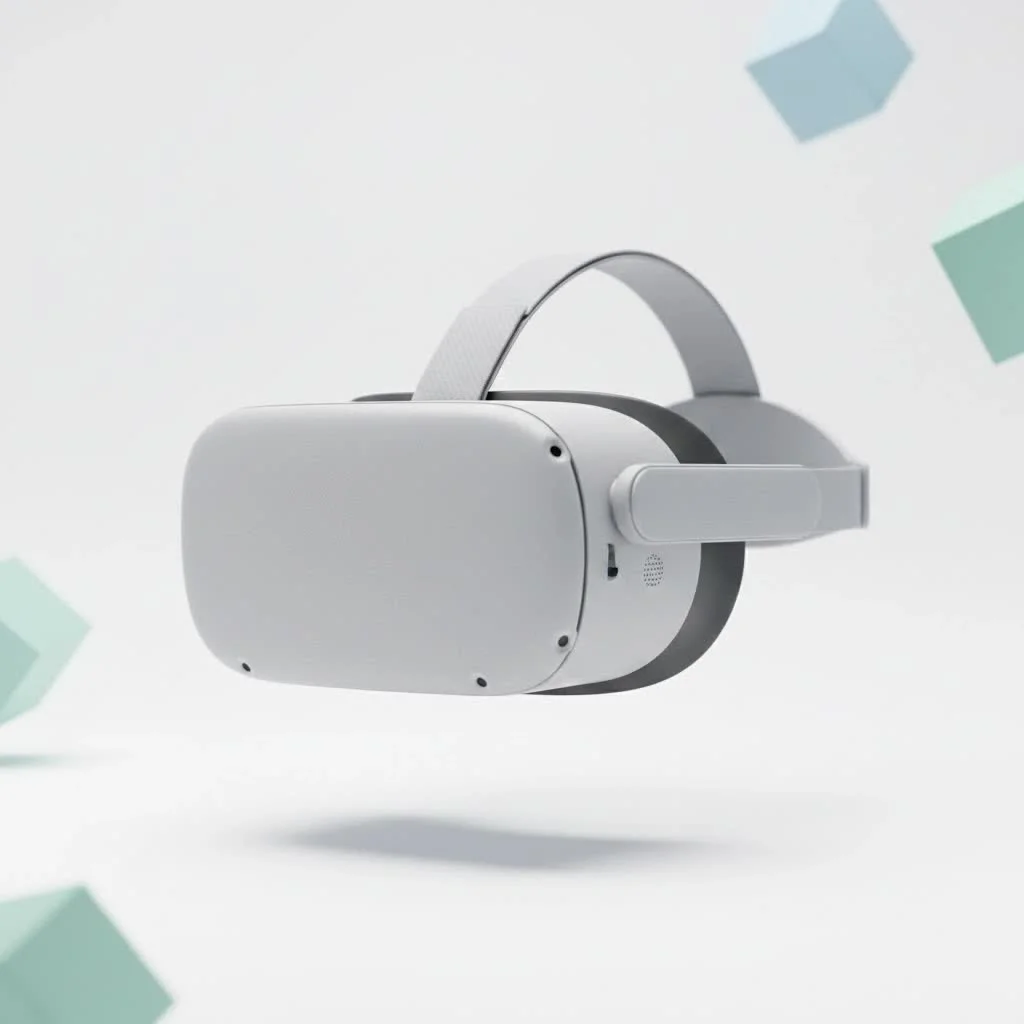
Having followed the VR scene for over a decade, the excitement around the original Rift Kickstarter was palpable. It promised true virtual reality for the masses, largely delivering on that promise. Although it required a powerful PC, external sensors, and patience for setup, the experience was transformative.
What Exactly Was the Oculus Rift?
The Oculus Rift was a virtual reality headset that connected to a high-end gaming PC to deliver immersive experiences. Unlike modern standalone headsets such as the Meta Quest 3, the Rift relied entirely on the processing power of the connected computer. This PC-tethered approach enabled it to run graphically complex and demanding games and applications that still serve as benchmarks for visual fidelity in VR today.
There were two primary consumer versions of the Oculus Rift:
- Oculus Rift CV1 (Consumer Version 1): The original model, released in 2016. It utilized external “Constellation” sensors for tracking the headset and Touch controllers.
- Oculus Rift S: An updated version released in 2019. This model streamlined the experience by replacing external sensors with inside-out tracking cameras built directly into the headset, significantly simplifying setup.
“The launch of the Oculus Rift CV1 was a watershed moment,” notes VR developer Dr. Evelyn Reed. “It wasn’t just a product; it was the delivery of a promise. It showed the world that high-fidelity, consumer-grade virtual reality was not only possible but also incredibly compelling. It laid the groundwork for the entire industry we see today.”
The Core Experience: What Made the Rift Special?
The appeal of the Oculus Rift VR headset stemmed from its ability to create a sense of “presence”—the feeling of truly being somewhere else. This was achieved through a combination of high-resolution displays, precise head and hand tracking, and integrated audio.
Visual and Audio Fidelity
Both the CV1 and Rift S featured OLED or LCD panels with high refresh rates (90Hz for CV1, 80Hz for Rift S) that were crucial for reducing motion sickness and creating a smooth, believable virtual world. The integrated headphones on the CV1 were particularly praised for their excellent spatial audio, which added another layer of immersion. Users could hear a sound from behind and instinctively turn their head to look, just as in real life.
The Power of PC VR
|
Our Picks for the Best VR Headset in 2026
As an Amazon Associate I earn from qualifying purchases.
|
||
| Num | Product | Action |
|---|---|---|
| 1 | DESTEK V5 VR Headset for Kids w/VR Gamepad, 128 Premium VR apps Included, Anti-Blue Eyes Protected HD Lenses, 110° FOV Virtual Reality Headsets for iPhone, Android Phone- Black |

|
| 2 | VR Headset for Phone, Virtual Reality Glasses with Bluetooth Headphones for Adults and Kids Play 3D VR Games Movies (White VR Only) |
|
| 3 | PlayStation VR2 Horizon Call of The Mountain™ Bundle (PSVR2) |
|
| 4 | Oculus Quest 2 VR Headset 128GB Holiday Set - Advanced All-in-One Virtual Reality Headset Cover Set, White |
|
| 5 | Oculus Quest 2 Advanced All-in-One Virtual Reality Gmaing VR Headset 128GB Set, White |
|
| 6 | Meta Quest 2 — Advanced All-In-One Virtual Reality Headset — 256 GB (Renewed) |
|
| 7 | FEEBZ 3D VR Headset for Kids 2.0 + Android Remote - for iPhone & Android Phones - with 3D VR Videos & Apps Links - Virtual Reality Goggles Set for Beginners |
|
| 8 | FEEBZ 3D VR Headset for Kids 2.0 + Android Remote - for iPhone & Android Phones - with 3D VR Videos & Apps Links - Virtual Reality Goggles Set for Beginners |
|
| 9 | PlayStation VR2 (PSVR2) |
|
| 10 | VR Headset for Nintendo Switch 2 (2025), Switch 2 Virtual Reality VR Glasses with Adjustable HD Lenses and Comfortable Head Strap, Labo VR Kit 3D Goggles for Switch 2 Accessories, White&Blue |
|
Being tethered to a PC was both the Rift’s greatest strength and its biggest hurdle. The requirement of a powerful gaming computer made the cost of entry high. However, it also meant the Rift could tap into the raw power of dedicated graphics cards. This resulted in visually stunning games like Half-Life: Alyx, Asgard’s Wrath, and Lone Echo, which feature graphics and physics that standalone headsets are still striving to match.
Setting Up the Oculus Rift: A Tale of Two Systems
The setup process was one of the most significant differences between the two Rift models and highlights the evolution of VR technology.
Oculus Rift CV1 Setup:
- PC Connection: Connect the headset via HDMI and USB 3.0 ports.
- Sensor Placement: Strategically place two (or three, for room-scale) external sensors around your play area.
- Sensor Connection: Connect each sensor to a USB 3.0 port on your PC.
- Software Calibration: Run the Oculus software to define your play space and calibrate the tracking.
Oculus Rift S Setup:
- PC Connection: Connect the headset via a single DisplayPort and USB 3.0 cable.
- Software Calibration: Put on the headset and use the built-in cameras to “paint” the boundaries of your play area.
The Rift S’s inside-out tracking system, which used five onboard cameras to map the room, was a major upgrade for convenience, eliminating the web of cables required by the CV1’s external sensors.
Is the Oculus Rift Still a Good Choice Today?
For most new users, the Oculus Rift VR headset is not a recommended choice today. Meta discontinued the Rift S in 2021, shifting focus to its standalone Quest platform, leading to waning software support and outdated hardware. Modern headsets like the Meta Quest 3 offer higher resolutions, wireless freedom, and a simpler user experience.
However, the Oculus Rift might still hold value for a few specific groups:
- VR Collectors and Historians: As a pioneering piece of consumer technology, the Rift has historical significance.
- Budget-Conscious PC VR Enthusiasts: If you can find a complete, working Rift S kit for a very low price on the second-hand market, it can still provide a decent entry point into PC VR gaming.
- Owners of Specific Peripherals: Some users with specialized simulation setups (like racing wheels or flight sticks) might find the dedicated PC connection of the Rift to be reliable.
Important Consideration: Replacement parts, especially the proprietary tether cable for the Rift S, are becoming increasingly rare and expensive. A broken cable can render the entire system useless, making it a risky purchase today.
The Legacy: How the Rift Paved the Way for the Quest
The Oculus Rift product line was a crucial stepping stone that provided invaluable lessons for Meta, directly influencing the design philosophy of the Quest: a self-contained, easy-to-use, and affordable VR headset for everyone. The challenges of PC tethering, complex setups, and high costs associated with the Rift led to this evolution.
The Rift platform helped build a library of high-quality PC VR games that can now be streamed to the Quest via Air Link or Virtual Desktop, or played with a Link cable. It cultivated a generation of VR developers and proved that a market for immersive content existed. Without the trials and triumphs of the Oculus Rift, the wireless, user-friendly VR landscape we enjoy today would likely look very different.
Frequently Asked Questions (FAQ)
Can you still buy an Oculus Rift VR headset?
No, the Oculus Rift and Rift S are no longer manufactured or sold new by Meta. They are only available through second-hand markets like eBay or local online marketplaces.
Do Oculus Rift games still work?
Yes, you can still access and play your Rift library on a PC through the Oculus desktop app. You can play these PC VR games on a newer Meta Quest headset using a Link cable or wirelessly with Air Link.
Is the Oculus Rift S better than the Meta Quest 2?
While the Rift S had the advantage of a direct DisplayPort connection for uncompressed video, the Meta Quest 2 (and especially the Quest 3) surpasses it in nearly every other metric: higher resolution, higher refresh rate options, standalone capability, and superior ease of use.
What are the main problems with the Oculus Rift S?
The most significant issue today is the lack of support and spare parts. The tether cable is notoriously fragile and difficult to replace. Its tracking can be less reliable than the more modern systems on the Quest 2 and 3.
Was the Oculus Rift the first VR headset?
No, the concept of VR has been around for decades with many preceding devices. However, the Oculus Rift CV1 is widely credited as the first modern, consumer-focused VR headset to achieve widespread recognition and commercial success, kickstarting the current wave of VR innovation.
Final Thoughts
The Oculus Rift VR headset was more than just a product; it was a revolution. It brought the dream of immersive virtual reality out of the lab and into the living room, setting the stage for the wireless, accessible future we see in devices like the Meta Quest. While it may no longer be the recommended choice for newcomers, its impact is undeniable. For those of us who took our first steps into a virtual world with a Rift strapped to our face, it will always hold a special place as the device that made us believe in the future of VR.
Frequently Asked Questions
Can you still buy an Oculus Rift VR headset?
No, the Oculus Rift and Rift S are no longer manufactured or sold new by Meta. They are only available through second-hand markets like eBay or local online marketplaces, making new purchases impossible.
Do Oculus Rift games still work?
Yes, you can still access and play your Rift library on a PC through the Oculus desktop app. Furthermore, these PC VR games can be played on a newer Meta Quest headset using a Link cable or wirelessly with Air Link.
Is the Oculus Rift S better than the Meta Quest 2?
While the Rift S had the advantage of a direct DisplayPort connection for uncompressed video, the Meta Quest 2 (and especially the Quest 3) surpasses it in nearly every other metric. These include higher resolution, higher refresh rate options, standalone capability, and superior ease of use.
What are the main problems with the Oculus Rift S?
The most significant issue today is the lack of support and spare parts, particularly the notoriously fragile and difficult-to-replace tether cable. Additionally, its tracking can be less reliable than the more modern systems found on the Quest 2 and 3.
Was the Oculus Rift the first VR headset?
No, the concept of VR has existed for decades with many preceding devices. However, the Oculus Rift CV1 is widely credited as the first modern, consumer-focused VR headset to achieve widespread recognition and commercial success, kickstarting the current wave of VR innovation.
Get our weekly buyer guide
Practical specs, not advice. Unsubscribe anytime.
I picked up an original Rift a few years after launch, and while the immersion was great, I found the need for a powerful PC a bit limiting. My gaming rig at the time struggled with some of the more demanding titles, which was a bit frustrating. It was a cool piece of tech, but the hardware requirements were definitely a barrier for entry for many.
I still remember getting my original Oculus Rift back in 2016. It was a game-changer for me, truly immersive and unlike anything I’d experienced before. Setting it up with the external sensors was a bit of a chore, but once it was running, it was pure magic. Even though I’ve moved on to newer headsets, the Rift holds a special place in my heart for kicking off my VR journey.
As a developer, the Oculus Rift was instrumental in the early days of VR content creation. It provided a solid platform to experiment and build on, even with its quirks. The legacy it left for the industry is undeniable, paving the way for the standalone Quest line and making VR more accessible to everyone. It truly was a pioneer.
The Rift S was my first serious VR headset, and it really opened my eyes to what VR could be. The inside-out tracking was a huge improvement over the original’s external sensors, making setup so much easier. While it’s been discontinued, I still think it offered a fantastic PC VR experience for its time, especially for the price point it eventually reached.