In 2025, the traditional mobile VR headset, which relies on a smartphone for its display and processing, is largely obsolete. The market for these devices, once heralded as the future of accessible virtual reality, has dramatically declined due to performance limitations, poor tracking, and the rise of superior standalone VR headsets like the Meta Quest 3. While a few niche use cases remain for basic 360-degree video viewing, dedicated standalone VR devices now offer a far more robust and immersive experience.
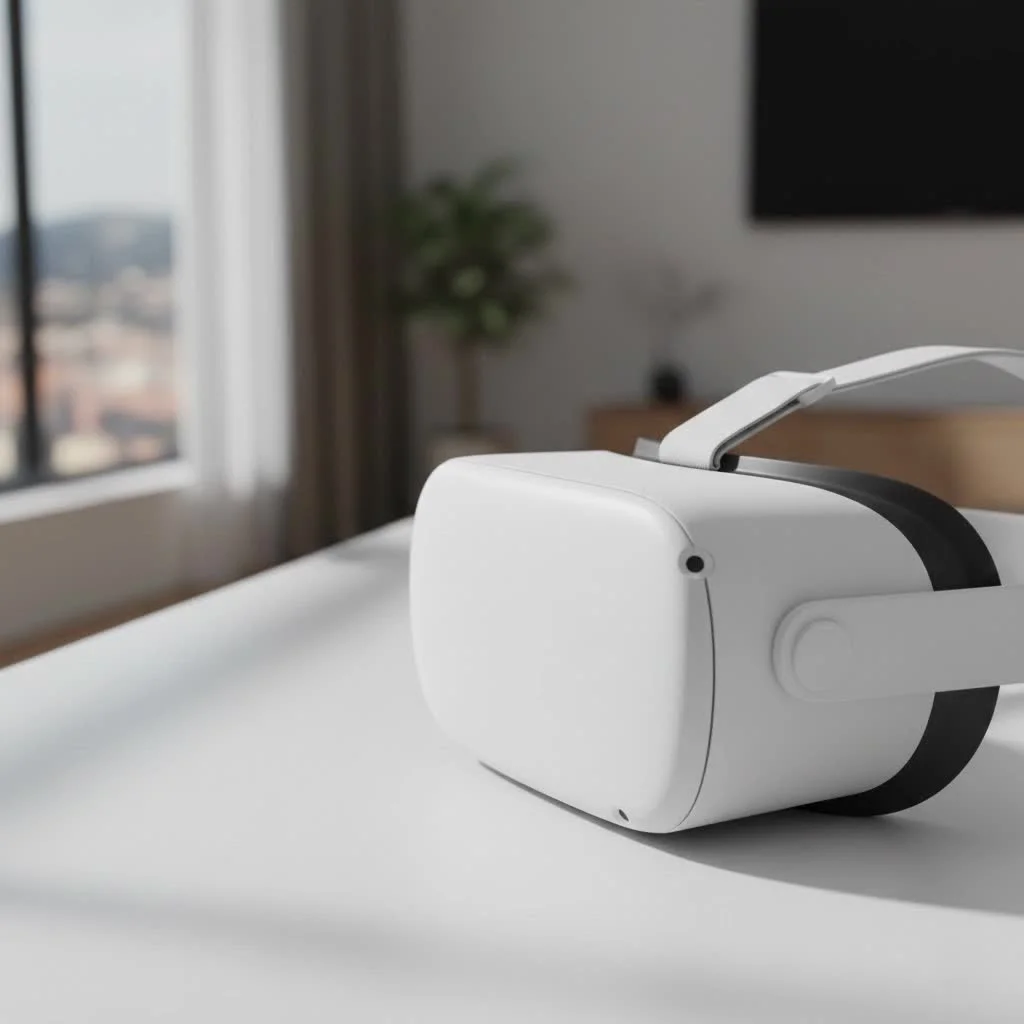
As the head content creator for MNWFC and a veteran of the VR industry for over a decade, I’ve had a front-row seat to this evolution. We’re going to break down the journey of the mobile VR headset, explore its current status, and help you understand where the real action is in portable VR today. For expert virtual reality reviews on this site.
What Exactly is a Mobile VR Headset?
At its core, a mobile VR headset is a simple shell, essentially a pair of lenses in a plastic or cardboard housing with a strap. It has no screen, no processor, and no built-in tracking. All the heavy lifting is done by your smartphone, which you slot into the front of the device.
- The Screen: Your phone’s display becomes your VR screen.
- The Brains: Your phone’s processor runs the VR app or game.
- The Motion Tracking: Your phone’s internal sensors (gyroscope and accelerometer) track your head movements.
This is fundamentally different from other types of VR. PC VR headsets like the Valve Index tether to a powerful gaming computer, while standalone VR headsets like the Meta Quest 3 have all the computers, screens, and sensors built right in. The mobile VR headset was the budget-friendly middle ground, leveraging the device you already owned.
The Golden Age and The Great Decline
The mid-2010s were the heyday for smartphone VR. It all started with a clever piece of cardboard.
The Pioneers of Phone-Based VR
Google Cardboard, introduced in 2014, was a revelation. It proved that a compelling, albeit basic, VR experience was possible with just a phone and a foldable viewer. This low-cost approach opened the floodgates.
Soon after, more sophisticated players entered the market. The Samsung Gear VR, co-developed with Oculus (now a part of Meta), was the undisputed king. It offered a higher-quality experience with a dedicated software platform, but it only worked with high-end Samsung phones. Google followed up with its own premium platform, Google Daydream, which aimed to create a standardized, higher-quality ecosystem for various Android phones.
For a few years, the future looked bright. Millions of these headsets were sold or given away, introducing a massive new audience to the concept of virtual reality. But the cracks were already beginning to show.
Why Did Mobile VR Disappear?
|
Our Picks for the Best VR Headset in 2026
As an Amazon Associate I earn from qualifying purchases.
|
||
| Num | Product | Action |
|---|---|---|
| 1 | DESTEK V5 VR Headset for Kids w/VR Gamepad, 128 Premium VR apps Included, Anti-Blue Eyes Protected HD Lenses, 110° FOV Virtual Reality Headsets for iPhone, Android Phone- Black |

|
| 2 | PlayStation VR2 Horizon Call of The Mountain™ Bundle (PSVR2) |
|
| 3 | Oculus Quest 2 VR Headset 128GB Holiday Set - Advanced All-in-One Virtual Reality Headset Cover Set, White |
|
| 4 | PlayStation VR2 (PSVR2) |
|
| 5 | Meta Quest 2 — Advanced All-In-One Virtual Reality Headset — 256 GB (Renewed) |
|
| 6 | FEEBZ 3D VR Headset for Kids 2.0 + Android Remote - for iPhone & Android Phones - with 3D VR Videos & Apps Links - Virtual Reality Goggles Set for Beginners |
|
| 7 | FEEBZ 3D VR Headset for Kids 2.0 + Android Remote - for iPhone & Android Phones - with 3D VR Videos & Apps Links - Virtual Reality Goggles Set for Beginners |
|
| 8 | Oculus Quest 2 Advanced All-in-One Virtual Reality Gmaing VR Headset 128GB Set, White |
|
| 9 | VR Headset for Phone, Virtual Reality Glasses with Bluetooth Headphones for Adults and Kids Play 3D VR Games Movies (White VR Only) |
|
| 10 | VR Headset for Nintendo Switch 2 (2025), Switch 2 Virtual Reality VR Glasses with Adjustable HD Lenses and Comfortable Head Strap, Labo VR Kit 3D Goggles for Switch 2 Accessories, White&Blue |
|
The very thing that made mobile VR accessible—its reliance on smartphones—also became its fatal flaw. The experience was riddled with compromises that more dedicated hardware would eventually solve.
- Performance Issues: Phones weren’t designed to be VR engines. They would often overheat, leading to performance throttling or outright shutdowns in the middle of a session.
- Drained Batteries: Running VR applications is incredibly power-intensive, and a 20-minute session could decimate a phone’s battery life.
- Poor Motion Tracking: Phone sensors only allowed for 3-degrees-of-freedom (3DoF) tracking. You could look up, down, and side to side, but you couldn’t lean in, walk around, or duck. This was a major cause of motion sickness.
- Lack of Hand Interaction: Most mobile VR relied on a simple single-button controller, making complex interactions impossible and limiting gameplay severely.
- Fragmented Ecosystem: Outside of the locked-down Gear VR, the Android app market was a wild west of varying quality, making it hard for users to find good content.
“The transition away from phone-based VR was inevitable,” notes Dr. Alistair Finch, a long-time VR developer. “We pushed phones to their absolute thermal and processing limits. The standalone headset wasn’t just a step up; it was a necessary leap to deliver the stable, interactive experience—with 6DoF tracking and hand controllers—that users were craving. It solved all the core problems in one elegant package.”
The final nail in the coffin was the arrival of the first Oculus Quest in 2019. It was a standalone, all-in-one device that offered a far superior, room-scale VR experience for a reasonable price. Suddenly, the compromised mobile VR headset seemed obsolete. Samsung and Google officially discontinued their platforms, and the market for phone-based VR dried up almost overnight.
Should Anyone Still Buy a Mobile VR Headset?
For the vast majority of people, the answer is a straightforward no. The technology is a dead end. The official app stores are gone, and the experience is leagues behind what you can get from a modern standalone device. Investing in a Meta Quest 2 (often available cheaply on the used market) or a Quest 3 provides an exponentially better experience.
However, there are a few niche scenarios where a basic, phone-based viewer might still have a purpose.
Potential Use Cases for a Simple Viewer
- Educational Content: For simple 360-degree video tours of museums, historical sites, or scientific models, a basic viewer can still be a functional tool in a classroom setting.
- Ultra-Budget Casual Viewing: If you simply want to watch 360-degree YouTube videos and have absolutely no desire for interactive games, a cheap plastic headset might suffice.
- Specific Marketing Activations: Companies occasionally use branded cardboard viewers for specific, short-form promotional VR experiences.
If you fall into one of these very narrow categories, here is a simple checklist for what to look for.
Checklist for a Basic VR Viewer:
- Does it fit my phone securely?
- Does it have adjustable lenses (IPD and focal distance)?
- Is the head strap comfortable and adjustable?
- Is there a button or trigger to interact with the phone screen?
- Is it well-ventilated to prevent my phone from overheating instantly?
The True Successor: Standalone VR
The spirit of the mobile VR headset—untethered, portable, and accessible—lives on in standalone VR. Devices like the Meta Quest series and the Pico 4 are what mobile VR always wanted to be. They are essentially specialized mobile computers designed from the ground up for virtual reality.
They offer everything phone-based VR couldn’t:
- Full 6DoF Tracking: You can walk, dodge, and crouch in your physical space, and it’s reflected in VR.
- Dual Hand Controllers: Intuitive and complex interactions with the virtual world are possible.
- Massive, Curated Content Library: Robust app stores are filled with thousands of high-quality games and experiences.
- Optimized Performance: Custom cooling and processing ensure a smooth, consistent experience.
If you’re looking for a portable VR solution in 2025, your search should begin and end with standalone headsets. They deliver on the original promise of mobile VR in a way your smartphone never could.
Frequently Asked Questions (FAQ)
What is the best mobile VR headset I can buy today?
The market for traditional mobile VR headsets that use your phone is essentially gone. The “best” portable VR experience is now found in standalone headsets like the Meta Quest 3, which doesn’t require a phone to operate.
Can I use my iPhone for VR?
While there are some basic plastic viewers that can hold an iPhone for watching 360-degree videos, Apple has never supported a major VR platform like Daydream or Gear VR. For a true VR experience, iPhones cannot be used in the same way that Android phones once were.
What happened to the Samsung Gear VR?
Samsung discontinued the Gear VR platform. The service was officially terminated, and the Oculus store for Gear VR is no longer active. While the hardware still exists, it has no functional software support, making it obsolete.
Is mobile VR bad for your eyes?
There is no scientific evidence suggesting that VR headsets, mobile or otherwise, cause permanent eye damage. However, prolonged use can cause eye strain, just like staring at any other screen. It’s important to take regular breaks and ensure the headset’s lenses are properly adjusted for your eyes.
What can you do with a cheap $20 VR headset?
A cheap, generic VR headset can really only be used for the most basic activities. This includes watching 360-degree or 3D videos on platforms like YouTube and using simple Google Cardboard-compatible apps, which are few and far between and often low quality.
The Final Verdict
The mobile VR headset was a fascinating and important chapter in the history of virtual reality. It was a brilliant proof-of-concept that introduced millions to VR’s potential. However, it was a transitional technology, a stepping stone to something far better. The dream of powerful, untethered VR is now a reality, but it’s not powered by the phone in your pocket—it’s thriving in the all-in-one architecture of standalone headsets. If you want to explore virtual worlds today, we at MNWFC wholeheartedly recommend looking past the old phone-based shells and embracing the true mobile VR of the modern era.
Frequently Asked Questions
What is the best mobile VR headset available for purchase today?
The market for traditional mobile VR headsets that utilize your phone is virtually nonexistent. The premier portable VR experience is now delivered by standalone headsets such as the Meta Quest 3, which operates independently without requiring a smartphone.
Can an iPhone be used to experience virtual reality content?
While basic plastic viewers exist to hold an iPhone for 360-degree videos, Apple has never supported a major VR platform like Google Daydream or Samsung Gear VR. Therefore, iPhones cannot provide a true, interactive VR experience in the same way some Android phones once could.
What led to the discontinuation of the Samsung Gear VR platform?
Samsung officially discontinued the Gear VR platform due to the rise of more advanced standalone VR headsets. The service and its associated Oculus store are no longer active, rendering the hardware obsolete without functional software support.
Does using a mobile VR headset pose a risk of eye damage?
There is no scientific evidence indicating that VR headsets, including mobile versions, cause permanent eye damage. However, extended use can lead to eye strain, similar to prolonged screen time. Taking regular breaks and ensuring proper lens adjustment are important preventative measures.
What are the practical uses for a very cheap $20 VR headset?
A cheap, generic VR headset, typically costing around $20, is limited to very basic activities. These include watching 360-degree or 3D videos on platforms like YouTube and using simple Google Cardboard-compatible apps, which are generally few and of low quality.
Get our weekly buyer guide
Practical specs, not advice. Unsubscribe anytime.
I still have my old Samsung Gear VR, and while it’s mostly gathering dust now, I did get some decent use out of it for simple media consumption. The article is right about the performance limitations though. It was always a bit clunky, and trying to play anything interactive was a real struggle. I wish it had evolved more, but I guess the tech just wasn’t there.
I totally agree with the point about standalone VR headsets taking over. I used to have a Google Cardboard back in the day, and while it was a fun novelty for 360-degree videos, the tracking was always a major issue. Upgrading to a Meta Quest 3 was a game-changer; the immersion is just on another level. It’s clear why the old mobile VR model didn’t last.
Spot on about the decline of smartphone-reliant VR. I tried a few different mobile VR headsets over the years, and while they were accessible, the poor tracking always broke the immersion for me. It’s great to see how far portable VR has come with devices that don’t need your phone to function. The difference in quality is night and day.
This really hit home. I remember thinking mobile VR was the future, but the experience never quite lived up to the hype. The shift to dedicated standalone devices like the Quest line makes so much sense. You just can’t beat having the processing power built right into the headset for a truly robust experience. It’s a shame for the old tech, but progress is progress.