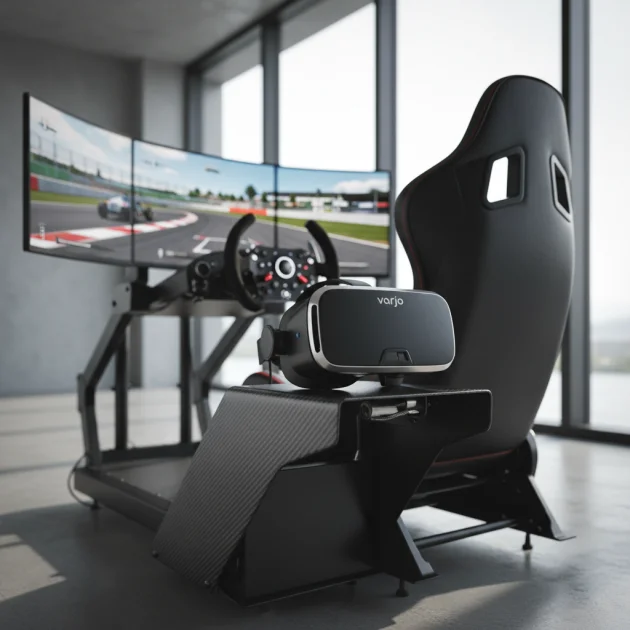
The Varjo Aero is the best Varjo VR headset for sim racing, offering exceptional visual clarity, a 90 Hz refresh rate, and a comfortable design critical for immersive and competitive virtual driving. Sim racers require precision and realism, and the Aero delivers with its industry-leading 2880 x 2720 pixels per eye resolution and superior optical quality. This guide details why the Aero is the top choice and compares it with other Varjo models to help you make an informed decision for your virtual cockpit.
Quick Comparison
| Feature | Varjo Aero | Varjo XR-3 | Varjo VR-3 |
|---|---|---|---|
| Resolution | 2880 x 2720 per eye | 2880 x 2720 per eye | 2880 x 2720 per eye |
| Field of View | 115 degrees horizontal | 87 degrees horizontal | 87 degrees horizontal |
| Refresh Rate | 90 Hz | 90 Hz | 90 Hz |
| Foveated Rendering | Yes | Yes | Yes |
| Price (Approx.) | $1,990 | $6,495 | $3,995 |
| Key Advantage for Sim Racing | High resolution, wide FOV, comfort | Mixed reality, industrial use | High resolution, industrial use |
What Sim Racing Needs from a VR Headset
Sim racing demands specific features from a VR headset to provide a truly immersive and competitive experience. High resolution is paramount; clear visuals allow drivers to accurately judge distances, spot apexes, and identify track details, directly impacting lap times. A wide field of view (FOV) is also crucial, mimicking natural peripheral vision, reducing tunnel vision, and enhancing situational awareness on the track. A high refresh rate, ideally 90Hz or above, ensures smooth motion and reduces motion sickness, vital during fast-paced races with rapid camera movements. Comfort is another significant factor, as sim racing sessions can last for hours. A lightweight design with balanced weight distribution and effective ventilation prevents discomfort and fatigue. Finally, precise tracking is essential for accurate head movements, ensuring the virtual cockpit view perfectly matches the driver’s real-world head position, preventing disorientation and enhancing realism.
Detailed Reviews
Varjo Aero
The Varjo Aero is specifically designed for prosumers and enthusiasts, making it an ideal choice for serious sim racers. Its standout feature is the dual mini-LED displays, offering a stunning 2880 x 2720 pixels per eye. This resolution provides unparalleled clarity, allowing drivers to see intricate track details, distant braking points, and competitor positions with exceptional sharpness. The 115-degree horizontal field of view is generous, enhancing immersion by providing wider peripheral vision, crucial for anticipating turns and monitoring side-by-side racing. With a 90Hz refresh rate, the Aero ensures smooth motion, minimizing motion sickness during intense races. The headset also features automatic IPD adjustment and a comfortable, balanced design, making it suitable for extended use. Its foveated rendering optimizes performance by rendering the area you’re looking at in full detail while reducing detail in your peripheral vision, maximizing GPU efficiency without sacrificing visual quality where it matters most.
Varjo XR-3
While the Varjo XR-3 offers cutting-edge mixed reality capabilities, its primary focus is on industrial and professional applications rather than pure sim racing. The XR-3 shares the same high resolution (2880 x 2720 per eye) and 90Hz refresh rate as the Aero, ensuring excellent visual fidelity and smooth motion. However, its field of view is narrower at 87 degrees horizontal, which can be a slight disadvantage for sim racing compared to the Aero’s wider FOV. The key differentiator is its advanced mixed reality pass-through cameras, which allow for seamless blending of virtual content with the real world. While impressive for training simulations and design reviews, these features add significant cost and complexity that are not directly beneficial for a dedicated sim racing setup. The XR-3 is a powerful device, but its specialized features make it an overkill and less cost-effective option for sim racers who prioritize pure virtual reality performance.
Varjo VR-3
The Varjo VR-3 is another high-end headset primarily aimed at professional users, offering exceptional visual quality for demanding applications. It features the same 2880 x 2720 pixels per eye resolution and a 90Hz refresh rate, delivering crisp visuals and fluid motion. Like the XR-3, its field of view is 87 degrees horizontal, which is good but not as expansive as the Aero. The VR-3 excels in color accuracy and contrast, making it suitable for detailed visual work. However, similar to the XR-3, its design and feature set are optimized for industrial use cases, such as design visualization, engineering, and medical training. While it provides a premium VR experience, it lacks the specific ergonomic and FOV advantages that make the Aero a more tailored choice for sim racing enthusiasts. The VR-3 is a robust and capable headset, but its professional-grade features might not translate into a superior sim racing experience compared to the more focused Aero, especially considering its higher price point.
Routine Fit
For sim racers, the Varjo Aero seamlessly integrates into a dedicated racing setup, enhancing the routine of competitive driving. Its plug-and-play compatibility with popular sim racing titles and platforms means less setup time and more time on the track. The comfortable fit, with its balanced weight and adjustable head strap, allows for extended racing sessions without discomfort, crucial for endurance races or long practice stints. The high resolution and wide field of view directly translate to better performance, enabling quicker reaction times and more precise car control. This makes the Aero an essential tool for those who regularly participate in online leagues or strive for personal bests. Its robust build quality ensures durability, standing up to the rigors of frequent use in a sim racing environment, making it a reliable part of any serious racer’s routine.
FAQs
What makes Varjo headsets good for sim racing?
Varjo headsets excel in sim racing primarily due to their industry-leading resolution and optical clarity. Models like the Varjo Aero offer incredibly sharp visuals, allowing sim racers to accurately perceive track details, braking points, and other vehicles with exceptional precision. This high fidelity reduces eye strain and enhances immersion, making the virtual racing experience feel more realistic. Additionally, their high refresh rates ensure smooth motion, which is crucial for fast-paced racing simulations to prevent motion sickness and maintain a competitive edge. The robust build quality and advanced tracking systems also contribute to a reliable and consistent performance during intense racing sessions.
Is the Varjo Aero worth the investment for sim racing?
For serious sim racing enthusiasts and professionals, the Varjo Aero is generally considered a worthwhile investment. Its superior resolution, wide field of view, and comfortable design directly translate to a more immersive and competitive racing experience. The ability to clearly see distant details and track apexes provides a significant advantage. While the price point is higher than many consumer VR headsets, the performance gains in visual fidelity and overall immersion justify the cost for those who prioritize the ultimate sim racing setup. It’s an investment in a premium experience that can improve a racer’s skill and enjoyment.
How does Varjo’s foveated rendering benefit sim racing?
Varjo’s foveated rendering technology significantly benefits sim racing by optimizing graphical performance without compromising visual quality where it matters most. This technology tracks the user’s gaze and renders the area they are directly looking at in full, ultra-high resolution, while reducing the detail in their peripheral vision. In sim racing, this means the track ahead, dashboard, and mirrors are always rendered with maximum clarity, while less critical areas are rendered at a lower resolution. This intelligent rendering approach reduces the computational load on the graphics card, allowing for smoother frame rates and a more consistent experience, even with demanding racing simulations.
Can I use Varjo headsets with popular sim racing games?
Yes, Varjo headsets are compatible with popular sim racing games and platforms that support OpenVR or SteamVR. This includes titles like iRacing, Assetto Corsa Competizione, rFactor 2, and others. Varjo provides drivers and software that integrate with these platforms, allowing users to launch their favorite racing simulations and experience them with the headset’s high-fidelity visuals. While some initial setup and configuration might be required, the overall compatibility ensures that sim racers can enjoy a wide range of content with their Varjo headset, leveraging its advanced features for an enhanced gaming experience.
What are the alternatives to Varjo for high-end sim racing?
While Varjo headsets offer top-tier performance, several other high-end VR headsets are popular among sim racers. These include the HP Reverb G2, known for its high resolution and relatively affordable price, and the Pimax series, which offers an extremely wide field of view. The Valve Index is also a strong contender, providing excellent tracking and a comfortable experience. Each of these alternatives has its own strengths and weaknesses regarding resolution, FOV, refresh rate, and price. However, for pure visual clarity and professional-grade optics, Varjo often remains a benchmark, especially for those seeking the absolute best in visual fidelity for their sim racing setup.
Verdict
For sim racing enthusiasts seeking the pinnacle of visual fidelity and immersion, the Varjo Aero stands out as the premier choice among Varjo’s offerings. Its exceptional resolution, wide field of view, and comfortable design are perfectly aligned with the demands of competitive virtual driving. While the Varjo XR-3 and VR-3 offer advanced features, their industrial focus and higher price points make them less suitable for dedicated sim racing. The Aero strikes the optimal balance between performance, features, and cost for serious sim racers, providing an unparalleled experience that translates directly into improved precision and enjoyment on the track.
Frequently Asked Questions
What makes Varjo headsets particularly good for sim racing?
Varjo headsets excel in sim racing due to their industry-leading resolution of 2880 x 2720 pixels per eye and optical clarity. This high fidelity allows sim racers to accurately perceive track details and braking points with exceptional precision, reducing eye strain and enhancing immersion. Their high refresh rates, typically 90Hz, ensure smooth motion crucial for fast-paced simulations.
Is the Varjo Aero a worthwhile investment for serious sim racers?
For serious sim racing enthusiasts and professionals, the Varjo Aero is generally considered a worthwhile investment. Its superior resolution, wide 115-degree field of view, and comfortable design directly translate to a more immersive and competitive racing experience. The ability to clearly see distant details and track apexes provides a significant advantage, justifying its premium price point.
How does foveated rendering in Varjo headsets benefit sim racing performance?
Varjo's foveated rendering technology significantly benefits sim racing by optimizing graphical performance without compromising visual quality where it matters most. It tracks the user's gaze, rendering the area of direct focus in full, ultra-high resolution while reducing detail in peripheral vision. This reduces the computational load on the graphics card, allowing for smoother frame rates and a more consistent experience in demanding racing simulations.
Are Varjo VR headsets compatible with popular sim racing games?
Yes, Varjo headsets are compatible with popular sim racing games and platforms that support OpenVR or SteamVR, such as iRacing, Assetto Corsa Competizione, and rFactor 2. Varjo provides necessary drivers and software for integration, allowing users to experience a wide range of content with high-fidelity visuals. Some initial setup and configuration may be required.
What are some high-end alternatives to Varjo headsets for sim racing?
While Varjo headsets offer top-tier performance, other high-end VR headsets popular among sim racers include the HP Reverb G2, known for its high resolution, and the Pimax series, which offers an extremely wide field of view. The Valve Index is also a strong contender, providing excellent tracking and a comfortable experience. Each offers different strengths in resolution, FOV, refresh rate, and price.
Get our weekly buyer guide
Practical specs, not advice. Unsubscribe anytime.
I got the Varjo Aero mainly for the wide 115 degrees horizontal field of view, and it does deliver on that front. However, I’ve had some minor issues getting it set up perfectly with my existing sim rig. It took a bit more tweaking than I expected, which was a little frustrating. Once it’s running, though, the visuals are great.
Coming from an older headset, the Varjo Aero is a revelation. The superior optical quality makes such a difference in immersion. I was comparing it to the Varjo VR-3, but the Aero’s focus on sim racing really sealed the deal for me. It’s truly built for virtual cockpits.
The 90 Hz refresh rate on the Varjo Aero is super smooth, no complaints there. I was a bit worried about the comfort for long sessions, but it’s surprisingly good, even with my glasses. My only minor gripe is the price point, it’s a significant investment, but the performance for sim racing is top-tier.
I finally pulled the trigger on the Varjo Aero after reading about its 2880 x 2720 pixels per eye resolution. It’s a game-changer for sim racing, the clarity is just insane. I can actually see the apex much better now, which has definitely improved my lap times. Worth every penny for serious racers.