The PlayStation VR2 (PS VR2) headset is Sony’s second-generation virtual reality system, designed exclusively for the PlayStation 5 console, offering a significant upgrade over its 2016 predecessor with 4K HDR OLED visuals, advanced haptics, and intelligent eye tracking. It connects via a single USB-C cable, leveraging the PS5’s processing power for high-fidelity VR experiences. This guide details its cutting-edge technology and game library, making it a compelling accessory for PS5 owners.
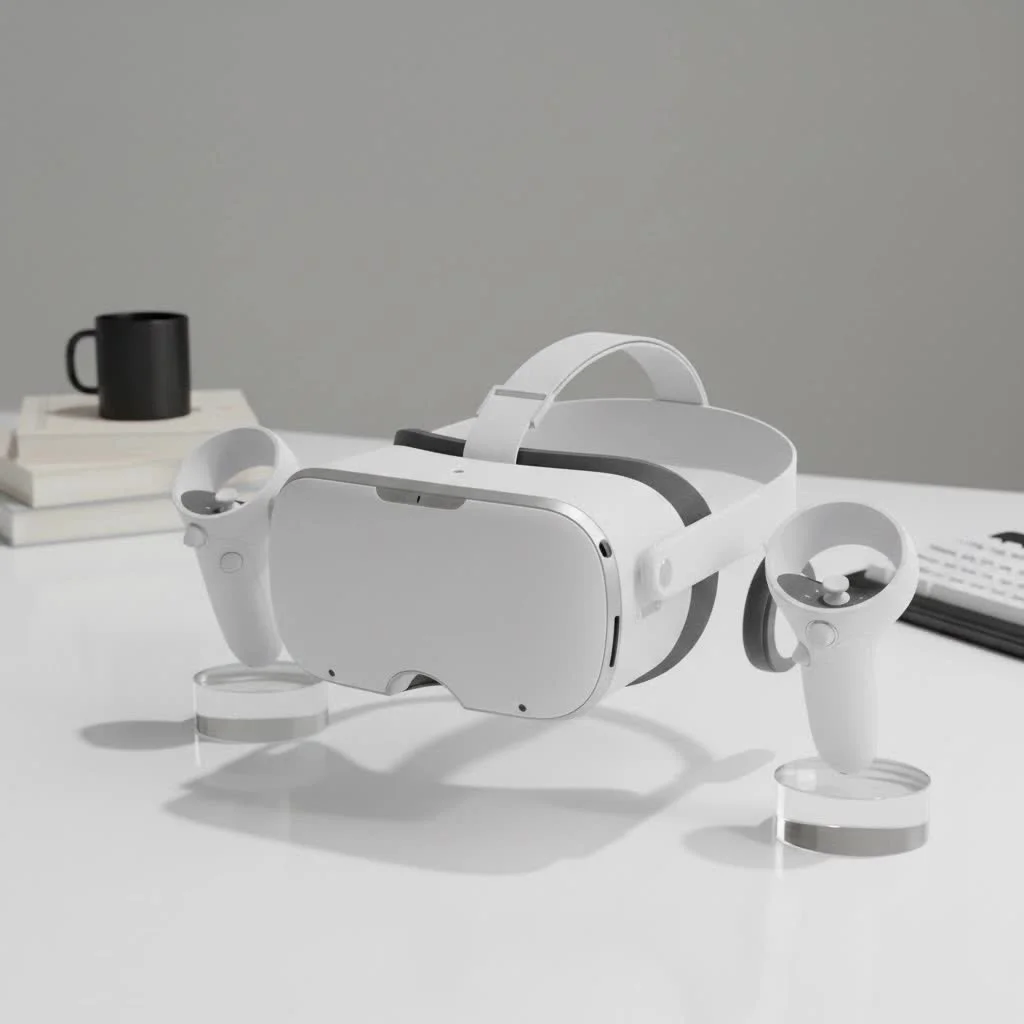
As a long-time VR enthusiast and creator at MNWFC, I’ve seen headsets come and go. But the PS VR2 feels different. It represents a significant leap forward in accessible, high-fidelity virtual reality, seamlessly integrating with one of the most powerful consoles on the market. For best virtual reality roundups on this site.
What Exactly is the PlayStation VR2?
The PlayStation VR2 is Sony’s second-generation virtual reality system designed exclusively for the PlayStation 5 console. It’s a complete overhaul of the original 2016 model, boasting significant upgrades in every department. Unlike standalone headsets, the PS VR2 leverages the formidable processing power of the PS5 to deliver high-end VR experiences that were previously the domain of expensive PC setups. It achieves this through a simple, single USB-C cable connection, making setup remarkably straightforward.
Key Features That Redefine Console VR
The magic of the PS VR2 lies in its combination of advanced technologies working in harmony. It’s not just about what you see; it’s about what you feel and how you interact with the digital environment.
Breathtaking Visuals: 4K HDR OLED Display
The first thing you’ll notice when you put on the PlayStation VR headset is the stunning visual clarity. The PS VR2 is equipped with two OLED panels that deliver a combined resolution of 4000 x 2040 pixels (2000 x 2040 per eye). This means sharp, vibrant images with deep blacks and brilliant highlights, all thanks to the power of 4K HDR. The display also supports refresh rates of 90Hz and 120Hz, ensuring fluid, buttery-smooth motion that is critical for comfortable and immersive VR. With a 110-degree field of view, the game world feels expansive and enveloping, minimizing the “looking through binoculars” effect found in some older headsets.
Feel the Game: Headset Haptics and Sense Controllers
Immersion goes beyond visuals, and this is where the PS VR2 truly shines. It is one of the first mainstream headsets to incorporate haptic feedback directly into the headset itself. Imagine feeling the rush of wind as a dragon flies overhead or the subtle rumble of a nearby explosion. This sensory feedback adds a new layer of physical connection to the game.
This is complemented by the revolutionary PlayStation VR2 Sense controllers. Each controller features:
- Haptic Feedback: Similar to the PS5’s DualSense controller, providing nuanced vibrations that simulate textures and impacts.
- Adaptive Triggers: The R2 and L2 buttons can provide variable resistance, mimicking the tension of drawing a bowstring or the kickback of a firearm.
- Finger Touch Detection: The controllers can sense the position of your fingers without you needing to press any buttons, allowing for more natural gestures in-game.
“The integration of headset haptics with controller feedback is a genuine game-changer,” notes Dr. Alistair Finch, a digital immersion specialist. “It creates a complete sensory loop that significantly enhances player presence and emotional connection to the virtual environment. It’s a crucial step toward true immersion.”
Intelligent Immersion: Eye Tracking and Foveated Rendering
|
Our Picks for the Best VR Headset in 2026
As an Amazon Associate I earn from qualifying purchases.
|
||
| Num | Product | Action |
|---|---|---|
| 1 | PlayStation VR2 (PSVR2) |

|
| 2 | Oculus Quest 2 VR Headset 128GB Holiday Set - Advanced All-in-One Virtual Reality Headset Cover Set, White |
|
| 3 | VR Headset for Nintendo Switch 2 (2025), Switch 2 Virtual Reality VR Glasses with Adjustable HD Lenses and Comfortable Head Strap, Labo VR Kit 3D Goggles for Switch 2 Accessories, White&Blue |
|
| 4 | PlayStation VR2 Horizon Call of The Mountain™ Bundle (PSVR2) |
|
| 5 | VR Headset for Phone, Virtual Reality Glasses with Bluetooth Headphones for Adults and Kids Play 3D VR Games Movies (White VR Only) |
|
| 6 | Meta Quest 2 — Advanced All-In-One Virtual Reality Headset — 256 GB (Renewed) |
|
| 7 | FEEBZ 3D VR Headset for Kids 2.0 + Android Remote - for iPhone & Android Phones - with 3D VR Videos & Apps Links - Virtual Reality Goggles Set for Beginners |
|
| 8 | DESTEK V5 VR Headset for Kids w/VR Gamepad, 128 Premium VR apps Included, Anti-Blue Eyes Protected HD Lenses, 110° FOV Virtual Reality Headsets for iPhone, Android Phone- Black |
|
| 9 | Oculus Quest 2 Advanced All-in-One Virtual Reality Gmaing VR Headset 128GB Set, White |
|
| 10 | FEEBZ 3D VR Headset for Kids 2.0 + Android Remote - for iPhone & Android Phones - with 3D VR Videos & Apps Links - Virtual Reality Goggles Set for Beginners |
|
Perhaps the most advanced feature of the PlayStation VR headset is its built-in eye tracking. Tiny infrared cameras inside the headset follow the movement of your pupils. This technology unlocks several key benefits:
- Foveated Rendering: This is a clever optimization technique. The headset renders the part of the scene you are directly looking at in the highest resolution, while peripheral areas are rendered at a lower quality. Since the human eye only sees a small central area in sharp focus anyway, this process is virtually imperceptible but dramatically frees up the PS5’s processing power, allowing for more detailed graphics overall.
- Enhanced Control: Some games use eye tracking as a control input, allowing you to select menu items or aim simply by looking at them.
- Social Interaction: In multiplayer games, eye tracking allows your avatar to mimic your eye movements, leading to more realistic and expressive social interactions.
Is the PlayStation VR Headset Worth Your Money?
This is the ultimate question for any potential buyer. The PS VR2 is a significant investment, and its value depends heavily on your gaming habits and expectations.
The Game Library: A Growing Roster of Hits
At launch, the PS VR2’s library was promising but limited. However, it has steadily grown with a mix of exclusive titles and VR versions of popular flat-screen games. Titles like Horizon Call of the Mountain serve as stunning showcases for the hardware, while VR modes for games like Gran Turismo 7 and Resident Evil Village offer unparalleled immersion. The library is curated for quality, with developers leveraging the unique features of the headset. While it doesn’t have the sheer quantity of a platform like the Meta Quest Store, the top-tier titles are among the best VR experiences available anywhere.
Setup and Comfort: A User-Friendly Experience
Sony learned a lot from the complex, multi-cable setup of the original PS VR. The PS VR2 is a masterclass in simplicity. You plug a single USB-C cable from the headset directly into the front of your PS5. That’s it. The initial software setup guides you through scanning your room to establish a play area and calibrating the eye tracking.
The headset itself is well-balanced and adjustable. The “halo” strap design places the weight on your forehead rather than your cheeks, and a simple dial tightens it for a secure fit. It’s designed to be comfortable for extended play sessions and can easily accommodate players who wear glasses.
How Does It Compare to the Competition?
The main competitor for the PlayStation VR headset is the standalone Meta Quest 3. The choice between them comes down to your priorities.
| Feature | PlayStation VR2 | Meta Quest 3 |
|---|---|---|
| Platform | Requires PlayStation 5 console | Standalone (no PC or console needed) |
| Power Source | Powered by the PS5 | Internal processor (Snapdragon XR2 Gen 2) |
| Display | 4K HDR OLED | LCD with “pancake” lenses |
| Key Tech | Eye Tracking, Headset Haptics, Adaptive Triggers | Mixed Reality (full-color passthrough), Wireless |
| Primary Use Case | High-fidelity, immersive console gaming | All-in-one VR, Mixed Reality, Social VR |
| Connection | Single USB-C cable | Wireless |
The PS VR2 is for the gamer who wants the highest possible visual fidelity and immersion, powered by their PS5. The Quest 3 is for the user who values the freedom of a wireless, standalone device and is interested in a broader range of apps and mixed reality experiences.
Frequently Asked Questions (FAQ)
What do you need to use the PlayStation VR2 headset? You must have a PlayStation 5 console (either the standard or digital edition). The PS VR2 is not compatible with the PlayStation 4.
Can I play original PS VR games on the PS VR2? No, the PlayStation VR2 is not backward compatible with games designed for the original PS VR. The underlying technology for tracking and control is completely different. However, some developers have released upgraded PS VR2 versions of their original PS VR titles.
Is the PlayStation VR headset comfortable for people with glasses? Yes, the headset is designed with ample space and an adjustable scope to comfortably accommodate most eyeglasses.
How long is the cable on the PS VR2? The cable is approximately 4.5 meters (about 14.7 feet) long, providing a good amount of freedom for room-scale VR experiences.
Does the PS VR2 require external cameras or sensors? No, it uses “inside-out” tracking. Four cameras built into the headset itself track its position and the position of the Sense controllers, eliminating the need for any external tracking devices.
The Final Verdict
The PlayStation VR headset, specifically the PS VR2, is a phenomenal piece of technology that offers a truly next-generation virtual reality experience for PS5 owners. Its stunning 4K HDR OLED display, innovative haptics, and intelligent eye-tracking create a level of immersion that is hard to beat without a high-end gaming PC. While the game library is still growing, the quality of its flagship titles is undeniable.
If you already own a PS5 and are eager to experience the future of gaming, the PS VR2 is an exceptional and highly recommended upgrade. It transforms your console from a simple gaming machine into a gateway to new, incredibly immersive worlds. It’s time to stop just playing the game and start living it.
Get our weekly buyer guide
Practical specs, not advice. Unsubscribe anytime.
I’ve been waiting for a true next-gen VR experience on my PS5, and the PS VR2 delivers! The 4K HDR OLED visuals are absolutely stunning, making games like Horizon Call of the Mountain feel incredibly immersive. The single USB-C cable setup is also a huge improvement over the original PSVR’s mess of wires. Definitely worth the investment for any PS5 owner.
The haptic feedback in the PS VR2 controllers and headset is a game-changer. Feeling the subtle vibrations as I move through virtual worlds adds so much to the immersion. My only minor complaint is that the initial setup for the play area can be a bit finicky, but once it’s done, it’s smooth sailing. Great upgrade from the first gen.
I was really excited for the intelligent eye tracking feature, and it works pretty well for foveated rendering. However, I found that sometimes the tracking would lose my eyes if I moved my head too quickly, which was a bit distracting. It’s still a good headset, but that specific feature could use a little more polish. The game library is growing, which is a plus.
As someone who’s owned multiple VR headsets, the PS VR2’s integration with the PS5’s processing power is fantastic. Games run incredibly smoothly, and the load times are minimal. It truly feels like a premium VR experience without needing a high-end PC. The comfort is also surprisingly good for long play sessions.