Stepping into the world of virtual reality can feel like entering a futuristic dream, full of wonder and immersive experiences. For many, the journey began with the Oculus Quest 2 – a device that, despite approaching its fifth anniversary, remains an undisputed titan in the VR landscape. But with newer, more powerful headsets now on the market, you might be asking yourself: Is the Oculus Quest 2 still worth investing in during 2025?
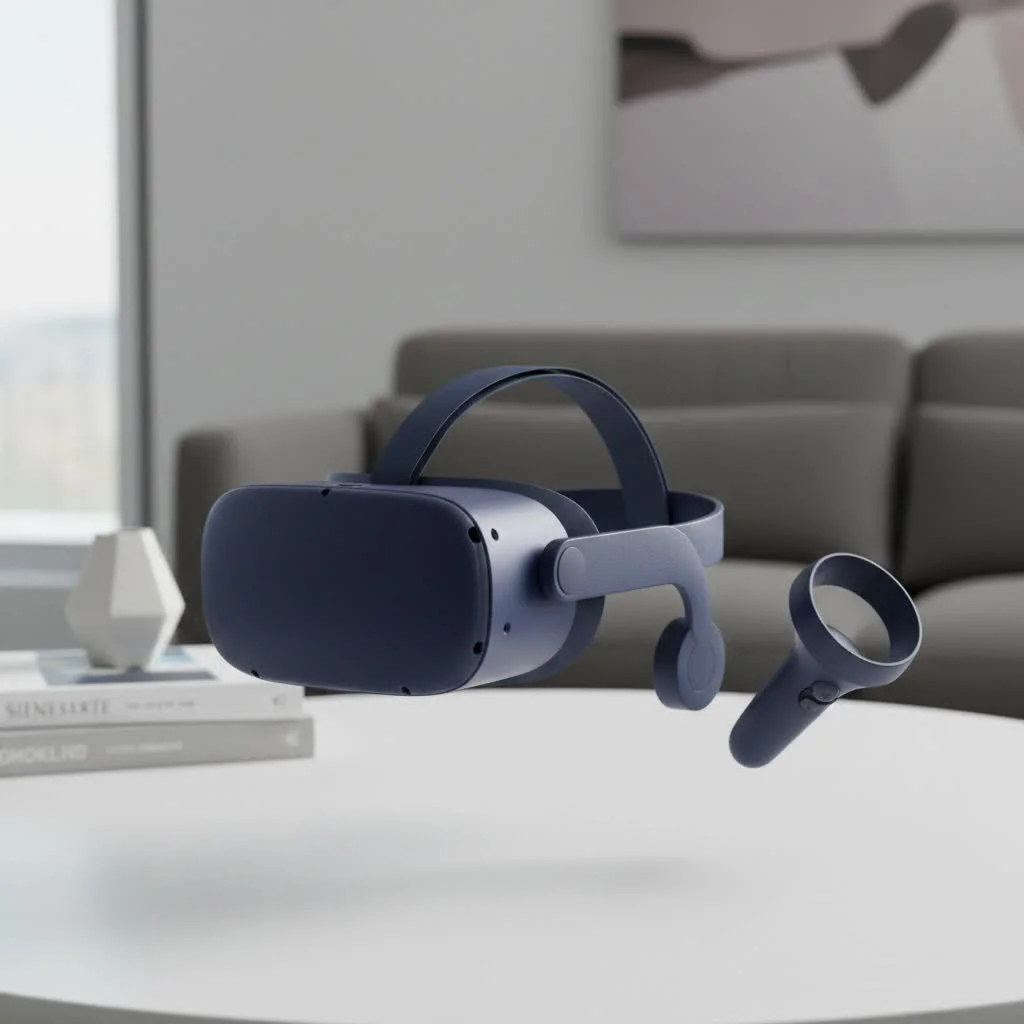
As a seasoned VR expert and content creator for MNWFC.com, I’ve seen countless headsets come and go. The Oculus Quest 2, now officially known as the Meta Quest 2, holds a special place, having democratized VR for millions. It struck a near-perfect balance of accessibility, performance, and affordability at its launch. Today, its role has shifted slightly, transitioning from the cutting-edge champion to a venerable workhorse, especially for those looking to dip their toes into virtual worlds without breaking the bank. Let’s dive deep into what makes the Oculus Quest 2 tick in 2025 and help you decide if it’s the right VR headset for your adventures.
The Enduring Appeal of the Meta Quest 2
Even in 2025, the Meta Quest 2 continues to capture imaginations, primarily due to its incredible value proposition. It remains the most popular virtual reality headset ever released, a testament to its design and execution. The sheer accessibility it offers is unparalleled, especially for newcomers to VR. Imagine unboxing a device, putting it on, and being transported into vibrant virtual worlds within minutes – no complex PC setup, no tangled wires. That’s the core promise of this standalone VR headset.
The significant price reduction has made the Oculus Quest 2 an incredibly affordable gateway into virtual reality. While newer models push the boundaries of performance and visual fidelity, the Quest 2’s lower entry cost means more people can experience VR firsthand. It’s like buying a reliable, well-loved car: it might not have all the latest bells and whistles, but it gets you where you need to go with plenty of fun along the way. The Meta Quest Store boasts a truly vast library of games and applications, from rhythm action games like Beat Saber to narrative-driven adventures, ensuring there’s something for everyone right out of the box.
Oculus Quest 2: Specs and Performance in Today’s Landscape
Let’s talk brass tacks. The Meta Quest 2, at its heart, is powered by a Qualcomm Snapdragon XR2 Gen 1 processor and features 6GB of RAM. For its time, this hardware provided a remarkably smooth and immersive experience. Visuals are delivered through an 1832 x 1920 pixels per eye Fast-Switch LCD display, offering decent clarity, complemented by a refresh rate that can go up to 90Hz. This combination still allows for lifelike virtual reality experiences, making digital worlds feel tangible and engaging.
When it comes to movement and interaction, the Oculus Quest 2 shines with its advanced tracking technology. Four external cameras strategically placed on the headset accurately detect its position and orientation, along with the Touch controllers, allowing for free movement within virtual spaces. Furthermore, its impressive hand-tracking feature lets you ditch the controllers entirely, interacting with virtual objects using just your natural hand gestures. This adds an intuitive layer of immersion that truly elevates the experience.
However, it’s crucial to acknowledge that the VR landscape has evolved. In 2025, the Quest 2’s Snapdragon XR2 Gen 1 processor has been surpassed by the XR2 Gen 2 chipsets found in the newer Quest 3 and Quest 3S, which boast roughly twice the graphical performance. These newer headsets also feature “pancake lenses” which offer a significantly clearer image across the entire field of view, addressing one of the common complaints about the Quest 2’s Fresnel lenses. While the Quest 2 still delivers solid performance for most existing content, the cutting-edge games and applications of tomorrow will increasingly be optimized for the latest hardware.
The Ups and Downs of Owning a Quest 2 in 2025
Every piece of technology has its strengths and weaknesses, and the Oculus Quest 2 is no exception. Understanding these can help you manage your expectations and ensure it’s the right fit for you.
What You’ll Love (Pros):
|
Our Picks for the Best VR Headset in 2026
As an Amazon Associate I earn from qualifying purchases.
|
||
| Num | Product | Action |
|---|---|---|
| 1 | Oculus Quest 2 Advanced All-in-One Virtual Reality Gmaing VR Headset 128GB Set, White |

|
| 2 | Meta Quest 2 — Advanced All-In-One Virtual Reality Headset — 256 GB (Renewed) |
|
| 3 | Oculus Quest 2 VR Headset 128GB Holiday Set - Advanced All-in-One Virtual Reality Headset Cover Set, White |
|
| 4 | DESTEK V5 VR Headset for Kids w/VR Gamepad, 128 Premium VR apps Included, Anti-Blue Eyes Protected HD Lenses, 110° FOV Virtual Reality Headsets for iPhone, Android Phone- Black |
|
| 5 | VR Headset for Nintendo Switch 2 (2025), Switch 2 Virtual Reality VR Glasses with Adjustable HD Lenses and Comfortable Head Strap, Labo VR Kit 3D Goggles for Switch 2 Accessories, White&Blue |
|
| 6 | PlayStation VR2 (PSVR2) |
|
| 7 | FEEBZ 3D VR Headset for Kids 2.0 + Android Remote - for iPhone & Android Phones - with 3D VR Videos & Apps Links - Virtual Reality Goggles Set for Beginners |
|
| 8 | FEEBZ 3D VR Headset for Kids 2.0 + Android Remote - for iPhone & Android Phones - with 3D VR Videos & Apps Links - Virtual Reality Goggles Set for Beginners |
|
| 9 | VR Headset for Phone, Virtual Reality Glasses with Bluetooth Headphones for Adults and Kids Play 3D VR Games Movies (White VR Only) |
|
| 10 | PlayStation VR2 Horizon Call of The Mountain™ Bundle (PSVR2) |
|
- Direct Access to a Huge Content Library: The Meta Quest store is brimming with exclusive titles and popular games. You’ll have a wealth of experiences at your fingertips, ready to download and play immediately.
- Self-Contained and Wireless Freedom: No wires, no external sensors, no powerful PC needed (unless you choose to connect it). The Quest 2 offers unparalleled freedom to move and explore virtual worlds anywhere you have space.
- PC VR Capability: For those with a capable gaming PC, the Quest 2 can transform into a formidable PC VR headset via a Link cable, Steam Link, or Virtual Desktop, unlocking graphically intensive titles like Half-Life: Alyx.
- Unbeatable Affordability: With its permanent price reduction and strong presence in the second-hand market, the Oculus Quest 2 offers exceptional value for money, making it the most budget-friendly entry point into VR.
What You Should Consider (Cons):
- Comfort for Long Sessions: The default head strap can be uncomfortable, and the headset’s front-heavy design can lead to pressure on the face and forehead. Prolonged use can also make your face feel warm or sweaty. Many users invest in aftermarket head straps for better weight distribution and comfort.
- Battery Life Limitations: Expect around 2-3 hours of battery life on a full charge, which might feel short for extended gaming sessions. This can be mitigated with an external battery pack or an Elite Strap with Battery accessory.
- Aging Resolution and Lenses: While good for its time, the resolution isn’t as crisp as newer headsets, and the Fresnel lenses can introduce “sweet spot” issues, requiring users to move their head instead of just their eyes for optimal clarity, especially with text.
- Outdated Hardware: The Snapdragon XR2 Gen 1 processor is now a generation behind. While still capable of running most existing VR content, new, graphically demanding titles are increasingly pushing its limits, and some might not even be released for the Quest 2 in the future.
- Basic Passthrough: The passthrough camera, which allows you to see your real-world surroundings, is functional but monochrome and lower resolution compared to the full-color, higher-fidelity passthrough on newer devices.
“The Quest 2, even in 2025, remains a phenomenal starting point for anyone curious about VR. Its affordability and vast content library make it an ideal choice for first-time users,” comments Dr. Evelyn Reed, a leading VR researcher at the Global Immersive Tech Institute. “However, users should be aware that the comfort and visual clarity, while excellent for its initial release, are now significantly outpaced by current-generation hardware. It’s a classic example of a ‘get what you pay for’ scenario, offering immense value at its price point.”
Who is the Oculus Quest 2 For in 2025?
Given its current standing, the Oculus Quest 2 isn’t for everyone. However, it still holds immense appeal for specific user groups:
- The Budget-Conscious Newcomer: If you’re looking for the absolute cheapest way to experience standalone VR and aren’t ready to drop significant cash on a cutting-edge device, the Quest 2 is your best bet. Especially if you can find a well-maintained second-hand unit for under $100, it offers incredible value.
- Casual VR Gamers: For those who primarily want to play established VR hits like Beat Saber, Superhot VR, or Rec Room, and aren’t overly concerned with the latest graphical advancements, the Quest 2 delivers a fantastic experience.
- Families or Social VR Users: Its ease of use and standalone nature make it perfect for sharing VR experiences with friends and family without needing additional equipment.
- PC VR Enthusiasts on a Budget: If you already own a powerful gaming PC and simply need a wireless headset to access your SteamVR library, the Quest 2 can serve as an excellent, cost-effective tethered or wireless PC VR solution.
If you prioritize the absolute best graphics, unparalleled comfort for marathon sessions, or mixed reality capabilities, then you might find the Meta Quest 3 or upcoming Quest 3S to be more suitable, despite their higher price tags.
Frequently Asked Questions About the Oculus Quest 2
Is the Oculus Quest 2 still supported by Meta in 2025?
Yes, the Meta Quest 2 still receives software updates and Meta continues to support its extensive content library. However, over time, new games may increasingly prioritize newer hardware, potentially leading to fewer new releases or less optimal performance on the Quest 2.
How much does an Oculus Quest 2 cost in 2025?
A new Meta Quest 2 typically sells for around $250. You can often find used units for significantly less, sometimes even under $100, which can be an excellent deal for first-time VR users.
Can the Quest 2 play PC VR games?
Absolutely! The Oculus Quest 2 can connect to a VR-ready PC via a Meta Link cable, Steam Link, or Virtual Desktop, allowing you to play PC VR titles like Half-Life: Alyx and many others from platforms like SteamVR.
What are the main alternatives to the Quest 2?
The primary alternatives from Meta are the Quest 3 and Quest 3S, offering superior performance, improved lenses, and enhanced passthrough mixed reality. Other standalone options include the Pico 4, which offers a higher resolution display.
How long does the Quest 2 battery last?
The Meta Quest 2 typically provides about 2-3 hours of battery life for gaming, or slightly longer for media consumption. This can be extended with external battery packs or accessories like the Meta Quest 2 Elite Strap with Battery.
Is it worth buying a used Quest 2?
Buying a used Quest 2 can be an excellent way to get into VR at a very low cost. If you can find one for under $100 and it’s in good condition with working controllers, it represents fantastic value.
Will new games stop working on Quest 2?
While Meta continues to support the Quest 2, developers for new, graphically intensive VR titles will increasingly optimize for the more powerful Quest 3 and 3S. This means some future games might not be released for Quest 2, or may run with reduced visual fidelity and performance.
Final Verdict: Your Journey into VR
In conclusion, the Oculus Quest 2 remains a highly relevant VR headset in 2025, particularly for those new to virtual reality or operating on a tight budget. Its accessibility, standalone functionality, and vast existing game library make it an incredibly attractive entry point. It’s truly a “bang for your buck” device, offering a complete and engaging VR experience at a fraction of the cost of its successors.
However, as a four-year-old device, it does come with certain compromises, primarily in terms of comfort for extended play, battery life, and overall graphical fidelity compared to the latest generation. If you demand the absolute best visuals, cutting-edge mixed reality features, and future-proof performance, then investing in a Quest 3 or Quest 3S would be a more suitable choice.
Ultimately, your decision to purchase an Oculus Quest 2 in 2025 boils down to your priorities and budget. If you’re eager to explore the magic of virtual reality without a hefty investment, the Meta Quest 2 still stands tall as a fantastic, affordable gateway. Dive in, experience the immersion, and discover a whole new world of digital adventures! What are your thoughts? Have you used a Quest 2 recently, or are you considering one? Share your experiences and questions in the comments below!
Get our weekly buyer guide
Practical specs, not advice. Unsubscribe anytime.