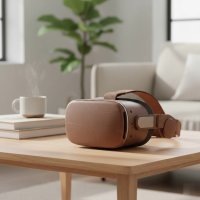
Stepping into the world of virtual reality often feels like peering into the future, and with the Meta Quest Pro VR headset, that future is firmly focused on productivity, collaboration, and cutting-edge mixed reality. This isn’t just another gaming device; it’s a sophisticated tool designed to revolutionize how professionals work, create, and interact within extended reality environments. If you’ve been wondering how virtual reality can truly integrate into your professional life, the Meta Quest Pro is a powerful answer.
What Sets the Meta Quest Pro Apart? A Glimpse into its Core Technology
The Meta Quest Pro isn’t merely an upgrade; it’s a re-imagining of what standalone VR can achieve, packed with advancements tailored for demanding users.
The Power Within: Processor, RAM, and Storage
At its heart, the Meta Quest Pro VR headset is powered by the Qualcomm Snapdragon XR2+ processor, a significant leap forward compared to its predecessors. This chipset boasts a claimed 50% increase in computing power over the standard XR2 found in many other VR headsets, allowing for more complex applications and smoother performance. Complementing this robust processor are 12GB of fast LPDDR5 RAM and 256GB of internal storage, providing ample space and speed for multitasking and high-fidelity experiences. This hardware foundation ensures the Quest Pro can handle professional-grade applications with ease, offering a fluid and responsive user experience.
Visual Brilliance: Display and Optics
Prepare for a visual feast with the Meta Quest Pro’s impressive display and optics. Featuring an 1800×1920 pixel resolution per eye, delivering a crisp 4K experience, and supporting refresh rates of 72Hz or 90Hz, the visuals are sharp and immersive. The standout innovation here is the use of pancake lenses, which allow for a much slimmer headset profile while dramatically improving visual clarity across the entire field of view. Additionally, a local dimming backlight system enhances contrast, and the display boasts a 130% larger color gamut compared to the Quest 2, resulting in richer, more vibrant colors that bring virtual worlds to life.
Seeing and Being Seen: Advanced Tracking Capabilities
The Meta Quest Pro truly excels in its tracking capabilities, setting a new industry standard. It incorporates a sophisticated array of ten cameras—five internal and five external—for unparalleled precision. Internally, eye-tracking cameras monitor your gaze, enabling foveated rendering where only the area you’re directly looking at is rendered in full detail, optimizing performance and battery life. Face-tracking cameras capture your expressions and micro-expressions, allowing your avatar to convey realistic emotions in social VR settings, making virtual meetings feel more human. Externally, five cameras provide robust 6DoF (six degrees of freedom) tracking, coupled with enhanced hand tracking that surpasses the Quest 2’s capabilities, letting you interact with virtual objects naturally, without controllers.
Your Digital Hands: The Revolutionary Touch Pro Controllers
|
Our Picks for the Best VR Headset in 2026
As an Amazon Associate I earn from qualifying purchases.
|
||
| Num | Product | Action |
|---|---|---|
| 1 | Oculus Quest 2 VR Headset 128GB Holiday Set - Advanced All-in-One Virtual Reality Headset Cover Set, White |

|
| 2 | Oculus Quest 2 Advanced All-in-One Virtual Reality Gmaing VR Headset 128GB Set, White |
|
| 3 | Meta Quest 2 — Advanced All-In-One Virtual Reality Headset — 256 GB (Renewed) |
|
| 4 | VR Headset for Nintendo Switch 2 (2025), Switch 2 Virtual Reality VR Glasses with Adjustable HD Lenses and Comfortable Head Strap, Labo VR Kit 3D Goggles for Switch 2 Accessories, White&Blue |
|
| 5 | PlayStation VR2 (PSVR2) |
|
| 6 | FEEBZ 3D VR Headset for Kids 2.0 + Android Remote - for iPhone & Android Phones - with 3D VR Videos & Apps Links - Virtual Reality Goggles Set for Beginners |
|
| 7 | PlayStation VR2 Horizon Call of The Mountain™ Bundle (PSVR2) |
|
| 8 | DESTEK V5 VR Headset for Kids w/VR Gamepad, 128 Premium VR apps Included, Anti-Blue Eyes Protected HD Lenses, 110° FOV Virtual Reality Headsets for iPhone, Android Phone- Black |
|
| 9 | VR Headset for Phone, Virtual Reality Glasses with Bluetooth Headphones for Adults and Kids Play 3D VR Games Movies (White VR Only) |
|
| 10 | FEEBZ 3D VR Headset for Kids 2.0 + Android Remote - for iPhone & Android Phones - with 3D VR Videos & Apps Links - Virtual Reality Goggles Set for Beginners |
|
The Meta Quest Pro’s Touch Pro controllers are a marvel of ergonomic design and advanced technology. Unlike previous generations that relied on the headset for tracking, these controllers are self-tracking, each housing its own Snapdragon 662 processor and three built-in sensors. This independent tracking provides a full 360-degree range of motion, ensuring accurate movement even when your hands are out of the headset’s line of sight. They feature advanced TruTouch Haptics, offering incredibly nuanced force feedback that adds a new layer of immersion. Lighter and more streamlined without the traditional tracking rings, these controllers also come with rechargeable batteries that last up to 8 hours, and a convenient wireless charging dock is included with the headset.
Blending Realities: The Full-Color Mixed Reality Passthrough
One of the most exciting features of the Meta Quest Pro VR headset is its full-color mixed reality passthrough. Utilizing its external cameras, the headset can display a relatively high-resolution color view of your real-world surroundings directly into your headset. This allows you to seamlessly blend virtual objects and interfaces with your physical environment, enhancing productivity and enabling new augmented reality (AR) applications. While still somewhat grainy compared to natural vision, it’s a significant improvement over the black-and-white passthrough of previous Quest models, making it possible to walk around your office or interact with a physical keyboard without removing the headset.
Design & Comfort: Engineered for Extended Sessions
Recognizing that professionals will spend extended periods in VR, Meta designed the Quest Pro with comfort and practicality in mind. Its sleek, all-black finish and premium build quality lend it a serious, professional aesthetic. The headset employs a balanced halo strap design, distributing its 722-gram weight (around 1.59 pounds) more evenly across your head, with the battery ingeniously placed in the rear for optimal weight balance.
The open-periphery design allows you to maintain awareness of your physical surroundings, which is crucial for mixed reality applications and helps prevent feelings of isolation. For immersive VR, optional magnetic side light blockers are included, and a full light blocker is available separately. A manual IPD (interpupillary distance) adjustment slider offers a wide range of 55mm-75mm, ensuring a comfortable and clear viewing experience for most users. Integrated speakers deliver excellent directional audio, and for those who prefer private listening or higher fidelity sound, two 3.5mm headphone jacks are thoughtfully included.
Who Is the Meta Quest Pro For? Unpacking Its Target Audience and Use Cases
The “Pro” in Meta Quest Pro isn’t just a marketing gimmick; it signifies a clear focus on enterprise, developers, and creative professionals. This headset is built for:
- Virtual Collaboration: Imagine conducting meetings in Meta Horizon Workrooms, where eye and face tracking allow your avatar to convey expressions, making virtual interactions more engaging and lifelike.
- Design and Architecture: Professionals in these fields can leverage mixed reality to visualize and manipulate 3D models in their physical space or collaborate on designs with colleagues in a shared virtual environment. Think of virtual whiteboards and interactive design reviews.
- Training and Simulation: From medical simulations to industrial training, the Quest Pro offers a powerful platform for immersive learning experiences that are both realistic and cost-effective.
- Developers and Early Adopters: For those building the next generation of VR and AR applications, the Quest Pro provides a robust development kit with advanced features like full-color passthrough and sophisticated tracking.
While consumers can purchase the Meta Quest Pro VR headset, its premium price tag (around $999.99 USD, though initially $1499.99) and current ecosystem of optimized apps make it less appealing for the average gamer compared to more consumer-focused options. It’s a tool for those who can genuinely integrate its advanced capabilities into their workflow and see a tangible return on investment.
The Real-World Impact: Pros and Cons of the Meta Quest Pro
Like any groundbreaking technology, the Meta Quest Pro comes with its share of strengths and weaknesses.
The Upsides: Where the Pro Shines
- Exceptional Comfort and Design: The balanced halo strap, open periphery, and premium materials make it comfortable for prolonged use.
- Industry-Leading Tracking: Eye, face, and hand tracking are precise and responsive, enhancing immersion and interaction.
- Stunning Visuals with Pancake Lenses: Offers superior clarity, contrast, and color compared to many other standalone headsets.
- Revolutionary Self-Tracking Controllers: The Touch Pro controllers offer unmatched freedom and haptic feedback.
- Robust Mixed Reality: Full-color passthrough opens up exciting possibilities for augmented reality and blended workspaces.
- Included Charging Dock: A convenient and essential accessory for keeping your headset and controllers ready.
The Downsides: Areas for Consideration
- High Price Point: Despite price drops, it remains a significant investment, especially for individual consumers.
- Limited Battery Life: The headset typically offers only 1-2 hours of use, necessitating frequent charging or tethered play.
- App Ecosystem Maturation: While growing, the number of applications fully optimized to leverage all of the Quest Pro’s advanced features, especially for productivity, is still evolving.
- Passthrough Graininess: While improved, the color passthrough is not yet perfectly seamless with reality.
- Manual IPD Adjustment: While wide-ranging, it lacks the automatic IPD adjustment seen in some high-end competitors.
Meta Quest Pro vs. Meta Quest 3: A Quick Comparison
It’s natural to compare the Meta Quest Pro VR headset with Meta’s more recent consumer offering, the Meta Quest 3. While the Quest Pro boasts advanced eye and face tracking, self-tracking controllers, and a professional-grade build, the Quest 3 (at a lower price point) actually features a higher display resolution per eye (2064×2208) and a faster refresh rate (up to 120Hz). The Quest 3 also offers excellent mixed reality capabilities. This means that for many general VR users or even some business applications, the Quest 3 might offer a more compelling value proposition, especially if the “Pro” features like eye and face tracking aren’t critical to their specific use case. The Quest Pro, however, still stands as Meta’s flagship for absolute fidelity in tracking and a truly professional-focused mixed reality experience.
Expert Insight: What Industry Leaders Are Saying
“The Meta Quest Pro is a clear indicator of where professional VR is heading,” says Dr. Anya Sharma, lead XR researcher at immersive tech think tank, Reality Forge. “Its combination of precise eye and face tracking with high-fidelity passthrough creates an unparalleled sense of presence and utility for collaboration and design. It’s not about replacing your physical desk, but augmenting it with infinite possibilities.”
Frequently Asked Questions (FAQ)
Q1: What is the primary difference between the Meta Quest Pro and the Meta Quest 2?
A1: The Meta Quest Pro is designed as a professional and enterprise-grade mixed reality headset with significantly advanced features like eye and face tracking, full-color passthrough, and self-tracking Touch Pro controllers, along with a more powerful processor and premium optics. The Quest 2 is a consumer-focused VR headset for gaming and entertainment.
Q2: Can the Meta Quest Pro be used for gaming?
A2: Yes, the Meta Quest Pro can play all Meta Quest 2 games and applications. However, its high price and focus on productivity mean it’s not primarily marketed as a gaming headset, and many games may not fully utilize its advanced features like eye and face tracking.
Q3: How long does the Meta Quest Pro’s battery last?
A3: The Meta Quest Pro headset typically offers 1 to 2 hours of battery life during active use. The Touch Pro controllers, however, have a much longer battery life of up to 8 hours.
Q4: Does the Meta Quest Pro require a PC to operate?
A4: No, the Meta Quest Pro is a standalone VR headset, meaning it operates independently without the need for a connected PC. It runs on its own internal processor and operating system.
Q5: What is “pancake optics” and why is it important for the Quest Pro?
A5: Pancake optics are a type of lens system that allows for a much shorter distance between the display and the lens, resulting in a significantly slimmer and lighter headset design. They also improve visual clarity across the entire field of view, reducing blurriness at the edges.
Q6: What are the main professional use cases for the Meta Quest Pro?
A6: The Meta Quest Pro is ideal for virtual collaboration in platforms like Horizon Workrooms, 3D design and modeling, architecture visualization, employee training simulations, and mixed reality application development.
Q7: Is the Meta Quest Pro still worth buying now that the Quest 3 is out?
A7: The Meta Quest Pro remains a strong choice for professionals who specifically need its advanced eye and face tracking, superior haptics, and the open-periphery design for mixed reality workflows. For general consumers or those prioritizing higher resolution and refresh rates at a lower cost, the Quest 3 might be a more suitable option.
Conclusion
The Meta Quest Pro VR headset represents a bold stride into the future of extended reality. It’s a powerful, comfortable, and highly capable device engineered for professionals, developers, and early adopters eager to harness the transformative potential of virtual and mixed reality. From seamless virtual collaboration to immersive design workflows and advanced training, the Quest Pro opens up new dimensions of productivity and interaction. While its premium price and specific feature set mean it’s not for everyone, for those truly invested in the next generation of digital work and creation, the Meta Quest Pro is an indispensable tool, leading the charge into an exciting, blended future. We at MNWFC believe it’s a pivotal piece of hardware that showcases just how far VR has come, and hints at the incredible journeys yet to come.
Get our weekly buyer guide
Practical specs, not advice. Unsubscribe anytime.