For years, the virtual reality landscape has been buzzing with anticipation, and now, Valve has officially lifted the curtain on its next-generation VR headset: the Valve Steam Frame. Previously known by its intriguing codename “Deckard,” this isn’t just another incremental upgrade; it represents a significant leap forward, designed to redefine how we experience VR. The Steam Frame aims to bridge the gap between powerful PC VR and convenient standalone devices, promising a versatile, high-fidelity experience that truly expands Valve’s Steam ecosystem. Get ready to dive deep into what makes this new headset a game-changer for enthusiasts and newcomers alike.
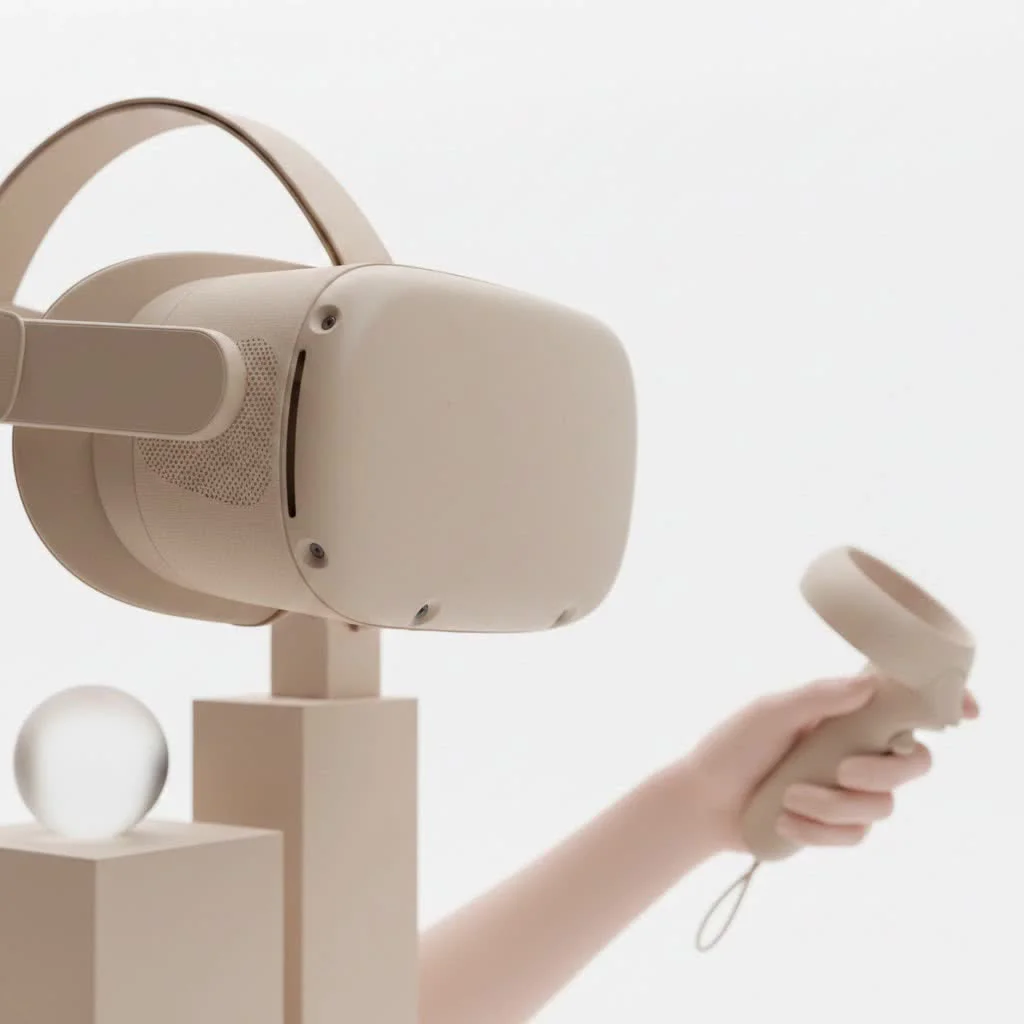
A New Era of Standalone Freedom with PC VR Flexibility
At its core, the Valve Steam Frame is a standalone virtual reality headset, a stark departure from its tethered predecessor, the Valve Index. This means you can pick it up and jump straight into your favorite VR worlds without being physically tied to a powerful gaming PC or needing cumbersome external “lighthouse” base stations scattered around your room. This newfound freedom is a massive convenience for casual users and a testament to advancements in mobile VR technology.
However, Valve hasn’t forgotten its roots in high-performance PC gaming. The Steam Frame is proudly “streaming-first,” equipped with an advanced wireless adapter that creates a low-latency, dedicated connection between the headset and your gaming PC. This innovative approach ensures that while you enjoy the portability of a standalone device, you can still tap into the raw power of your desktop rig for the most graphically demanding PC VR titles, enjoying a seamless, high-fidelity experience without the wires. It truly offers the best of both worlds, enabling users to switch effortlessly between mobile VR and top-tier PC VR.
What is the Valve Steam Frame?
The Valve Steam Frame is the company’s newest virtual reality headset, officially announced in November 2025 and expected to launch in early 2026. It is a standalone device that runs on a custom VR version of SteamOS, designed to be the successor to the highly regarded Valve Index, which has now ceased production.
Powering the Experience: SteamOS and Snapdragon 8 Gen 3
Underneath its sleek exterior, the Steam Frame packs a formidable punch. It’s powered by a Qualcomm Snapdragon 8 Gen 3 system-on-chip, coupled with 16 GB of unified LPDDR5X RAM. This mobile processor, a powerhouse in its own right, enables the headset to run a custom-tailored VR version of Valve’s Linux-based SteamOS, familiar to Steam Deck users.
What’s truly exciting is the evolved Proton compatibility layer integrated into Steam Frame. This allows the headset to natively run a vast array of games, including Linux, Windows, and even Android titles, expanding its library far beyond traditional VR-only content. For standalone use, this means access to a diverse gaming experience, though Valve acknowledges that many high-end titles will perform best when streamed from a PC. Storage won’t be an issue either, with models offering 256 GB or 1 TB of UFS internal storage, further expandable via a microSD card slot that’s even compatible with your Steam Deck.
Deep Dive into Cutting-Edge Technology
Valve has always been known for pushing the boundaries of VR technology, and the Steam Frame continues this tradition with a host of advanced features designed to deliver unparalleled immersion and comfort.
Crystal-Clear Displays and Advanced Optics
|
Our Picks for the Best VR Headset in 2026
As an Amazon Associate I earn from qualifying purchases.
|
||
| Num | Product | Action |
|---|---|---|
| 1 | VR Headset for Phone, Virtual Reality Glasses with Bluetooth Headphones for Adults and Kids Play 3D VR Games Movies (White VR Only) |

|
| 2 | PlayStation VR2 (PSVR2) |
|
| 3 | Oculus Quest 2 Advanced All-in-One Virtual Reality Gmaing VR Headset 128GB Set, White |
|
| 4 | FEEBZ 3D VR Headset for Kids 2.0 + Android Remote - for iPhone & Android Phones - with 3D VR Videos & Apps Links - Virtual Reality Goggles Set for Beginners |
|
| 5 | FEEBZ 3D VR Headset for Kids 2.0 + Android Remote - for iPhone & Android Phones - with 3D VR Videos & Apps Links - Virtual Reality Goggles Set for Beginners |
|
| 6 | Oculus Quest 2 VR Headset 128GB Holiday Set - Advanced All-in-One Virtual Reality Headset Cover Set, White |
|
| 7 | Meta Quest 2 — Advanced All-In-One Virtual Reality Headset — 256 GB (Renewed) |
|
| 8 | PlayStation VR2 Horizon Call of The Mountain™ Bundle (PSVR2) |
|
| 9 | DESTEK V5 VR Headset for Kids w/VR Gamepad, 128 Premium VR apps Included, Anti-Blue Eyes Protected HD Lenses, 110° FOV Virtual Reality Headsets for iPhone, Android Phone- Black |
|
| 10 | VR Headset for Nintendo Switch 2 (2025), Switch 2 Virtual Reality VR Glasses with Adjustable HD Lenses and Comfortable Head Strap, Labo VR Kit 3D Goggles for Switch 2 Accessories, White&Blue |
|
Visual fidelity is paramount in VR, and the Steam Frame doesn’t disappoint. It features dual 2160 × 2160 LCD panels, one for each eye, providing a sharp and vibrant image. These displays support refresh rates from 72 Hz up to a smooth 120 Hz, with an experimental 144 Hz mode for those seeking the ultimate fluidity, mirroring the high standards set by the Valve Index.
Perhaps one of the most impactful upgrades comes in the form of its pancake lenses. These advanced optics allow for a significantly more compact and lightweight headset design while delivering sharper images across the entire field of view and reducing common visual distortions. [cite: 2, 4, 1 (search 3)] With a generous field of view (FOV) up to 110-115 degrees, the Steam Frame aims to draw you deeper into virtual worlds, making the boundaries of the headset virtually disappear. [cite: 4, 1 (search 3)]
Precision Tracking and Immersive Interaction
Gone are the days of setting up external sensors. The Steam Frame incorporates sophisticated inside-out tracking, utilizing four onboard grayscale cameras to precisely track your movements and your controllers within the virtual space. [cite: 2, 1 (search 3)] This not only simplifies setup but also enhances freedom of movement.
Adding another layer of immersion and efficiency, the headset includes built-in eye tracking. This technology serves a crucial purpose: foveated streaming. When wirelessly streaming PC VR content, the eye tracking dynamically encodes the video stream in higher resolution precisely where you’re looking, while areas in your peripheral vision receive a lower resolution. This intelligent allocation of processing power significantly reduces bandwidth requirements and latency, resulting in a smoother, more detailed visual experience that feels remarkably responsive. Valve claims this foveated streaming offers lower latency and greater precision compared to existing solutions like Steam Link VR for Quest Pro, thanks to their comprehensive control over the headset’s software stack.
Furthermore, two of the tracking cameras can be used for monochrome passthrough, offering a glimpse of your real-world surroundings without needing to remove the headset. [cite: 2, 1 (search 3)] This mixed reality capability enhances safety and convenience, allowing you to quickly interact with your physical environment or transition between VR and reality.
Ergonomics and Thoughtful Design
Comfort is key for extended VR sessions, and Valve has clearly prioritized ergonomics with the Steam Frame’s lightweight, modular design. The core computing module and facial interface weigh in at a mere 185g, with the total weight including the head strap and rear-mounted battery coming to a balanced 440g. This design choice aims to distribute weight evenly, reducing strain during long playtimes.
The headset features a replaceable battery strap with a 21.6 Wh rechargeable lithium-ion battery, conveniently located at the rear for optimal balance. This design also allows for potential hot-swapping or future battery upgrades. Charging is handled via a 45W USB-C connection. An often-overlooked but incredibly versatile addition is the front expansion port, offering both a high-speed camera interface and a PCIe port, hinting at future modular accessories and possibilities. [cite: 1 (search 3)]
Controllers: A Familiar Yet Innovative Approach
The interaction points in VR are just as important as the visuals, and Valve has designed new motion controllers for the Steam Frame that prioritize familiarity and versatility. These controllers aim for “gamepad parity,” meaning they incorporate a more traditional gamepad layout into a VR motion controller form factor. [cite: 2, 4, 1 (search 2)] Specifically, you’ll find four action buttons on the right controller and a directional pad on the left, alongside the expected grip and trigger inputs.
This thoughtful design choice, rumored to be codenamed “Roy” during development, is particularly beneficial for playing traditional flat-screen games within VR. [cite: 1 (search 2), 3 (search 2)] By blending the precision of VR motion controllers with the ergonomic familiarity of a gamepad, Valve aims to make non-VR gaming on the Steam Frame a comfortable and intuitive experience.
SteamOS and the Ecosystem Advantage
The Steam Frame isn’t just a new piece of hardware; it’s a strategic expansion of Valve’s burgeoning hardware ecosystem, building on the success of the Steam Deck. Running SteamOS, the headset benefits from the same robust software foundation that has made the Steam Deck a favorite among portable PC gamers.
Beyond VR: Playing Flat-screen Games
One of the most compelling features of the Steam Frame is its ability to serve as a “wearable Steam Deck.” [cite: 5 (search 2)] Thanks to SteamOS and the Proton compatibility layer, you can play your existing library of flat-screen Steam games on a massive, immersive virtual screen without needing a separate PC. [cite: 1 (search 2), 3 (search 2)] This capability transforms your entire Steam library into a portable, big-screen experience, whether you’re at home or on the go. It’s a testament to Valve’s vision of breaking down the barriers between traditional and virtual gaming.
The Valve Ecosystem: Seamless Integration
The Steam Frame integrates seamlessly into the broader Valve hardware family. Shared features like the microSD card slot, which allows you to transfer games and content directly from your Steam Deck, highlight Valve’s commitment to a cohesive user experience. This interconnectedness ensures that your digital library and accessories can be utilized across devices, maximizing value and convenience for Valve hardware owners. The launch of the Steam Frame alongside a second-generation Steam Machine and Steam Controller further solidifies this integrated ecosystem, positioning Valve as a comprehensive gaming hardware provider.
Pricing, Availability, and the Road Ahead
The official announcement from Valve confirms that the Steam Frame is expected to be released in “early 2026.” While specific pricing details have yet to be unveiled, Valve has indicated that they aim for the Steam Frame to be “cheaper than the Index full-kit,” which originally launched at $1,000. This competitive pricing strategy suggests Valve is keen on making its advanced VR accessible to a wider audience, though earlier rumors had speculated a price point closer to $1,200. [cite: 1 (search 2), 3 (search 2), 4 (search 2)] Developer kits are also expected to roll out, paving the way for a strong launch library and optimized experiences.
No New First-Party VR Games (Yet)
Interestingly, Valve has stated that there are no new first-party VR games currently in development to coincide with the Steam Frame’s launch, a departure from the Valve Index’s release alongside the critically acclaimed Half-Life: Alyx. This decision underscores Valve’s confidence in the Steam Frame’s ability to leverage its existing, vast Steam library, both VR and non-VR, and its “streaming-first” approach to deliver compelling content. The focus appears to be on building a robust platform that supports a wide range of experiences, rather than relying solely on exclusive titles.
Expert Insight: The MNWFC Perspective
“The Valve Steam Frame is more than just a new VR headset; it’s a statement about the future of immersive gaming,” says Dr. Lena Chen, Lead VR Architect at MNWFC Labs. “By combining true standalone capability with a robust, low-latency PC streaming option and the power of SteamOS, Valve is empowering users with unprecedented flexibility. This hybrid approach, coupled with cutting-edge displays, foveated rendering, and intuitive controllers, positions the Steam Frame to be a truly disruptive force, catering to both the casual VR explorer and the hardcore PC VR enthusiast. It’s an exciting time to be in VR.”
Frequently Asked Questions
What is the official name of Valve’s new VR headset?
Valve’s new VR headset is officially called the Steam Frame. It was previously known by its codename, “Deckard.”
When is the Valve Steam Frame expected to be released?
The Valve Steam Frame is expected to be released in “early 2026,” following its official announcement in November 2025.
Will the Steam Frame be a standalone headset or require a PC?
The Steam Frame is a standalone VR headset that can operate independently. However, it also includes a wireless adapter for low-latency streaming of PC VR games from a powerful gaming PC, offering a hybrid experience.
How much will the Valve Steam Frame cost?
While an official price has not yet been announced, Valve has indicated that they expect the Steam Frame to be “cheaper than the Valve Index full-kit,” which retailed for $1,000.
Does the Steam Frame have eye tracking?
Yes, the Valve Steam Frame features built-in eye tracking, which is used for foveated streaming to optimize visual fidelity and reduce latency when streaming PC VR content. [cite: 2, 1 (search 3)]
Can I play regular Steam games on the Steam Frame?
Absolutely! The Steam Frame runs a VR version of SteamOS with an evolved Proton compatibility layer, allowing you to play most Linux, Windows, and Android games, including many flat-screen Steam titles, on a large virtual display within the headset. [cite: 2, 1 (search 2)]
Conclusion
The Valve Steam Frame marks an ambitious and meticulously planned evolution in the VR landscape. By embracing a standalone design while retaining its commitment to high-fidelity PC VR streaming, Valve is delivering a versatile headset that caters to a broad spectrum of users. With its powerful Snapdragon 8 Gen 3 processor, crystal-clear pancake optics, precise eye tracking, and seamless integration with the Steam ecosystem, the Steam Frame is poised to offer an incredibly immersive and flexible gaming experience. As we eagerly await its early 2026 launch, it’s clear that Valve is not just iterating on existing technology, but actively shaping the future of virtual reality. Get ready to step into a new dimension of gaming possibilities with the Valve Steam Frame – the boundaries of virtual worlds are about to get a whole lot thinner.
Get our weekly buyer guide
Practical specs, not advice. Unsubscribe anytime.