If you’ve been searching for a “Microsoft Vr Headset” lately, you might have found the results confusing. You’ll see mentions of Windows Mixed Reality, futuristic HoloLens devices, and partnerships with other major tech companies. It’s a tangled web of ambitious projects, strategic pivots, and, ultimately, a quiet exit from the consumer virtual reality space. So, what’s the real story? Did Microsoft make a VR headset, and can you still get one?
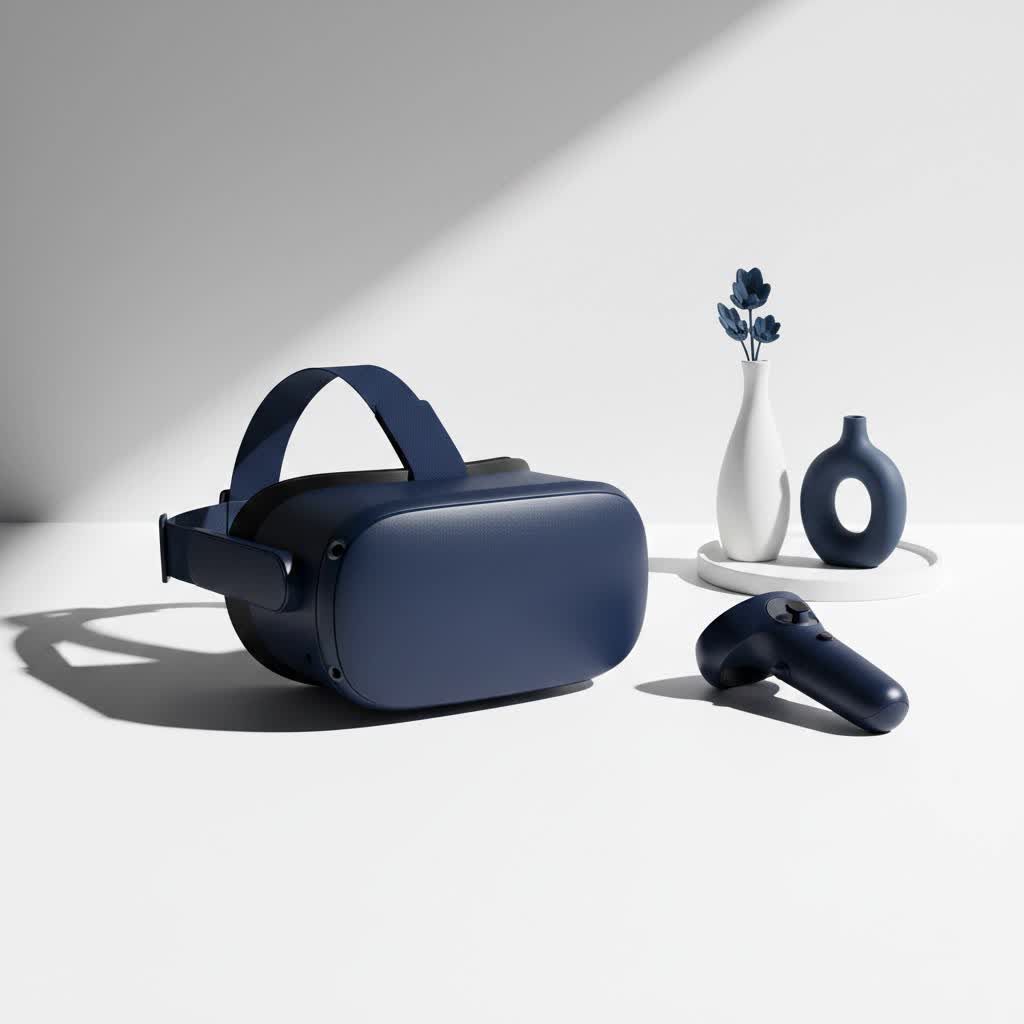
As a long-time VR enthusiast and industry analyst, I’m here to unravel the history of Microsoft’s journey into virtual reality. We’ll explore the rise and fall of their unique platform, clarify what their current focus is, and guide you on what to look for instead if you’re in the market for an immersive PC VR experience. Let’s dive into the fascinating, and somewhat cautionary, tale of the Microsoft VR headset.
What Was Windows Mixed Reality?
First, let’s clear up a common misconception. There was never a single device officially branded as the “Microsoft VR headset.” Instead, Microsoft created a platform called Windows Mixed Reality (WMR), which launched with the Windows 10 Fall Creators Update in 2017.
The idea was brilliant in its simplicity: create a standardized framework within Windows that third-party manufacturers could use to build their own VR headsets. This approach was meant to democratize PC VR, making it more affordable and accessible than the expensive, sensor-heavy systems from Oculus (now Meta) and HTC at the time.
Key features of the WMR platform included:
- Inside-Out Tracking: Unlike the Oculus Rift or HTC Vive, which required external sensors placed around your room, WMR headsets used cameras mounted on the device itself to track your position. This made setup incredibly simple—just plug and play.
- Affordability: By providing the software and core technology, Microsoft enabled partners like HP, Samsung, Dell, Acer, and Lenovo to produce headsets at very competitive prices.
- A Unified Hub: Windows provided a native virtual environment called the “Cliff House,” a virtual home from which users could launch games and applications.
Some of the most popular Windows Mixed Reality headsets included the Samsung Odyssey+, known for its vibrant OLED displays, and later, the HP Reverb G2, which was praised for its incredibly high-resolution screens that minimized the “screen door effect.” For a time, WMR was a viable and exciting third pillar in the PC VR market.
The End of an Era: Why Microsoft Deprecated WMR
Despite a promising start, the Windows Mixed Reality platform struggled to maintain momentum. The market became increasingly dominated by Meta’s standalone Quest headsets and Valve’s high-fidelity, gaming-focused Index system. WMR’s controllers were often cited as a weak point, feeling clunky compared to the competition, and the platform never cultivated a must-have library of exclusive content.
In a move that confirmed what many industry watchers had long suspected, Microsoft officially announced the deprecation of Windows Mixed Reality in December 2023. This means the platform, including the Mixed Reality Portal and support for SteamVR, will be completely removed from a future release of Windows.
This decision effectively marks the end of Microsoft’s consumer VR hardware ambitions. For the thousands of users who still own WMR devices like the HP Reverb G2, the future is uncertain, with many relying on community-developed workarounds to keep their hardware functioning in the long term.
What About HoloLens? Is It a VR Headset?
You can’t discuss Microsoft and immersive tech without mentioning HoloLens. However, it’s crucial to understand that HoloLens is not a VR headset. It’s an Augmented Reality (AR) or Mixed Reality (MR) device.
So, what’s the difference?
- Virtual Reality (VR) completely replaces your surroundings with a digital world. When you wear a VR headset, you are fully immersed in a virtual environment.
- Augmented Reality (AR) overlays digital information onto your real-world view. Think of Pokémon GO or the heads-up display in a modern car.
- Mixed Reality (MR), as exemplified by HoloLens, takes this a step further. It projects interactive, 3D digital objects (holograms) into your real space that you can walk around and interact with.
HoloLens 2, the latest version, is a marvel of engineering. It’s a self-contained computer worn on your head, designed purely for enterprise and industrial use. Surgeons use it to overlay patient data during operations, engineers use it to visualize complex 3D models, and factory workers use it for remote assistance. It carries a price tag in the thousands of dollars, placing it far outside the consumer market.
Even the future of HoloLens has been turbulent, with reports of a canceled HoloLens 3 and significant team layoffs. This suggests Microsoft’s focus has shifted away from pioneering hardware altogether.
Microsoft’s New Strategy: Software and Partnerships
So if Microsoft is out of the consumer VR headset game, what is their plan for the metaverse? The answer is clear: software and services. Instead of competing on hardware, Microsoft is focusing on becoming the platform that powers work and play across other companies’ devices.
“Microsoft has made a classic strategic pivot,” explains Dr. Evelyn Reed, a leading XR industry analyst. “They recognized the immense cost and competition in building a consumer hardware ecosystem. Instead, they are leveraging their strengths in enterprise software and cloud computing to be the connective tissue of the metaverse, regardless of who makes the headset.”
This strategy has two main pillars:
- Microsoft Mesh: This is a platform designed to enable shared holographic experiences. Think of it as a virtual meeting room where participants, represented as avatars or even photorealistic holoportations, can collaborate in a 3D space. Mesh is designed to work on everything from a smartphone to a high-end VR headset to the HoloLens.
- Partnership with Meta: In a move that surprised many, Microsoft has partnered with its former rival, Meta. This brings Xbox Cloud Gaming, Microsoft 365 apps (like Word, Excel, and PowerPoint), and Windows features to the massive user base of the Meta Quest headsets. You can now play Halo on a giant virtual screen inside a Quest 3—a clear sign that Microsoft wants its services to be everywhere.
What Are the Best Alternatives to a Microsoft VR Headset?
If you were hoping to buy a Microsoft VR headset for PC gaming, don’t despair! The market is filled with fantastic alternatives that have inherited the spirit of WMR and pushed the technology even further.
For Standalone and PC VR Hybrid
- Meta Quest 3: This is the undisputed king of consumer VR. It can be used as a standalone device with its own library of games and apps, or it can be connected to a PC (wired or wirelessly) to play high-fidelity PC VR titles. Its full-color passthrough also offers a solid mixed-reality experience.
|
Our Picks for the Best VR Headset in 2026
As an Amazon Associate I earn from qualifying purchases.
|
||
| Num | Product | Action |
|---|---|---|
| 1 | FEEBZ 3D VR Headset for Kids 2.0 + Android Remote - for iPhone & Android Phones - with 3D VR Videos & Apps Links - Virtual Reality Goggles Set for Beginners |

|
| 2 | PlayStation VR2 Horizon Call of The Mountain™ Bundle (PSVR2) |
|
| 3 | PlayStation VR2 (PSVR2) |
|
| 4 | Oculus Quest 2 VR Headset 128GB Holiday Set - Advanced All-in-One Virtual Reality Headset Cover Set, White |
|
| 5 | Meta Quest 2 — Advanced All-In-One Virtual Reality Headset — 256 GB (Renewed) |
|
| 6 | DESTEK V5 VR Headset for Kids w/VR Gamepad, 128 Premium VR apps Included, Anti-Blue Eyes Protected HD Lenses, 110° FOV Virtual Reality Headsets for iPhone, Android Phone- Black |
|
| 7 | Oculus Quest 2 Advanced All-in-One Virtual Reality Gmaing VR Headset 128GB Set, White |
|
| 8 | VR Headset for Nintendo Switch 2 (2025), Switch 2 Virtual Reality VR Glasses with Adjustable HD Lenses and Comfortable Head Strap, Labo VR Kit 3D Goggles for Switch 2 Accessories, White&Blue |
|
| 9 | FEEBZ 3D VR Headset for Kids 2.0 + Android Remote - for iPhone & Android Phones - with 3D VR Videos & Apps Links - Virtual Reality Goggles Set for Beginners |
|
| 10 | VR Headset for Phone, Virtual Reality Glasses with Bluetooth Headphones for Adults and Kids Play 3D VR Games Movies (White VR Only) |
|
For High-Fidelity PC VR Gaming
- Valve Index: Although an older headset, the Index is still beloved by enthusiasts for its exceptional audio, comfortable design, and innovative “knuckle” controllers that track individual finger movement. It provides a premium, gaming-first experience.
For High Resolution & Clarity
- Bigscreen Beyond: For users who prioritize a lightweight form factor and ultra-high resolution, this new contender offers a custom-fit, tiny headset with stunning OLED displays. Note that it requires separate controllers and base stations.
Frequently Asked Questions (FAQ)
Is Windows Mixed Reality completely dead?
Yes. Microsoft officially deprecated the platform in late 2023 and announced it will be removed from a future version of Windows. This includes the Mixed Reality Portal app and official SteamVR support.
Will my HP Reverb G2 or other WMR headset stop working?
Once Microsoft removes the WMR software from Windows, these headsets will no longer function natively. However, the community is actively working on open-source drivers that may allow them to continue working through platforms like SteamVR.
Is Microsoft making a VR headset for the Xbox Series X/S?
There are no official plans for an Xbox VR headset. Microsoft’s strategy for Xbox in VR is currently focused on bringing Xbox Cloud Gaming to the Meta Quest platform, allowing users to play traditional Xbox games on a large virtual screen.
What is the main difference between HoloLens 2 and Meta Quest 3?
HoloLens 2 is an enterprise-focused augmented reality headset that costs thousands of dollars and overlays interactive holograms onto the real world. Meta Quest 3 is an affordable, consumer-focused virtual reality headset designed for gaming and social experiences, which also includes mixed reality features.
Why did Microsoft give up on consumer VR?
While Microsoft hasn’t given an official, detailed reason, the decision was likely due to a combination of factors: intense competition from Meta, Valve, and Sony; a desire to focus on their more profitable enterprise and software divisions (like Azure and Microsoft 365); and the strategic decision to become a platform-agnostic software provider in the XR space.
Conclusion: A Shift in the Virtual Landscape
The story of the Microsoft VR headset is a perfect example of how quickly the tech landscape can change. The Windows Mixed Reality platform was a bold and admirable attempt to make PC VR accessible to everyone. It spurred innovation and gave consumers affordable options, pushing the entire industry forward.
While Microsoft has stepped back from the hardware race, their influence is far from over. Through powerful software like Microsoft Mesh and strategic partnerships with leaders like Meta, they are reshaping their role in our immersive future. They may not be building the headsets we wear, but they are increasingly focused on building the worlds we’ll explore with them. The dream of a Microsoft VR headset may be over, but their vision for a connected, mixed-reality world is just beginning.
