Welcome to MNWFC, where we dive deep into the world of virtual reality. For years, the conversation around standalone VR has been dominated by a single name. But a powerful challenger has emerged, offering superior comfort and visual clarity at a competitive price point. We’re talking about the Pico VR headset, and specifically, the impressive Pico 4. If you’re wondering whether this device has what it takes to redefine your virtual experiences, you’ve come to the right place. This guide breaks down everything you need to know about this formidable contender in the VR space.
Design and Comfort: A New Standard
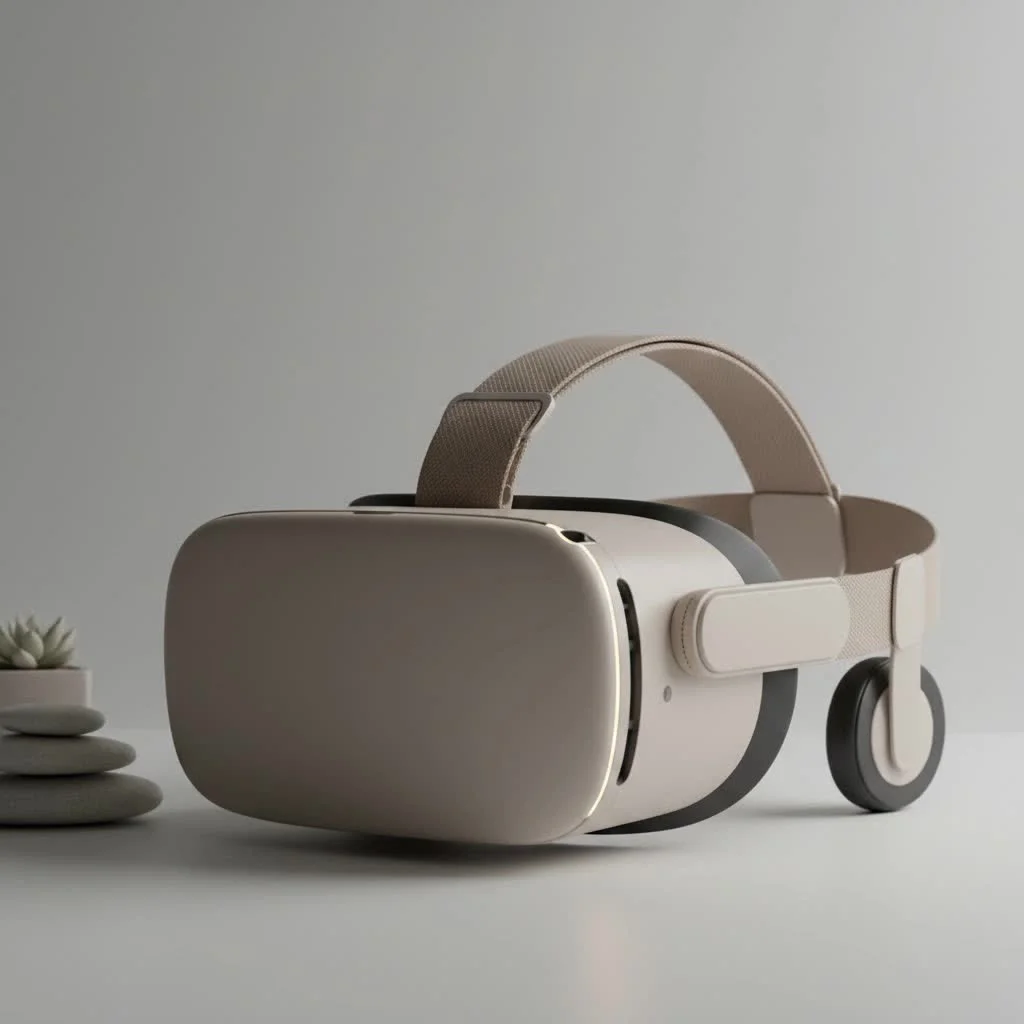
The first thing you’ll notice when you put on a Pico 4 is the comfort. Unlike many front-heavy headsets that place all the weight on your face, the Pico VR headset features a brilliantly balanced design by placing its battery at the back of the head strap. This distribution makes the headset feel significantly lighter than its specifications might suggest, allowing for longer, more comfortable VR sessions without the constant need for adjustment. For explore our virtual reality reviews on this site.
Another key to its ergonomic success is its slim profile. This is achieved through the use of pancake lenses, which are much thinner and lighter than the Fresnel lenses found in older headsets. The result is a device that sits closer to your face, reducing the “goggle” effect and creating a more natural feel. The included strap is a rigid, dial-adjusted system that provides a secure fit for almost any head size, a feature that is often a paid upgrade for competing devices.
A Friendly Fit for Glasses Wearers
For those who wear corrective lenses, VR can often be a frustrating experience. The Pico 4 addresses this head-on. It offers ample space within the facial interface to accommodate most glasses frames comfortably. A glasses spacer is also included in the box to provide extra room if needed, ensuring that you don’t have to sacrifice clear vision for virtual immersion.
A Leap in Visuals: Lenses and Resolution
The visual experience is where the Pico VR headset truly shines and sets itself apart. The use of pancake lenses isn’t just about comfort; it’s a revolutionary step up in image quality.
Here’s why it matters:
- Edge-to-Edge Clarity: Unlike traditional lenses that have a small “sweet spot” of perfect focus in the center, pancake lenses provide a sharp, clear image across a much wider field of view. You can move your eyes to look around the virtual world, not just your entire head.
- Reduced Glare: Annoying visual artifacts like “god rays” and glare, common in older headsets, are significantly minimized, leading to a more immersive and believable picture.
- Higher Resolution: The Pico 4 boasts a resolution of 2,160 x 2,160 pixels per eye. This is a noticeable improvement over many competitors, resulting in a sharper image with a much less prominent screen-door effect (the visible grid of pixels).
Furthermore, the Pico 4 features a full-color passthrough camera. This allows you to see your real-world surroundings in color without taking off the headset, making it easier to set up your play area, grab a drink, or check your phone.
“The Pico 4 represents a significant inflection point in the consumer VR market,” says Dr. Alistair Finch, a senior VR analyst at MNWFC. “By packaging next-generation lens technology and a comfort-first design into an affordable device, it has forced the entire industry to raise its standards. It’s no longer just about processing power; it’s about the holistic user experience.”
Performance: Standalone and PC VR Gaming
At its core, the Pico VR headset is powered by the Qualcomm Snapdragon XR2 processor, the same chipset found in many of its direct competitors. This ensures robust performance for standalone games and applications downloaded directly from the Pico Store. Tracking is handled by four cameras on the headset, providing reliable 6-degrees-of-freedom (6DoF) movement without the need for external base stations.
The controllers are ergonomically designed, featuring a unique tracking ring that arches over the hand. This design helps prevent the controllers from losing tracking when held close together, a common issue in other systems.
How to Connect Your Pico VR Headset to a PC
|
Our Picks for the Best VR Headset in 2026
As an Amazon Associate I earn from qualifying purchases.
|
||
| Num | Product | Action |
|---|---|---|
| 1 | Meta Quest 2 — Advanced All-In-One Virtual Reality Headset — 256 GB (Renewed) |

|
| 2 | VR Headset for Phone, Virtual Reality Glasses with Bluetooth Headphones for Adults and Kids Play 3D VR Games Movies (White VR Only) |
|
| 3 | FEEBZ 3D VR Headset for Kids 2.0 + Android Remote - for iPhone & Android Phones - with 3D VR Videos & Apps Links - Virtual Reality Goggles Set for Beginners |
|
| 4 | PlayStation VR2 Horizon Call of The Mountain™ Bundle (PSVR2) |
|
| 5 | VR Headset for Nintendo Switch 2 (2025), Switch 2 Virtual Reality VR Glasses with Adjustable HD Lenses and Comfortable Head Strap, Labo VR Kit 3D Goggles for Switch 2 Accessories, White&Blue |
|
| 6 | FEEBZ 3D VR Headset for Kids 2.0 + Android Remote - for iPhone & Android Phones - with 3D VR Videos & Apps Links - Virtual Reality Goggles Set for Beginners |
|
| 7 | Oculus Quest 2 Advanced All-in-One Virtual Reality Gmaing VR Headset 128GB Set, White |
|
| 8 | PlayStation VR2 (PSVR2) |
|
| 9 | Oculus Quest 2 VR Headset 128GB Holiday Set - Advanced All-in-One Virtual Reality Headset Cover Set, White |
|
| 10 | DESTEK V5 VR Headset for Kids w/VR Gamepad, 128 Premium VR apps Included, Anti-Blue Eyes Protected HD Lenses, 110° FOV Virtual Reality Headsets for iPhone, Android Phone- Black |
|
For those with a powerful gaming PC, the Pico 4 is an excellent choice for PC VR. You can access the vast libraries of SteamVR and other platforms in two main ways:
- Wired Connection: A simple USB-C cable provides a stable, low-latency connection for the highest fidelity experience.
- Wireless Streaming: Using Pico’s own Streaming Assistant or, for the best results, the highly recommended third-party app Virtual Desktop, you can stream PC VR games wirelessly to your headset over your Wi-Fi network. The freedom of wireless PC VR is a game-changer.
The Software and Game Library
A headset is only as good as the games and apps it can run. The Pico Store is a growing ecosystem with hundreds of titles, including many VR must-haves like SUPERHOT VR, The Walking Dead: Saints & Sinners, and Red Matter 2.
However, it’s important to be realistic. The library is not as vast as Meta’s, and some major exclusive titles, most notably Beat Saber, are currently absent. While the ability to connect to a PC mitigates this for many, if you plan to use the headset exclusively in standalone mode, it’s wise to check the Pico Store to ensure your favorite games are available.
A Note on Availability
The biggest hurdle for many potential buyers, particularly in North America, is availability. The Pico VR headset is not officially sold in the United States. While it’s widely available in Europe and parts of Asia, US customers must rely on importing the device, which can significantly increase the cost and complicate warranty claims. This is a critical factor to consider before making a purchase.
Frequently Asked Questions (FAQ)
Is a Pico VR headset better than a Meta Quest 3?
This depends on your priorities. The Pico 4 offers superior out-of-the-box comfort and arguably better visual clarity due to its balanced design and pancake lenses. The Quest 3, however, has a more powerful processor, a much larger and more mature standalone game library with key exclusives, and official support in more regions.
Can you play SteamVR games on a Pico VR headset?
Yes, absolutely. The Pico 4 works seamlessly as a PC VR headset, allowing you to play the entire SteamVR library and other PC VR titles either through a wired USB-C connection or wirelessly via applications like Virtual Desktop.
What are the main advantages of the Pico 4?
The three primary advantages are superior comfort due to its balanced weight distribution, enhanced visual clarity from its high-resolution display and pancake lenses, and excellent value for money in the regions where it is officially sold.
Does the Pico VR headset require a social media account?
No, unlike the initial requirements for Meta headsets, the Pico VR headset does not require you to link a social media account like Facebook or TikTok for use. You will need to create a Pico account.
Is the Pico 4 a good entry-level VR headset?
For users in Europe and Asia, the Pico 4 is arguably one of the best entry-level to mid-range VR headsets available. Its combination of advanced features, comfort, and a competitive price makes it an outstanding choice for both newcomers and VR veterans.
The Final Verdict
The Pico VR headset, and the Pico 4 in particular, is a phenomenal piece of hardware that has successfully challenged the status quo. It delivers a premium experience focused on user comfort and visual fidelity, aspects that are paramount for true immersion. While the smaller standalone library and limited availability in the US are notable drawbacks, they don’t diminish the quality of the device itself. For anyone living in a supported region and looking for a powerful, comfortable, and crystal-clear VR experience for both standalone and PC VR, the Pico 4 is not just a viable alternative—it’s a top-tier choice.
Get our weekly buyer guide
Practical specs, not advice. Unsubscribe anytime.
I was skeptical about a new contender in the standalone VR space, but the Pico VR headset really delivers. The display is sharp, and I appreciate not having to deal with a PC. It’s definitely a strong alternative to the more dominant brands out there. My only minor gripe is that the app library could still use a bit more expansion, but it’s growing.
The Pico 4 is pretty good for the price point, and the comfort is definitely better than my previous headset. However, I found the initial setup a little less intuitive than I expected. It took me a bit longer to get everything configured and connected properly. Once it’s up and running, though, the experience is solid, especially for media consumption.
I finally decided to upgrade to the Pico 4 after reading about its superior visual clarity, and I’m so glad I did. Everything looks incredibly crisp and vibrant, which really enhances my gaming sessions. It’s amazing how far standalone VR has come, and this headset truly redefines what’s possible without being tethered to a PC.
I’ve been using my Pico 4 for a few months now, and the comfort really is a game-changer. I used to get neck strain with my old headset, but the balanced design with the battery at the back makes a huge difference. I can play for hours without feeling any discomfort. The visual clarity is also super impressive, making games and experiences much more immersive.