Remember the buzz a few years ago? The idea that your phone could be a portal to other worlds was revolutionary. A Smartphone Vr Headset seemed like the future, an accessible entry point into virtual reality for everyone. You’d simply snap your phone into a plastic or cardboard viewer, and voilà, you were immersed. But as we move further into this decade, the landscape of VR has changed dramatically. So, the big question is, does a smartphone VR headset still have a place in today’s tech world?
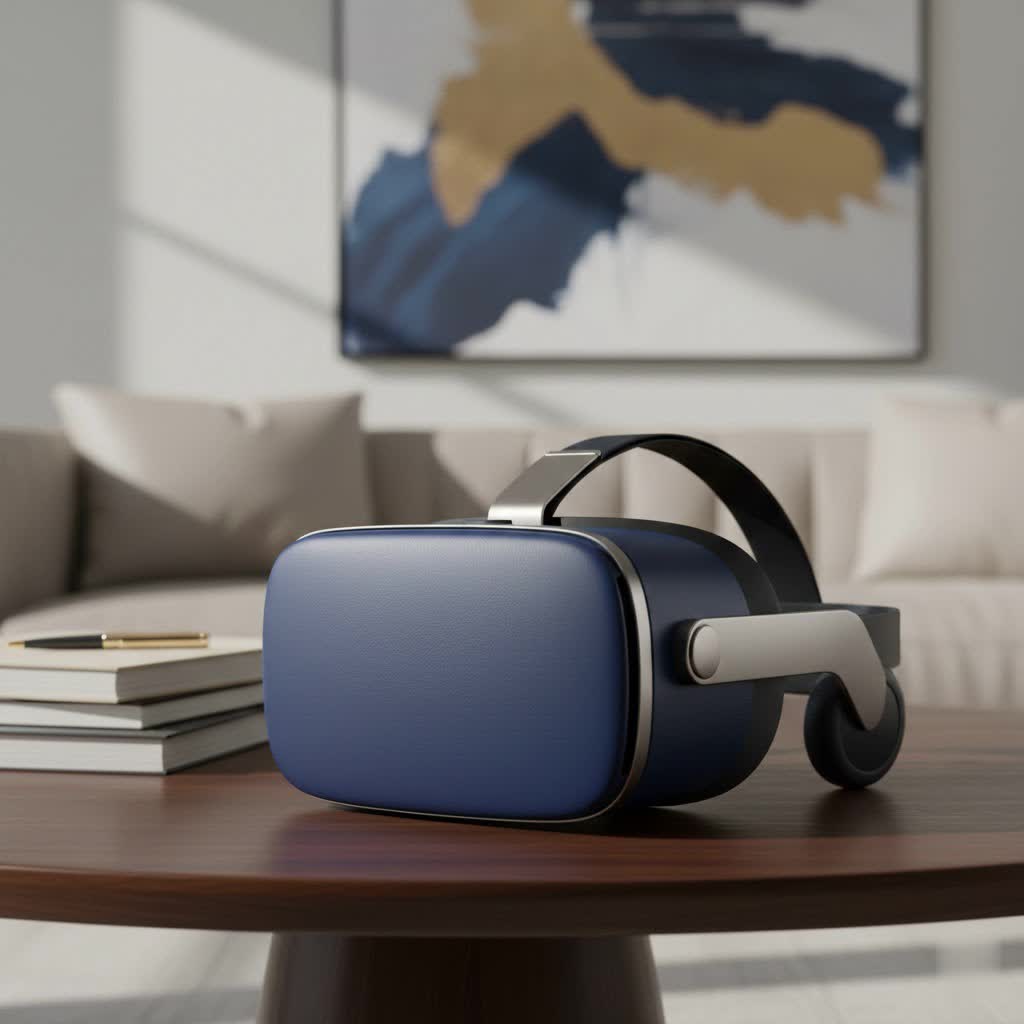
As someone who has been navigating the VR space for over a decade, I’ve seen technologies come and go. The initial excitement for mobile-powered VR was immense, driven by giants like Google and Samsung. However, the rise of powerful, self-contained standalone headsets has shifted the goalposts entirely. Let’s take an honest look at where smartphone VR stands today and whether it’s still a worthy investment for curious newcomers.
What Exactly is a Smartphone VR Headset?
Before we dive deeper, let’s clarify what we’re talking about. A smartphone VR headset isn’t a VR device in itself; it’s essentially a housing for the device you already own: your smartphone.
The core components are simple:
- A casing: This holds your smartphone securely in front of your eyes.
- Lenses: A pair of lenses are positioned between your eyes and the phone screen. They magnify and focus the screen to fill your field of view, creating a sense of immersion.
- A strap: This secures the headset to your head, freeing up your hands.
The smartphone does all the heavy lifting. Its screen displays a stereoscopic image (a slightly different picture for each eye), its processor runs the VR app or video, and its internal sensors (like the accelerometer and gyroscope) track your head movements. When you turn your head, the view on the screen changes accordingly. This is the fundamental principle behind how these devices create a basic virtual experience.
The Rise and Fall of Mobile VR Dominance
The journey of the smartphone VR headset was a whirlwind. It began with a brilliant, simple idea: Google Cardboard. This low-cost, literally-made-of-cardboard viewer made VR accessible to millions. It was a novelty, a fantastic taster of what VR could be.
Following this, more robust platforms emerged. Samsung, in partnership with Oculus (now Reality Labs, a part of Meta), launched the Samsung Gear VR. It was a step up, featuring better lenses, a comfortable build, and its own dedicated app store. For a while, it was the leading VR platform. Then came Google Daydream View, a more polished, fabric-covered headset with a simple motion controller, aiming to standardize the Android VR experience.
So, what happened? Why aren’t we all walking around with phones strapped to our faces? Several key factors led to the decline:
- Limited Interaction: Most smartphone VR relied on head-tracking and a single, simple pointer-style controller. This is worlds away from the full six-degrees-of-freedom (6DoF) tracking and dual-hand controllers of modern systems, which let you walk around and interact with virtual objects naturally.
- Performance Issues: Running VR is demanding. It would often cause smartphones to overheat, drain batteries at an alarming rate, and suffer from performance stutters that could break immersion and cause nausea.
- Fragmented Ecosystem: There was no single standard. An app for Gear VR wouldn’t work on Daydream. The quality of the experience varied wildly depending on your specific phone’s screen resolution, processing power, and sensor quality.
- The Standalone Revolution: The launch of the Oculus Go, and more importantly, the Oculus Quest (now Meta Quest), changed everything. These were all-in-one, standalone headsets that required no phone and no PC. They offered superior tracking, better performance, and a curated library of high-quality experiences at an affordable price point. This was the killing blow for the premium smartphone VR market.
Is a Smartphone VR Headset Worth It Today?
With the big players having officially discontinued their platforms, the question of value becomes critical. The short answer is: for most people, probably not. However, there are a few niche scenarios where it might make sense.
The Pros: Why You Might Still Consider One
- Extremely Low Cost: This is the single biggest advantage. You can find basic plastic smartphone VR headsets for very little money, sometimes under $20. If your curiosity is fleeting and your budget is tight, it’s the cheapest possible way to see a 360-degree video.
- Simplicity: There’s no complex setup. You download an app, put your phone in the viewer, and you’re good to go. It’s a straightforward way to understand the basic concept of stereoscopic 3D.
|
Our Picks for the Best VR Headset in 2026
As an Amazon Associate I earn from qualifying purchases.
|
||
| Num | Product | Action |
|---|---|---|
| 1 | Oculus Quest 2 Advanced All-in-One Virtual Reality Gmaing VR Headset 128GB Set, White |

|
| 2 | Oculus Quest 2 VR Headset 128GB Holiday Set - Advanced All-in-One Virtual Reality Headset Cover Set, White |
|
| 3 | FEEBZ 3D VR Headset for Kids 2.0 + Android Remote - for iPhone & Android Phones - with 3D VR Videos & Apps Links - Virtual Reality Goggles Set for Beginners |
|
| 4 | PlayStation VR2 (PSVR2) |
|
| 5 | VR Headset for Nintendo Switch 2 (2025), Switch 2 Virtual Reality VR Glasses with Adjustable HD Lenses and Comfortable Head Strap, Labo VR Kit 3D Goggles for Switch 2 Accessories, White&Blue |
|
| 6 | FEEBZ 3D VR Headset for Kids 2.0 + Android Remote - for iPhone & Android Phones - with 3D VR Videos & Apps Links - Virtual Reality Goggles Set for Beginners |
|
| 7 | Meta Quest 2 — Advanced All-In-One Virtual Reality Headset — 256 GB (Renewed) |
|
| 8 | VR Headset for Phone, Virtual Reality Glasses with Bluetooth Headphones for Adults and Kids Play 3D VR Games Movies (White VR Only) |
|
| 9 | PlayStation VR2 Horizon Call of The Mountain™ Bundle (PSVR2) |
|
| 10 | DESTEK V5 VR Headset for Kids w/VR Gamepad, 128 Premium VR apps Included, Anti-Blue Eyes Protected HD Lenses, 110° FOV Virtual Reality Headsets for iPhone, Android Phone- Black |
|
The Cons: The Reality of the Experience
- Poor Quality: The experience is severely compromised. Expect low resolutions (the “screen door effect,” where you see the pixels, is very noticeable), a narrow field of view, and light leakage.
- Motion Sickness: The latency (delay) between your head movement and the screen updating, combined with the lack of positional tracking, is a perfect recipe for motion sickness for many users.
- Dwindling Content: The dedicated app stores for Gear VR and Daydream are gone. You’re largely limited to a handful of basic games on the Google Play or Apple App Store and 360-degree videos on platforms like YouTube VR.
- Phone Incompatibility: Many newer phones are ditching the high-resolution screens and sensors needed for a decent VR experience. Furthermore, the physical size of modern phones, especially with large camera bumps, means they often don’t even fit in older headset models.
As our in-house tech analyst, Dr. Alistair Finch, often states, “The standalone headset didn’t just offer a better experience; it offered a complete experience. Smartphone VR was a window, but standalone VR is a door you can walk through. That fundamental difference is why the market shifted so decisively.”
What Can You Actually Do With a Smartphone VR Headset?
If you happen to find an old one lying around or decide to buy a cheap one, you should set your expectations appropriately. The primary use case today is passive media consumption.
- 360-Degree Videos: YouTube VR is your best bet. You can experience immersive videos, from virtual roller coasters to nature documentaries. It’s like looking around from inside a video sphere.
- Simple VR Apps: There are still some basic arcade-style games and educational experiences on the app stores. These are typically “on-rails” shooters or simple puzzle games where you interact by looking at things.
- Viewing 3D Photos: You can view stereoscopic photos that create a cool sense of depth.
Do not expect to play complex, interactive games like those you see advertised for Meta Quest or PlayStation VR2. The hardware simply isn’t capable of it.
The Modern Alternative: Standalone VR
For anyone genuinely interested in exploring virtual reality, the clear path forward is a standalone headset. The Meta Quest 2 (often available at a reduced price) and the newer Meta Quest 3 are the market leaders. They offer:
- Full 6DoF Tracking: You can walk, duck, and move in your physical space, and it’s reflected 1:1 in VR.
- Dual Motion Controllers: Your hands are tracked in VR, allowing for intuitive interaction.
- A Vast Content Library: A mature ecosystem with thousands of high-quality games, social apps, fitness experiences, and productivity tools.
- No Phone Needed: Everything is built-in, providing a seamless and optimized experience.
While the upfront cost is higher than a plastic phone holder, the value and quality of the experience are exponentially greater.
Frequently Asked Questions (FAQ)
Can any phone be used for VR?
Technically, any smartphone can display a stereoscopic image. However, for a decent experience, you need a phone with a high-resolution screen (at least 1440p), a powerful processor, and high-quality gyroscope and accelerometer sensors. Many budget phones will provide a blurry and laggy experience.
What is the difference between a smartphone VR headset and a standalone one?
A smartphone VR headset is a passive shell that uses your phone for its screen, processing, and sensors. A standalone headset, like a Meta Quest 3, is a self-contained computer with its own dedicated screens, processors, cameras, and sensors, all optimized specifically for VR.
Does Google Cardboard still work?
Yes, the Google Cardboard platform and app still technically function. You can use it to watch YouTube VR and use other Cardboard-compatible apps. However, the experience is very basic, and Google is no longer actively developing the platform.
Can I watch Netflix on a smartphone VR headset?
While there isn’t a dedicated smartphone VR app for Netflix that works well anymore, you might be able to use a virtual desktop app to view the standard Android app in a virtual theater. The experience is often clunky and not as seamless as on dedicated VR platforms like Meta Quest, which have official Netflix VR apps.
Why did Google Daydream and Samsung Gear VR fail?
They were caught in a difficult middle ground. They were more expensive and complex than Google Cardboard but vastly inferior in capability to the standalone headsets that arrived shortly after. They couldn’t compete on price with the low end or on quality with the high end, and their reliance on specific, expensive flagship phones limited their market.
Final Thoughts
The smartphone VR headset was a fascinating and important chapter in the history of consumer VR. It served as a gateway, introducing the magic of virtual reality to millions of people. But in 2025, its time has largely passed. It has become a technological relic, superseded by far superior, dedicated hardware.
If you are simply looking for a 5-minute novelty to watch a 360-degree video on YouTube, then a sub-$20 headset might provide a flicker of entertainment. For anyone else—for anyone who wants to truly experience what virtual reality is and what it can be—my strong recommendation is to save your money and invest in a true standalone VR headset. The difference isn’t just an upgrade; it’s a whole new dimension of experience.
