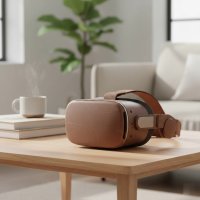
Stepping into the world of virtual reality can feel like entering a whole new dimension, and Samsung has been a key player in shaping that journey for many of us. From pioneering accessible mobile VR to diving headfirst into the expansive realm of Extended Reality (XR), Samsung’s commitment to immersive technology has evolved significantly over the years. We’re not just talking about screens strapped to your face; we’re talking about a rich history of innovation that’s now pointing towards an incredibly exciting future with the upcoming Samsung Galaxy XR headset.
The Dawn of Mobile VR: Samsung Gear VR
Remember when you could just snap your Samsung Galaxy phone into a headset and instantly be transported to another world? That was the magic of the Samsung Gear VR. Developed in a groundbreaking collaboration with Oculus VR, the Gear VR truly democratized virtual reality, making it accessible to millions. First unveiled in 2014, with its consumer edition launching in August 2015, the Gear VR was a game-changer.
This innovative device utilized your compatible Samsung Galaxy smartphone as its display and processing powerhouse. Instead of needing a high-end gaming PC, all you required was your phone, offering an unprecedented level of portability and convenience for VR experiences. The headset itself housed the lenses, a custom inertial measurement unit (IMU) for rotational tracking, and basic controls like a touchpad and a back button on the side.
Over its lifespan, Samsung released several iterations of the Gear VR (SM-R320, SM-R321, SM-R322, SM-R323, SM-R324, SM-R325), each bringing minor improvements and expanding compatibility. Initially, it worked with devices like the Galaxy Note 4, and later models supported a range of flagship phones up to the Galaxy S9 and Note 8 series. By 2017, Samsung had sold over 5 million units, showcasing its widespread appeal. It offered a diverse range of content, from 360-degree videos to immersive games, all powered by the Oculus Home platform.
However, as standalone VR headsets like the Oculus Go and Quest began to emerge, the reliance on a smartphone became a limiting factor. Samsung eventually ceased support for the Gear VR with newer Galaxy devices, marking the end of an important, pioneering chapter in mobile VR.
Stepping into PC VR: The Samsung Odyssey Series
While the Gear VR focused on mobile accessibility, Samsung also ventured into the more powerful PC-tethered VR space with its Windows Mixed Reality (WMR) headsets: the original Samsung Odyssey (2017) and its successor, the Samsung Odyssey+ (2018). These devices targeted a different audience, offering a higher fidelity experience powered by a gaming PC.
The Odyssey series truly impressed with its specifications, often standing out as the “premium” option within the WMR lineup. Both headsets featured stunning AMOLED displays, offering a sharp resolution of 1440×1600 pixels per eye for the Odyssey+ and 1440×1600 per eye for the Odyssey, delivering vibrant colors and deep blacks. They boasted a wide field of view (FoV) of 101-110 degrees and a smooth 90Hz refresh rate, contributing to a truly immersive visual experience.
What made the Odyssey series particularly user-friendly was its inside-out 6DoF (six degrees of freedom) tracking system. This meant no external sensors or base stations were required; the headset itself tracked your movement and the movement of its ergonomic controllers. Furthermore, integrated AKG spatial audio headphones provided excellent sound, completing the immersion. Reviewers often praised the Odyssey+ for its improved comfort, even accommodating users with glasses.
Despite their strong performance and critical acclaim within the Windows Mixed Reality ecosystem, both the Samsung Odyssey and Odyssey+ have since been discontinued, signaling Samsung’s strategic shift away from this particular PC VR segment.
The Next Frontier: Samsung’s Galaxy XR Headset and Beyond
|
Our Picks for the Best VR Headset in 2026
As an Amazon Associate I earn from qualifying purchases.
|
||
| Num | Product | Action |
|---|---|---|
| 1 | VR Headset for Nintendo Switch 2 (2025), Switch 2 Virtual Reality VR Glasses with Adjustable HD Lenses and Comfortable Head Strap, Labo VR Kit 3D Goggles for Switch 2 Accessories, White&Blue |

|
| 2 | DESTEK V5 VR Headset for Kids w/VR Gamepad, 128 Premium VR apps Included, Anti-Blue Eyes Protected HD Lenses, 110° FOV Virtual Reality Headsets for iPhone, Android Phone- Black |
|
| 3 | FEEBZ 3D VR Headset for Kids 2.0 + Android Remote - for iPhone & Android Phones - with 3D VR Videos & Apps Links - Virtual Reality Goggles Set for Beginners |
|
| 4 | Meta Quest 2 — Advanced All-In-One Virtual Reality Headset — 256 GB (Renewed) |
|
| 5 | VR Headset for Phone, Virtual Reality Glasses with Bluetooth Headphones for Adults and Kids Play 3D VR Games Movies (White VR Only) |
|
| 6 | Oculus Quest 2 VR Headset 128GB Holiday Set - Advanced All-in-One Virtual Reality Headset Cover Set, White |
|
| 7 | Oculus Quest 2 Advanced All-in-One Virtual Reality Gmaing VR Headset 128GB Set, White |
|
| 8 | FEEBZ 3D VR Headset for Kids 2.0 + Android Remote - for iPhone & Android Phones - with 3D VR Videos & Apps Links - Virtual Reality Goggles Set for Beginners |
|
| 9 | PlayStation VR2 Horizon Call of The Mountain™ Bundle (PSVR2) |
|
| 10 | PlayStation VR2 (PSVR2) |
|
Fast forward to today, and Samsung is making an ambitious return to immersive technology, this time with a strong focus on Extended Reality (XR). The company is developing a new, highly anticipated XR headset, reportedly named Galaxy XR, in a powerful collaboration with tech giants Google and Qualcomm. This isn’t just a rehash of old ideas; it’s a strategic move to build a comprehensive, AI-native XR ecosystem designed to redefine how we interact with digital worlds.
The Galaxy XR headset is expected to launch in 2025, promising a new era of discovery, play, and work. At its core will be the new Android XR platform, deeply integrated with Google’s powerful Gemini AI. This integration aims to create an incredibly intuitive and natural user experience, allowing for seamless interactions through voice, vision, and gestures. Imagine an AI companion that truly understands your surroundings and assists you in real-time within your immersive environment.
“Samsung’s move with the Galaxy XR, particularly its deep integration with Android XR and Gemini AI, isn’t just about launching a new device; it’s about crafting an intelligent, interconnected ecosystem,” says Dr. Anya Sharma, Lead XR Analyst at MNWFC Labs. “They’re leveraging their expertise in mobile and hardware to create a platform that feels truly native to our digital lives, pushing beyond mere entertainment into practical, everyday utility.”
The hardware itself is rumored to be cutting-edge, potentially featuring high-resolution micro-OLED displays and a smooth 90Hz refresh rate. Powering this immersive experience will likely be Qualcomm’s Snapdragon XR2+ Gen 2 chip, offering a significant performance advantage over some existing headsets in the market. Samsung’s vision extends beyond just the headset, with reports suggesting the development of accompanying AR glasses slated for 2026, aiming for a broader range of XR form factors. This holistic approach emphasizes open collaboration and scalability, betting on seamless compatibility within the wider Galaxy ecosystem to drive mass adoption.
Why Samsung’s XR Vision Matters: Experience, Expertise, and Ecosystem
Samsung’s journey in VR headsets has been one of learning and evolution. The Gear VR taught them the power of mobile accessibility, while the Odyssey series pushed the boundaries of PC-powered fidelity. These experiences, coupled with their extensive history in consumer electronics, put Samsung in a unique position to succeed in the nascent XR market.
Their vertical integration, manufacturing everything from displays to semiconductors, gives them a distinct edge in controlling quality and innovation. By partnering with Google and Qualcomm, Samsung is not just building a product; they are contributing to an open, scalable ecosystem that could become as pervasive as smartphones themselves. The emphasis on AI and natural interaction signals a future where XR devices are not just tools, but intelligent companions that blend seamlessly into our daily routines.
This strategic pivot is about moving from “niche headset moments” to “everyday AR,” making immersive technology feel effortless and integrated. If Apple targets the premium user and Meta the mass market, Samsung is positioning itself to own the critical middle ground, offering a balanced blend of accessibility, integration, and premium features.
Choosing Your Immersive Path: What to Consider in a Samsung VR Headset
For those reminiscing about the glory days of the Gear VR or the power of the Odyssey, exploring the secondary market might offer a nostalgic trip. However, it’s crucial to remember that software support for these older devices is limited, and the experiences they offer are foundational compared to today’s innovations.
Looking ahead to the Galaxy XR headset, the considerations shift dramatically. You’ll want to think about:
- Ecosystem Integration: How seamlessly will it work with your existing Samsung Galaxy devices?
- AI Capabilities: How will the embedded Gemini AI truly enhance your daily tasks and immersive experiences?
- Content and Platform: What kind of applications and experiences will be available on the Android XR platform?
- Comfort and Design: Given Samsung’s focus on user experience, how well will the headset fit for extended use?
- Future-Proofing: With AR glasses potentially on the horizon, how does the Galaxy XR fit into a broader, evolving XR ecosystem?
Samsung’s renewed focus on XR, built on an open platform with powerful AI, presents an exciting future. It promises not just another gadget, but a new paradigm for how we connect, work, and play in a digitally enhanced world.
FAQs about Samsung VR Headsets
Q: Is Samsung Gear VR still supported?
A: No, Samsung officially ended support for the Gear VR, and it is no longer compatible with newer Samsung Galaxy smartphones, including the S10 series and later models.
Q: What replaced the Samsung Gear VR?
A: While no direct replacement was offered immediately, Samsung’s future in immersive technology is now focused on its upcoming Galaxy XR headset, a more advanced Extended Reality device that will run on the Android XR platform.
Q: Did Samsung make a PC VR headset?
A: Yes, Samsung produced the Samsung Odyssey and Odyssey+ headsets, which were PC-powered devices that operated within the Windows Mixed Reality ecosystem. These have also been discontinued.
Q: When is Samsung’s new XR headset coming out?
A: Samsung’s new Galaxy XR headset is anticipated to be released in 2025, though specific dates can be subject to change.
Q: Will Samsung’s new XR headset be compatible with all Galaxy phones?
A: The upcoming Galaxy XR headset is expected to be a standalone device, but it will likely offer seamless integration and compatibility with the broader Samsung Galaxy ecosystem, including smartphones, to leverage an interconnected experience.
In conclusion, Samsung’s journey with virtual reality headsets has been one of consistent innovation, adapting from mobile-first experiences to powerful PC VR, and now, to a visionary future in Extended Reality. With the upcoming Samsung Galaxy XR headset, powered by Android XR and integrated AI, Samsung is poised to once again redefine immersive technology, offering a connected and intelligent experience that promises to blend seamlessly into our digital lives. The future of immersive computing, with Samsung at the helm, looks brighter and more integrated than ever before.
Get our weekly buyer guide
Practical specs, not advice. Unsubscribe anytime.