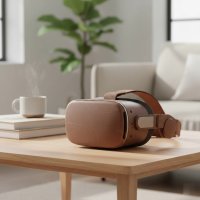
Welcome to the definitive guide for finding the best VR headset for Steam. As someone who has lived and breathed virtual reality for over a decade at MNWFC, I’ve seen headsets come and go. Today, the landscape is more exciting than ever, especially for PC VR enthusiasts who call Steam their home. Choosing the right device can feel daunting with so many technical specs and competing models, but that’s what we’re here to solve. Whether you’re a seasoned VR veteran or a newcomer ready to dive into immersive worlds like Half-Life: Alyx, this guide will help you find the perfect match for your gaming rig and preferences.
SteamVR is the gold standard for PC-based virtual reality, offering the largest library of games and experiences. To unlock its full potential, you need a headset that can keep up. We’ll break down the top contenders, from high-fidelity wired options to versatile wireless powerhouses, ensuring you make an informed decision for countless hours of immersive gameplay.
What Makes a Great VR Headset for Steam?
Before we jump into the top picks, it’s crucial to understand the key features that define a quality SteamVR experience. It’s not just about the highest resolution; it’s about a balanced combination of technology that creates a seamless and believable virtual world.
- Tracking: This is paramount. Flawless tracking translates your real-world movements into the virtual space. The gold standard is Valve’s “Lighthouse” base station system (outside-in tracking), which offers unparalleled precision. However, modern inside-out tracking, using cameras on the headset itself, has become incredibly effective and offers a much simpler setup.
- Resolution and Display Quality: Higher pixels-per-eye means a sharper, clearer image, reducing the “screen door effect” where you can see the gaps between pixels. Look for resolutions of 2064 x 2208 per eye or higher for a crisp experience. Panel type also matters; OLED screens offer true blacks and vibrant colors, while high-quality LCDs can provide excellent brightness and clarity.
- Field of View (FoV): A wider FoV increases your peripheral vision, making the experience feel more natural and immersive. An FoV of around 110 degrees is a great target, as it closely mimics human vision and helps you feel truly present in the game.
- Refresh Rate: Measured in Hertz (Hz), this is how many times the screen updates per second. A higher refresh rate (90Hz or 120Hz) results in smoother motion, which is critical for comfort and reducing motion sickness in fast-paced games.
- Comfort and Ergonomics: You’ll be wearing this device for extended periods. A well-balanced headset with comfortable padding, adjustable straps, and a manageable weight is essential for long gaming sessions.
- Wired vs. Wireless: A wired connection via DisplayPort offers the most stable, highest-fidelity experience without any compression. However, wireless solutions, either through a dedicated adapter or Wi-Fi streaming, provide unparalleled freedom of movement. Many modern headsets offer both options.
Top Picks for the Best VR Headset for Steam in 2025
After extensive testing and countless hours in SteamVR, here are the top headsets that deliver the best experience for PC gamers.
Meta Quest 3: The Versatile All-Rounder
|
Our Picks for the Best VR Headset in 2026
As an Amazon Associate I earn from qualifying purchases.
|
||
| Num | Product | Action |
|---|---|---|
| 1 | FEEBZ 3D VR Headset for Kids 2.0 + Android Remote - for iPhone & Android Phones - with 3D VR Videos & Apps Links - Virtual Reality Goggles Set for Beginners |

|
| 2 | DESTEK V5 VR Headset for Kids w/VR Gamepad, 128 Premium VR apps Included, Anti-Blue Eyes Protected HD Lenses, 110° FOV Virtual Reality Headsets for iPhone, Android Phone- Black |
|
| 3 | PlayStation VR2 Horizon Call of The Mountain™ Bundle (PSVR2) |
|
| 4 | Oculus Quest 2 Advanced All-in-One Virtual Reality Gmaing VR Headset 128GB Set, White |
|
| 5 | VR Headset for Phone, Virtual Reality Glasses with Bluetooth Headphones for Adults and Kids Play 3D VR Games Movies (White VR Only) |
|
| 6 | Oculus Quest 2 VR Headset 128GB Holiday Set - Advanced All-in-One Virtual Reality Headset Cover Set, White |
|
| 7 | PlayStation VR2 (PSVR2) |
|
| 8 | VR Headset for Nintendo Switch 2 (2025), Switch 2 Virtual Reality VR Glasses with Adjustable HD Lenses and Comfortable Head Strap, Labo VR Kit 3D Goggles for Switch 2 Accessories, White&Blue |
|
| 9 | FEEBZ 3D VR Headset for Kids 2.0 + Android Remote - for iPhone & Android Phones - with 3D VR Videos & Apps Links - Virtual Reality Goggles Set for Beginners |
|
| 10 | Meta Quest 2 — Advanced All-In-One Virtual Reality Headset — 256 GB (Renewed) |
|
The Meta Quest 3 has firmly established itself as the go-to recommendation for most people. While it’s a standalone headset, its PC VR capabilities are outstanding. Using a USB-C cable (Oculus Link) or a dedicated Wi-Fi 6E router (Air Link), you can stream your SteamVR games wirelessly with impressive clarity and low latency.
Its pancake lenses are a game-changer, providing edge-to-edge sharpness that few other headsets in its price range can match. The 2064 x 2208 per-eye resolution is a significant step up from its predecessor, making text and fine details in games pop. It’s the perfect blend of affordability, ease of use, and high-quality performance, making it the best VR headset for Steam for the majority of users.
Pros:
- Excellent visual clarity with pancake lenses.
- Strong performance for both standalone and PC VR.
- Flexible wired and wireless connectivity for SteamVR.
- Great value for the features offered.
Cons:
- Battery life is limited for wireless PC VR (around 2 hours).
- Requires a Meta account.
Valve Index: The Gold Standard for Fidelity
Even years after its release, the Valve Index remains a top contender for a pure, no-compromise SteamVR experience. Its biggest strengths are its superb audio, comfortable design, and, most importantly, the “Knuckles” controllers. These controllers track individual finger movements, adding a new layer of immersion that is simply magical in games that support it.
The Index uses external base stations for tracking, which, while requiring more setup, provides flawless, sub-millimeter accuracy that is still the benchmark for competitive VR gaming. Its 130-degree FoV and 120Hz (with an experimental 144Hz mode) refresh rate create an incredibly smooth and expansive view. While its resolution is lower than newer headsets, the overall package remains one of the most premium and immersive ways to experience SteamVR.
Pros:
- Best-in-class controllers with finger tracking.
- Rock-solid tracking with base stations.
- Wide field of view and high refresh rate.
- Excellent integrated audio solution.
Cons:
- Requires a more involved setup process.
- Lower resolution compared to the latest models.
- Premium price point.
Pimax Crystal: The Resolution King
If visual fidelity is your absolute top priority and budget is no object, the Pimax Crystal is in a league of its own. Boasting an incredible 2880 x 2880 pixels-per-eye QLED display, it delivers an unparalleled level of sharpness and detail. This makes it a dream for simulation enthusiasts playing titles like Microsoft Flight Simulator or iRacing, where reading small text on cockpit instruments is crucial.
The Crystal is a heavy-hitter in every sense—it’s bulky and requires a top-of-the-line PC to drive its massive resolution. However, for those who demand the best possible image quality for their SteamVR games, the Pimax Crystal offers a glimpse into the future of VR visuals.
Pros:
- Stunning, class-leading display resolution.
- QLED panels provide excellent color and contrast.
- Great for simulation games and visual experiences.
Cons:
- Very expensive and requires a high-end PC.
- Software can be cumbersome to set up.
- Heavier and less comfortable than competitors.
HTC Vive Pro 2: A High-Resolution Competitor
The HTC Vive Pro 2 is another excellent option for those seeking high-end PC VR. It boasts an impressive 2448 x 2448 per-eye resolution, delivering a sharp and immersive image with a wide 120-degree field of view. It operates within the SteamVR ecosystem, utilizing the same reliable base station tracking as the Valve Index, which means you can even mix and match components, using the Vive Pro 2 headset with Valve’s Knuckles controllers for the ultimate setup.
While it’s a powerful and capable headset, it is a premium product with a price tag to match. The setup is also more involved than inside-out tracked headsets, but for dedicated enthusiasts, the visual and tracking performance is well worth the effort.
Pros:
- Incredible resolution for crisp visuals.
- Wide 120-degree field of view.
- Compatible with Valve Index controllers and base stations.
Cons:
- High cost for the full kit.
- Can get warm during extended use.
- Setup requires dedicated space for base stations.
How to Choose the Right SteamVR Headset for You
Your ideal headset depends on your priorities. Here’s a quick guide to help you decide:
- For the All-Rounder: If you want a fantastic, flexible experience without a complicated setup and at a reasonable price, the Meta Quest 3 is your best bet. Its wireless freedom for SteamVR is a liberating experience.
- For the Ultimate Immersion: If you crave the most precise tracking, incredible controllers, and a super-smooth display, and you don’t mind the setup, the Valve Index is still a top-tier choice.
- For the Visual Purist: If your main goal is the absolute sharpest, most detailed image possible, especially for simulation games, and you have a powerful PC to back it up, the Pimax Crystal is the undisputed champion.
- For the High-Fidelity Enthusiast: If you want a headset with a resolution that rivals the best but want to stay within the proven SteamVR tracking ecosystem, the HTC Vive Pro 2 is a strong contender.
Frequently Asked Questions (FAQ)
What is the best VR headset for Steam overall?
For the best balance of price, performance, and ease of use, the Meta Quest 3 is the best overall VR headset for Steam in 2025. It offers excellent visuals and the flexibility of both wired and high-quality wireless play.
Can I use a Meta Quest 3 for SteamVR?
Yes, absolutely. You can connect the Quest 3 to your PC via a USB-C cable (Link) or wirelessly over a strong Wi-Fi network (Air Link or Virtual Desktop). This allows you to play your entire SteamVR library.
Do I need a powerful PC for SteamVR?
Yes, PC VR gaming is demanding. The required specifications depend on the headset’s resolution and the games you want to play. For modern headsets, we recommend at least an NVIDIA RTX 3070 or equivalent and a recent multi-core CPU for a smooth experience.
What’s the difference between inside-out and outside-in tracking?
Inside-out tracking uses cameras on the headset to track its position and the controllers, making setup extremely simple. Outside-in tracking (like the Valve Index uses) relies on external base stations placed in your room, which offers more precise and reliable tracking but requires more setup.
Is the Valve Index still worth it in 2025?
For enthusiasts who prioritize tracking fidelity and controller immersion, the Valve Index is still very much worth it. While its screen resolution has been surpassed, the complete package of comfort, audio, controllers, and tracking performance remains a premium experience for SteamVR.
Conclusion
Choosing the best VR headset for Steam is about matching the hardware to your personal gaming style, budget, and technical setup. The Meta Quest 3 has democratized high-quality PC VR with its incredible versatility and price point. Meanwhile, dedicated PC VR systems like the Valve Index and HTC Vive Pro 2 continue to offer a premium, high-fidelity experience for those who want the absolute best. No matter which you choose, you’re stepping into a universe of amazing games and experiences powered by SteamVR. Pick your portal, and we’ll see you in the virtual world.
Get our weekly buyer guide
Practical specs, not advice. Unsubscribe anytime.