The tech world has been buzzing for years about a potential Apple Vr Headset, and now it’s finally here. Officially named the Apple Vision Pro, this device isn’t just another headset; Apple is billing it as a revolutionary “spatial computer.” With over a decade of experience analyzing every major VR release at MNWFC, I can tell you this isn’t just marketing hype. The Vision Pro represents a significant leap in personal computing, blending the digital and physical worlds in a way we’ve only seen in science fiction. But what does that mean for you? Let’s break down everything you need to know about this groundbreaking device.
What Exactly Is the Apple Vision Pro?
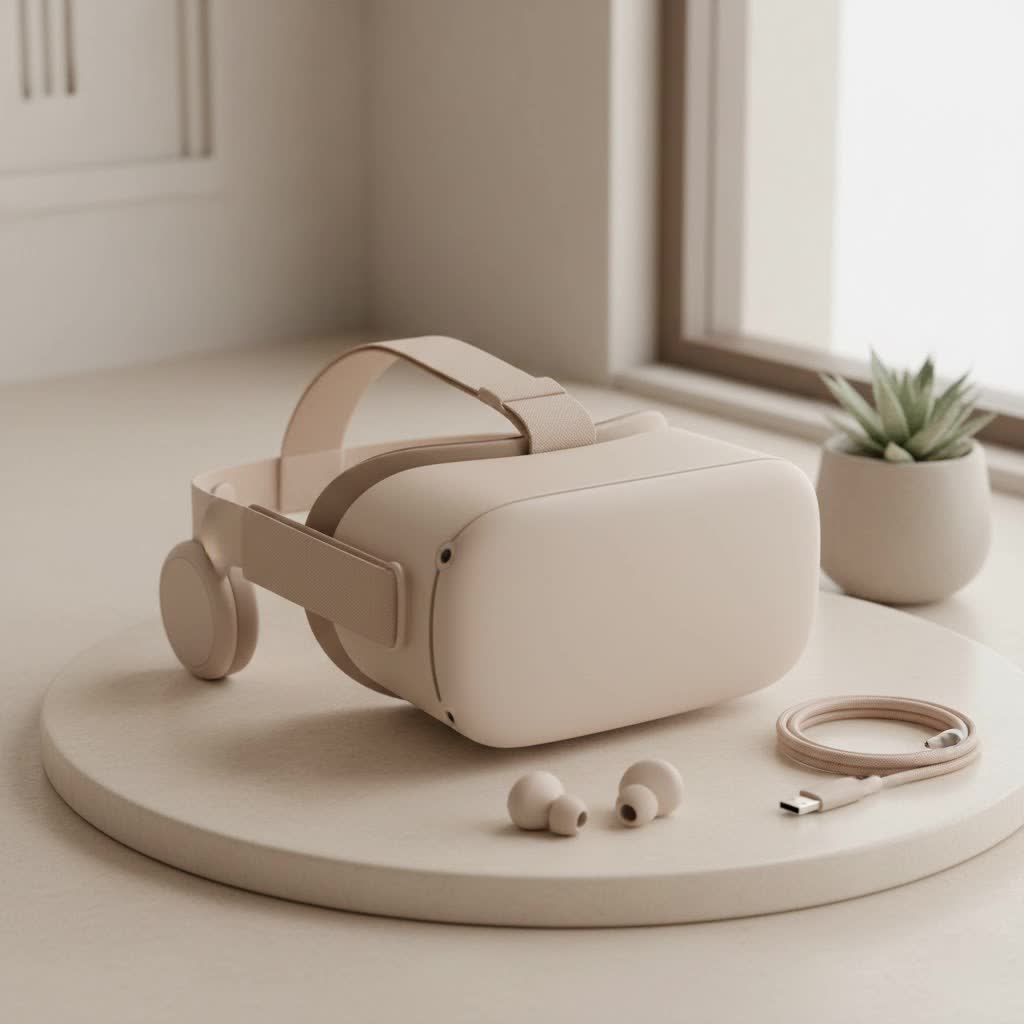
First, let’s clear up a common point of confusion. While many call it the Apple VR headset, the Vision Pro is technically a mixed-reality (MR) device. This means it can provide fully immersive virtual reality (VR) experiences, but its primary strength is in augmented reality (AR), where digital content is overlaid onto your real-world view. You control the level of immersion with a physical dial—the Digital Crown—letting you seamlessly shift between AR and VR.
Apple avoids these labels altogether, preferring the term “spatial computing.” This concept treats your surrounding environment as an infinite canvas. Instead of being confined to a screen, your apps, videos, and calls can be placed anywhere in the room, scaled to any size. It’s a fundamental rethinking of the user interface, moving from a 2D screen to a 3D space.
Core Features That Set the Apple VR Headset Apart
The Vision Pro is packed with next-generation technology that justifies its premium positioning. Here are the key components that make it work.
Unparalleled Display Quality
The visual experience is arguably the most critical part of any headset, and Apple has pulled out all the stops.
- Micro-OLED Technology: The device uses two custom micro-OLED displays, each about the size of a postage stamp.
- Stunning Resolution: Together, these displays pack 23 million pixels, delivering more pixels than a 4K TV to each eye. This results in breathtaking clarity and sharpness, effectively eliminating the “screen door effect” (visible pixelation) that plagues many other headsets.
- Vibrant Colors: With a wide color gamut and high dynamic range (HDR), visuals are incredibly lifelike and vibrant, whether you’re watching a movie or exploring a virtual environment.
|
Our Picks for the Best VR Headset in 2026
As an Amazon Associate I earn from qualifying purchases.
|
||
| Num | Product | Action |
|---|---|---|
| 1 | Oculus Quest 2 VR Headset 128GB Holiday Set - Advanced All-in-One Virtual Reality Headset Cover Set, White |

|
| 2 | Oculus Quest 2 Advanced All-in-One Virtual Reality Gmaing VR Headset 128GB Set, White |
|
| 3 | DESTEK V5 VR Headset for Kids w/VR Gamepad, 128 Premium VR apps Included, Anti-Blue Eyes Protected HD Lenses, 110° FOV Virtual Reality Headsets for iPhone, Android Phone- Black |
|
| 4 | PlayStation VR2 Horizon Call of The Mountain™ Bundle (PSVR2) |
|
| 5 | VR Headset for Nintendo Switch 2 (2025), Switch 2 Virtual Reality VR Glasses with Adjustable HD Lenses and Comfortable Head Strap, Labo VR Kit 3D Goggles for Switch 2 Accessories, White&Blue |
|
| 6 | FEEBZ 3D VR Headset for Kids 2.0 + Android Remote - for iPhone & Android Phones - with 3D VR Videos & Apps Links - Virtual Reality Goggles Set for Beginners |
|
| 7 | FEEBZ 3D VR Headset for Kids 2.0 + Android Remote - for iPhone & Android Phones - with 3D VR Videos & Apps Links - Virtual Reality Goggles Set for Beginners |
|
| 8 | PlayStation VR2 (PSVR2) |
|
| 9 | Meta Quest 2 — Advanced All-In-One Virtual Reality Headset — 256 GB (Renewed) |
|
| 10 | VR Headset for Phone, Virtual Reality Glasses with Bluetooth Headphones for Adults and Kids Play 3D VR Games Movies (White VR Only) |
|
The Dual-Chip Powerhouse
To drive this advanced display and process a massive amount of sensor data in real-time, Apple developed a unique dual-chip system.
- The M2 Chip: This is the same powerful, efficient chip found in modern MacBooks. It runs the visionOS operating system, executes complex applications, and handles the core computing tasks.
- The R1 Chip: This is a brand-new chip designed specifically for the Vision Pro. Its sole purpose is to process input from the 12 cameras, five sensors, and six microphones. It streams images to the displays within 12 milliseconds—eight times faster than the blink of an eye—ensuring that your view of the world is virtually lag-free.
“The introduction of the R1 chip is a game-changer,” says Dr. Alistair Finch, a leading expert in human-computer interaction. “By dedicating a processor to real-time sensor data, Apple has solved one of the biggest hurdles for immersive AR: latency. A lag-free experience is crucial for user comfort and making the digital overlay feel truly part of the real world.”
An Interface Without Controllers
One of the most radical departures from traditional VR is the control scheme. The Apple Vision Pro does away with physical controllers entirely. Instead, you navigate the interface using a combination of your eyes, hands, and voice.
- Eye Tracking: High-precision eye-tracking cameras instantly know where you’re looking. To select an icon or button, you simply look at it.
- Hand Gestures: To ‘click,’ you tap your thumb and index finger together. To scroll, you gently flick your wrist. These gestures are subtle and intuitive, designed to be used while your hands are resting comfortably in your lap.
- Voice Commands: For text input or commands, you can use your voice. Siri is deeply integrated into visionOS, allowing for hands-free operation.
This controller-free approach makes the entire experience feel more natural and less intimidating for new users.
The visionOS Experience: A New Era of Computing
The software is just as important as the hardware, and Apple has built a new operating system from the ground up for spatial computing.
Your Apps in Your Space
With visionOS, familiar apps like Safari, Photos, Music, and Messages are no longer confined to a small screen. You can open multiple apps, arrange them anywhere in your room, and resize them to your liking. Imagine a massive web browser floating next to your couch, a stock ticker above your desk, and a photo gallery on the wall, all at the same time.
Immersive Entertainment
The Apple VR headset aims to be the ultimate personal entertainment device.
- Cinematic Movie Watching: You can create a virtual screen that feels 100 feet wide, with a full Spatial Audio system that makes you feel like you’re in a theater. The device supports 3D movies, offering an unparalleled sense of depth.
- Immersive Videos: Apple is introducing a new video format designed to capture 180-degree, 3D 8K recordings that put you right back inside a memory or an event.
- Gaming: While not its primary focus at launch, the Vision Pro supports Apple Arcade games and can connect to a PlayStation or Xbox controller for a more traditional gaming experience on a massive virtual screen.
The Future of Work and Communication
The productivity potential is immense. You can connect the Vision Pro to your Mac and create a massive, private 4K virtual display. For communication, FaceTime calls become “Spatial Personas”—lifelike digital avatars that mirror your facial expressions and hand movements in real-time, making it feel like you’re in the same room as the other person.
Is the Apple VR Headset Worth the Price?
There’s no getting around it: with a starting price of $3,499, the Apple Vision Pro is a significant investment. It is not positioned to compete with consumer-level VR headsets like the Meta Quest 3. Instead, it’s a first-generation “Pro” device aimed at developers, creative professionals, and early adopters who want to be on the cutting edge of a new computing platform.
Think of it like the original Macintosh or the first iPhone. It’s an expensive, premium product that lays the foundation for a new ecosystem. The cost reflects the years of research and development and the custom high-end components packed inside. For most consumers, it will be wise to wait for future, more affordable iterations. But for those who can afford it, the Vision Pro offers a tantalizing glimpse into the future.
Frequently Asked Questions (FAQ)
How much does the Apple VR headset cost?
The Apple Vision Pro starts at $3,499 in the United States. This price can increase depending on storage options and the cost of prescription lens inserts if you wear glasses.
Is the Apple Vision Pro a VR or AR headset?
It is a mixed-reality (MR) headset, meaning it can do both fully immersive Virtual Reality (VR) and Augmented Reality (AR), where digital elements are placed over your real-world view. Apple calls the experience “spatial computing.”
Can you play games on the Apple Vision Pro?
Yes. It supports games from the Apple Arcade library, many of which are being updated with spatial features. You can also play traditional 2D games on a giant virtual screen and connect a standard gaming controller.
What is the battery life of the Vision Pro?
The external battery pack provides up to 2 hours of general use or 2.5 hours of video playback on a single charge. You can also plug it into a power source for all-day use.
Do I need an iPhone or Mac to use it?
The Apple Vision Pro is a standalone device and does not require an iPhone or Mac to operate. However, it works seamlessly within the Apple ecosystem, and features like creating a virtual Mac display require a Mac.
The Final Verdict
The Apple VR headset, or Vision Pro, is an ambitious, stunningly engineered piece of technology that successfully delivers on its promise of spatial computing. It redefines what’s possible in a headset with its flawless display, intuitive controls, and seamless integration of the digital and physical worlds. While its high price tag places it out of reach for many, its influence on the future of technology is undeniable. The Vision Pro is not just a new product; it’s a bold declaration of what comes after the smartphone.
