The Oculus Go, released back in 2018, feels like a lifetime ago in the fast-paced world of virtual reality. For many, this sleek, standalone device was their first real taste of VR. It promised a simple, untethered experience without needing a powerful PC or a specific smartphone. As an expert who has followed the industry for over a decade, I remember the excitement well. The Oculus Go Vr Headset was a pivotal step, aiming to make virtual reality accessible to everyone. But now, years after it was discontinued, what is its legacy, and is there any reason to dust one off today?
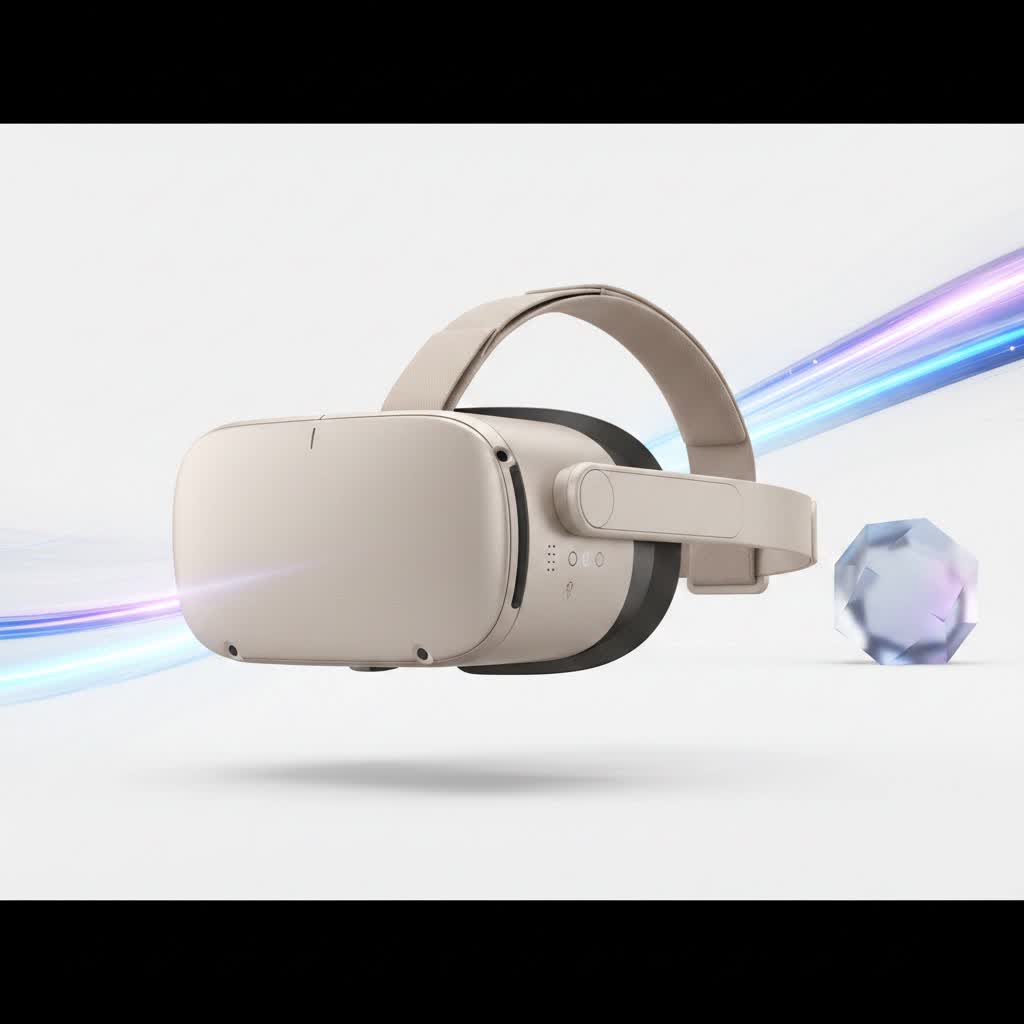
What Was the Oculus Go?
The Oculus Go was the first mass-market standalone VR headset from Oculus (now Meta). This meant all the processing power, storage, and display technology were built right into the device itself. Before the Go, high-quality VR was either expensive and tethered to a PC (like the original Oculus Rift) or reliant on slotting a smartphone into a plastic shell (like the Samsung Gear VR).
Priced at an accessible $199 for the 32GB model, it was designed to be a middle ground. It was a self-contained portal to virtual worlds, primarily focused on media consumption, social VR apps, and simple games. The goal was clear: lower the barrier to entry and get more people to experience VR. And with an estimated two million units sold in its first year, it certainly made a splash.
Key Specifications and Features
To understand the Oculus Go’s place in VR history, it’s helpful to look at its core components:
- Display: It featured a single 5.5-inch fast-switching LCD with a total resolution of 2560×1440 (1280×1440 per eye), which was quite impressive for its time and helped reduce the “screen-door effect.”
- Processor: It was powered by the Qualcomm Snapdragon 821 chipset, a capable mobile processor that could handle basic VR experiences.
- Tracking: The Go used 3DoF (Three Degrees of Freedom) tracking. This is a crucial point. It meant the headset could track head rotation (looking up, down, and side-to-side) but not your position in physical space. You couldn’t walk around a room or lean in to inspect virtual objects.
- Controller: It came with a single, simple 3DoF controller that acted like a laser pointer for navigating menus and interacting with apps.
- Audio: Integrated spatial audio speakers were built into the head strap, a convenient feature that meant you didn’t need headphones. A 3.5mm jack was also included for private listening.
|
Our Picks for the Best VR Headset in 2026
As an Amazon Associate I earn from qualifying purchases.
|
||
| Num | Product | Action |
|---|---|---|
| 1 | FEEBZ 3D VR Headset for Kids 2.0 + Android Remote - for iPhone & Android Phones - with 3D VR Videos & Apps Links - Virtual Reality Goggles Set for Beginners |

|
| 2 | VR Headset for Nintendo Switch 2 (2025), Switch 2 Virtual Reality VR Glasses with Adjustable HD Lenses and Comfortable Head Strap, Labo VR Kit 3D Goggles for Switch 2 Accessories, White&Blue |
|
| 3 | FEEBZ 3D VR Headset for Kids 2.0 + Android Remote - for iPhone & Android Phones - with 3D VR Videos & Apps Links - Virtual Reality Goggles Set for Beginners |
|
| 4 | PlayStation VR2 (PSVR2) |
|
| 5 | VR Headset for Phone, Virtual Reality Glasses with Bluetooth Headphones for Adults and Kids Play 3D VR Games Movies (White VR Only) |
|
| 6 | Meta Quest 2 — Advanced All-In-One Virtual Reality Headset — 256 GB (Renewed) |
|
| 7 | DESTEK V5 VR Headset for Kids w/VR Gamepad, 128 Premium VR apps Included, Anti-Blue Eyes Protected HD Lenses, 110° FOV Virtual Reality Headsets for iPhone, Android Phone- Black |
|
| 8 | PlayStation VR2 Horizon Call of The Mountain™ Bundle (PSVR2) |
|
| 9 | Oculus Quest 2 Advanced All-in-One Virtual Reality Gmaing VR Headset 128GB Set, White |
|
| 10 | Oculus Quest 2 VR Headset 128GB Holiday Set - Advanced All-in-One Virtual Reality Headset Cover Set, White |
|
The Rise and Fall of a 3DoF Pioneer
The Oculus Go was revolutionary for its simplicity. You could pick it up, put it on, and immediately be in VR. It was perfect for watching movies on a giant virtual screen, enjoying 360-degree videos, or playing simple, seated games.
However, its greatest strength—simplicity—was also its biggest limitation. The 3DoF tracking felt restrictive almost as soon as the Oculus Quest, its 6DoF (Six Degrees of Freedom) successor, was released. The Quest allowed users to walk, crouch, and move around in their physical space, translating those movements into the virtual world. This was a true game-changer, and it quickly became the new standard for standalone VR.
In June 2020, Meta announced the discontinuation of the Oculus Go, stating they would no longer produce 3DoF headsets and would focus entirely on 6DoF devices like the Quest. App support and updates were phased out, with security patches ending in 2022.
“The Oculus Go was a necessary step on the evolutionary ladder of VR,” notes Dr. Alistair Vance, a VR historian. “It proved the market existed for an affordable, standalone device. But its 3DoF tracking was always a temporary solution. The moment true positional tracking became available in a similar form factor, the Go’s fate was sealed.”
Can You Still Use an Oculus Go VR Headset in 2025?
Technically, yes, but it’s a severely limited experience. While existing Go headsets still function, Meta’s official support has long ended. Many users have reported a “Failed Entitlement Check” error that prevents them from opening many apps, both paid and free, rendering much of the software library inaccessible.
The Oculus Store for the Go is no longer updated, and new apps ceased being accepted in late 2020. While some pre-installed apps or those already on your device might work offline, the connected experience is largely a thing of the past. It’s now more of a collector’s item or a VR history piece than a practical device for daily use.
Modern Alternatives to the Oculus Go
For anyone seeking an entry-level, standalone VR experience today, the landscape is vastly different and infinitely better. The spiritual successor to the Go is the Meta Quest lineup.
- Meta Quest 2: Although an older model now, the Quest 2 is still a fantastic and affordable 6DoF headset with a massive library of games and applications. It offers a complete VR experience that the Go could only dream of.
- Meta Quest 3: The latest generation offers significant improvements in processing power, display resolution, and features full-color passthrough for mixed-reality experiences. It represents the current pinnacle of consumer-grade standalone VR.
These devices offer the full 6DoF immersion that is now expected from virtual reality, making them far superior choices for gaming, fitness, social VR, and productivity.
Frequently Asked Questions (FAQ)
What was the original price of the Oculus Go?
The Oculus Go was launched at $199 for the 32GB version and $249 for the 64GB version.
Can I still play games on the Oculus Go?
While the device will power on, many games and apps are no longer functional due to failed entitlement checks with Meta’s servers. The library is no longer updated or supported.
Does the Oculus Go need a PC or phone to work?
The Oculus Go is a standalone headset and does not need a PC. However, the initial setup required a companion app on an Android or iOS smartphone.
What’s the difference between Oculus Go and Oculus Quest?
The main difference is the tracking. The Oculus Go has 3DoF tracking (rotational only), while the Oculus Quest has 6DoF tracking (rotational and positional), allowing you to move around in your space. This makes the Quest a far more immersive and capable device.
Is it worth buying a used Oculus Go today?
No, it is not recommended. For a slightly higher price, a used Meta Quest 2 will provide a vastly superior and fully supported VR experience. The Oculus Go is effectively an obsolete piece of technology.
The Final Word
The Oculus Go VR headset deserves its place in the hall of fame. It was a bold, accessible, and important device that introduced millions to the magic of virtual reality. It successfully tested the waters for the standalone concept, paving the way for the incredible success of the Quest platform. While its time as a viable VR system has passed, its legacy as the “VR for the masses” pioneer lives on.
